
Electrolux washing machines
 Electrolux – Sweden, made with care! Many remember this phrase, often heard on television. And the quality and reliability of their washing machines are truly well-made. But can we really say that a modern Electrolux washing machine is as reliable as the original units, given that they are manufactured not only in Sweden but also in China, Poland, and other countries? That's what we'll find out.
History of the Electrolux brand
Let's begin with a brief history of the corporation's founding and development. It begins in 1901, when Lux, a company producing kerosene lanterns, was founded in Stockholm. In 1910, Elektromekaniska AB, a company manufacturing motors, was founded in Sweden. By this time, Lux's business was declining due to the advent of electricity, so the decision was made to switch from lamps to vacuum cleaners.
This production idea caught the attention of Axel Wenner-Gren, a sales agent who decided to work for Lux. He began collaborating with them in 1912, and just a few years later, he established his own production facility under the name Svenska Elektron. The company's fortunes blossomed, and Wenner-Gren acquired Elektromekaniska. Two years later, he received an offer to merge with Lux. This is how the Ele corporation was founded in 1918.ktrolux (at first it was written with "k").
Electrolux began producing refrigerators and vacuum cleaners, selling them abroad. The war years didn't disrupt production. Thus, in 1944, the company began producing industrial washing machines, and in 1951, the first domestic washing machines, the W20, appeared.
Since 1957, the corporation's name has been spelled with an "s"—Electrolux. The founder is considered to be the Swede Axel Wenner-Gren.
 Electrolux gradually expanded its production by acquiring various companies, beginning to manufacture dishwashers, electric stoves, and compressors. For example, in 1984, the Italian company Zanussi became part of Electrolux, and in 1994, the German company AEG.
Today, Electrolux is the largest complex for the production of household, professional and garden equipment, with its head office in Stockholm. It appeared in Russia in 1994. In 2005, a factory manufacturing household appliances under this brand was founded in St. Petersburg, but it closed in 2010 at a loss due to uncompetitive pricing. For Russian consumers, automatic washing machines proved too expensive compared to competitors, despite their high quality. The main consumers of this type of equipment are still European countries and the United States.
Modern technologies: quality and reliability
Only a small fraction of the washing machine models available in stores are manufactured in Sweden. Most are assembled in factories in China, Poland, Germany, and Ukraine. For example, the EW 1010 F and EWF 1486 models are manufactured in Germany. The EWF 1090 and EWF 1086 models are assembled in Italy, the EWC 1350 and EWC 1150 are assembled in Poland, and the EWF 147410 A and EWF 106410 A are assembled in Ukraine.
Important! Electrolux maintains strict control over production to ensure its reputation and reputation are not tarnished. Therefore, the quality of its automatic machines is independent of the country in which they were assembled.
Thanks to their reliability, Electrolux washing machines can last up to 20 years with proper operation. To ensure its appliances provide maximum user experience and are environmentally friendly, Electrolux strives to incorporate all modern technologies into its models. Thanks to these technologies, the machines offer high-quality washing results. So, what's so special about these washing machines?
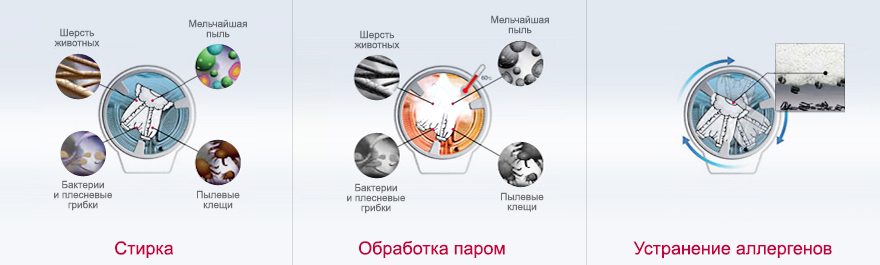
- The Steam System, which means steam treatment, is featured on more expensive washing machine models. Steam treatment not only makes clothes easier to clean, even from the most stubborn stains, but also makes them easier to iron. This feature can be used either in conjunction with washing or separately to refresh clothes. Steam kills germs and allergens, which is also very important and beneficial.
- My Favorite Plus technology allows the machine to remember frequently used programs and functions. This means it will suggest the remembered programs the next time you wash, saving you time selecting the program. All you have to do is press Start, and the machine will do the rest. Overall, Electrolux machines are very user-friendly, with a Russian-language control panel and display.
- Time Manager function, which allows you to set the washing time manually. The shortest program is 14 minutes.During this time, you can easily refresh your socks without having to twist them for 1.5 hours each time.
- Direct Spray technology uses water and energy based on the load of laundry, reducing costs and making washing more economical.
- The auto-parking function in top-loading machines allows the drum to rotate upwards for loading items.
In addition to advanced technology, this brand's machines boast a wide range of programs. These include not only cotton and delicates, but also pillows, lingerie, and sportswear. Spin speeds vary from 400 to 1600 RPM across models. Maximum spin speeds are gentle on fabrics and accelerate drying by 25 minutes. The washing machine's dimensions allow for a load capacity of 3 to 10 kg.
Weaknesses of this brand's cars
Washing machines are really reliable, we can judge this by Electrolux car consumer reviews, but unfortunately, they don't last forever and also break down. What are their weaknesses, and how expensive can repairs to these machines be? As with most washing machines, the pump, heating element, and bearings can fail in Electrolux washing machines, and power surges can burn out the control board. After prolonged use, the drain hose may require replacement. While not common, it does happen.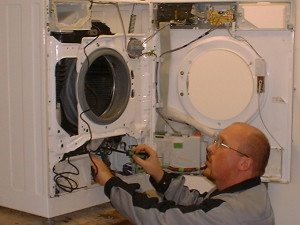
In most cases, it's best to take your washing machine to a professional mechanic. Just imagine disassembling the machine to get to the drum, which houses the bearings and seals. And getting them out requires a fair amount of effort. Therefore, in some cases, it's easier to hire a professional.
As for the cost of repairs, it will depend on what broke and in which country the car was assembled. Spare parts for European vertical models will naturally be more expensive, and you will have to buy them in euros. Components for Ukrainian- or Russian-assembled cars will be cheaper. If the filler hose breaks, you can replace it yourself for a few hundred dollars.
The most expensive repair is the control board, which accounts for up to 40% of the cost of the car itself.
With proper maintenance and protection from power surges, board failure is extremely rare, so don't assume that buying a cheaper competitor will be easier and cheaper to repair than an Electrolux. A crucial aspect of repair is how to determine what's broken. It's quite simple: look at the display to see an error, and the explanation of these errors is provided in the article. Electrolux Washing Machine Error Codes.
Review of popular models
Let's look at several examples of washing machines from Electrolux and their technical characteristics.
The ELECTROLUX EWF1408WDL2 is a full-size washing machine with a maximum load capacity of 10 kg for cotton, 4 kg for synthetics, and 2 kg for wool. It spins at up to 1400 rpm, and the speed is adjustable. The tub is made of carborane (a composite alloy), and features a built-in light. This model offers 14 washing programs, including steam, delicates, and down comforters. It has an A+++ energy rating, and features leakage and child protection. Made in Italy, prices start at $620.
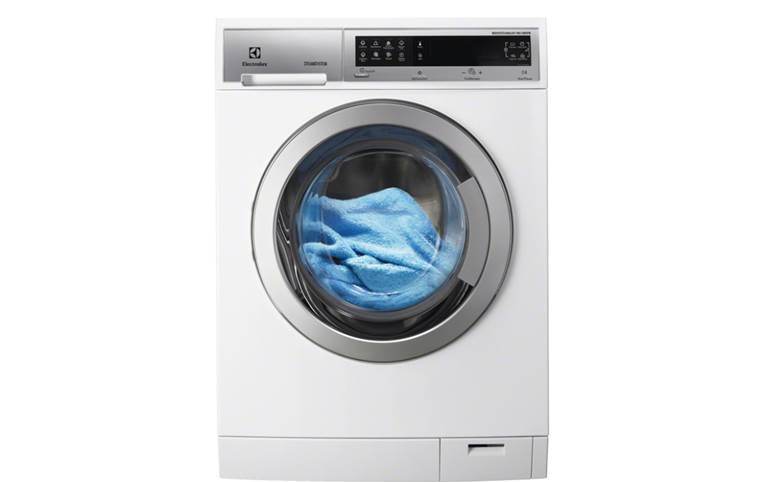
The ELECTROLUX EWT1366HDW is a top-loading washing machine with a capacity of up to 6 kg and a spin speed of up to 1300 rpm. It features fuzzy logic and a digital display. It offers all the essential washing programs, including a "jeans" cycle. Dimensions are 89 x 60 x 60 cm. Made in Poland.
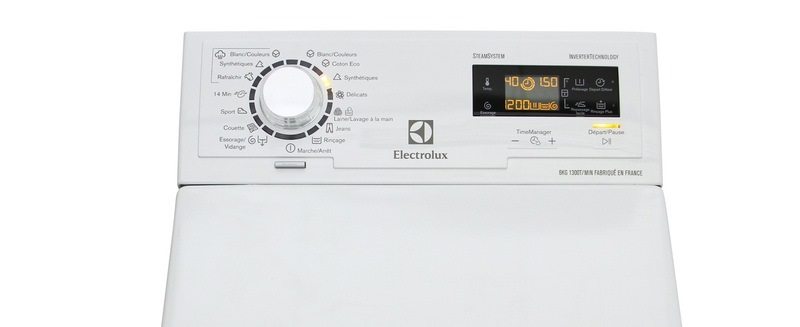
The ELECTROLUX EWW51697SWD is a full-size washing machine with a wash load capacity of up to 9 kg and a dry load capacity of 6 kg, but this is only for cotton items. For synthetic fabrics, the wash load capacity is 6 kg and the dry load capacity is 3 kg. After spinning, laundry is practically dry, thanks to the machine's 1600 rpm spin speed. It has 14 programs, including a special water drain program. The safety system is top-notch, as in addition to leak protection, it also has overflow and overheating protection, as well as self-diagnosis of faults. Country of origin: Italy; price for a model with this functionality starts at $920.
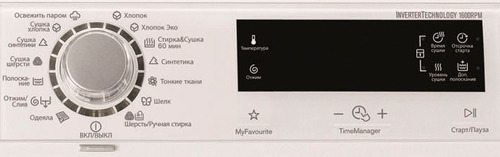
The Electrolux EWS 1064 SAU is a slim washing machine with a load capacity of up to 6 kg and a spin speed of up to 1000 rpm. Of the 14 wash programs, the stain removal program, economy wash, and down wash are noteworthy. Leak protection is only partial. Made in Ukraine. Prices for this model start at $220.
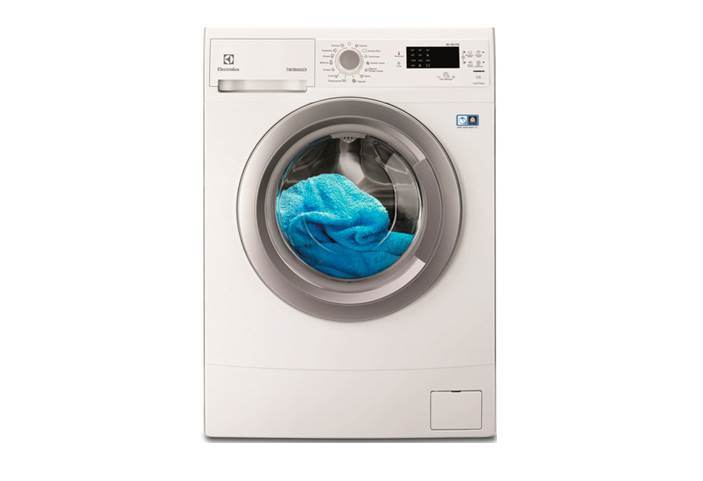
The ELECTROLUX EWC 1350 is a washing machine with non-standard dimensions of 67 x 50 x 52 cm. It features manual controls, a wash capacity of up to 3 kg, and a spin speed of up to 1300 rpm. It features 15 built-in wash modes, including mixed and delicates. Made in Poland. Prices start at $330.
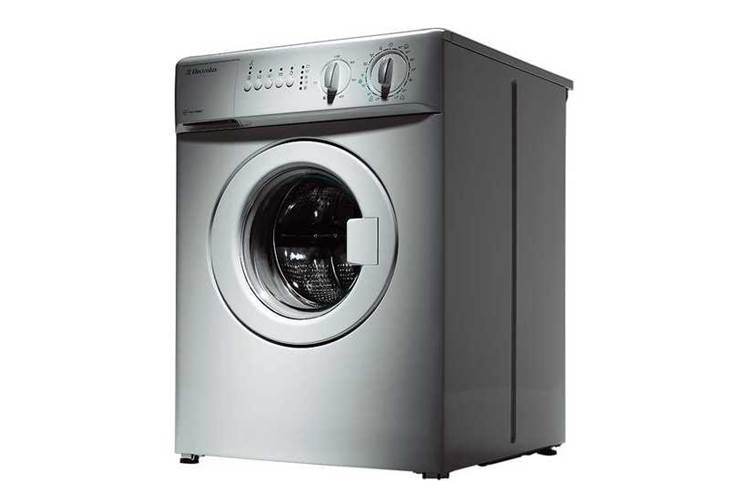
So, an Electrolux washing machine is a technological marvel, equipped with the most essential programs to ensure high-quality washing. But this quality comes at a price, especially if it's made in Italy or Sweden. The choice is yours, and happy shopping!
Interesting:
4 reader comments
Add a comment
Headings
Washing machine repair




For buyers




For users


Dishwasher




Top-loading washing machine ewt1266. The assembly is crap. It didn't even last two years; the drum supports broke.
Bosch, Samsung and LG are much better, cooler and more reliable than Electrolux.
Electrolux only made really good vacuum cleaners in 1996, and they still work. Their washing machines are just crap. That's all. And the assembly, by the way, is really bad, both Chinese and Turkish. That's all.
The Turkish-made Archelik and Beko were durable, but the Electrolux has good features.
They are also collected in Ukraine.