
Direct drive washing machines vs. regular ones – what's the difference?
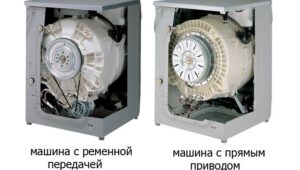
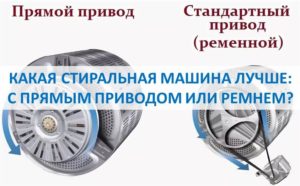
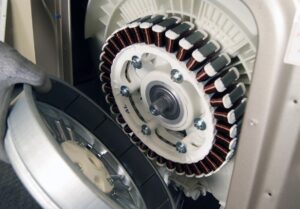
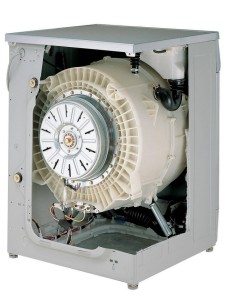 Direct-drive washing machines differ significantly from belt-driven machines. They eliminate the need for a belt or pulley, replacing them with a special clutch. The motor's speed is controlled by an inverter. This system senses the weight of the laundry being washed. By taking this into account, the motor's power can be increased or decreased as needed. This approach ensures better washing results and energy savings.
The first direct-drive washing machines appeared on the market in 1991. They use a special clutch attached to the electric motor. When this clutch fails, water leaks. The number of spare parts in this type of machine is somewhat smaller than in conventional machines. Part of the washing and spinning action is accomplished by controlling the motor.
What are the advantages of a direct drive washing machine?
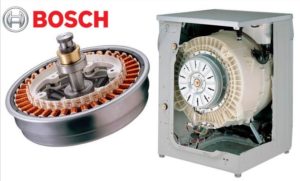
Their design is somewhat simpler than that of pulley-and-belt machines. The rotating drum is directly connected to the electric motor. What are the benefits of these changes?
- There is no need to worry about the safety of the drive belt. In conventional washing machines, it wears out periodically, leading to breakdown and the need for replacement. In this machine, it's simply not used, as the motor rotates the drum directly.
- The engine rotation is regulated by a special inverter. It also determines the weight of the laundry. Using the load data generated by a given weight, the machine controls the speed and power of the electric motor. This helps save on electricity.
- Most standard washing machines are less balanced than direct-drive machines. This makes them noisier and more prone to vibration.
- In addition, items washed in such washing machines are not as susceptible to damage.
How good is direct drive?
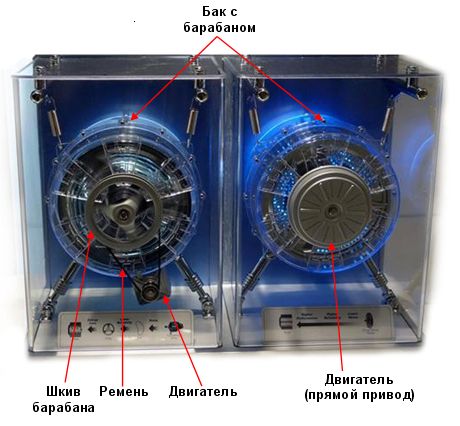
The idea of creating and using direct-drive washing machines is nothing new. A large number of different electrical appliances also feature this type of drive. When it comes to washing machines, LG was the first manufacturer to mass-produce this type of appliance. You may also recall a commercial from this company that touted a 10-year warranty on all motors in these washing machines. The direct drive was the reason for this long service life.
Perhaps you, like many other consumers, have already developed an immunity to the various promises we all see in television and other advertisements. And this is understandable. After all, the main goal of an advertisement is to interest a potential buyer enough to purchase the product. Therefore, we propose a more detailed discussion of the benefits of a washing machine's direct drive and what it offers.
As already mentioned, One of the significant differences of a direct drive washing machine is low vibration and reduced noise. This is because the design eliminates both a drive belt and a pulley. However, this design eliminates the additional support point found in a standard design. This means the static load on the bearing assembly increases, which means they wear out faster. A standard design also provides a cushioning effect. This is achieved by using a drive belt if the items being washed are unevenly distributed.
There's also a potential downside. If the washing machine's electric motor shaft and drum are located on the same shaft, moisture can penetrate the motor if the seal wears out. This, in turn, can cause serious damage. We hope that the companies that manufacture such machines have minimized this risk.
There's also a perception that controlling a direct-drive washing machine is somewhat more complex than controlling a conventional one due to its design features. This should increase their cost.
What are the most common problems with washing machines, regardless of the drive?
 If we assume that a direct drive does ensure longer and better performance of a washing machine motor, then we need to understand how practical this is. Specifically, how often do motors fail in other models and what are the most common failures.
To compile some statistics, we'll use data from studies conducted at three repair shops. This study lasted for 100 days. And what did it reveal? It revealed the following:
- Washing machines from the most popular manufacturers (ARISTON, INDESIT, ARDO, ZANUSSI) most often break down due to power surges. Sometimes, even relatively minor surges can cause problems. These can cause malfunctions in electronic modules, various microchips, and circuit boards. Electric motors can also fail due to this type of malfunction. It's worth noting that LG and SAMSUNG washing machines are more resistant to such problems than other brands.
- About 20 percent of the number of various malfunctions are malfunctions of the drain pump. It's also worth noting that half of these accidents are caused by improper use of the washing machine. Often, these are caused by items people forget to remove from the pockets of clothes they're washing (coins, pins, and other small items), and one of the most common such items is underwire from women's bras. It's recommended to wash bras in special containers. All these items can get caught in the drain pump, get stuck between the tub and the drum, clog the filter, and so on.
- The next common breakdown is the failure of the heating element (TEN). This malfunction occurs in 16 percent of cases. Hard tap water and other causes can be the culprit.
- The fourth position in the ranking of faults is occupied by defects in electronics (modules, circuits, etc.). They account for five to ten percent of repairs. This can occur for a variety of reasons, ranging from leaks and short circuits to a host of other causes.
- Bearing assemblies or seals can be the reason for calling for service in 6 percent of cases.
- Electric motors may upset us less often (from 1 to 2 percent).
- Drums and tanks don't fail very often. Typically, these malfunctions account for less than one percent of total repairs.
- And the remaining breakdowns are defects in various pipes, seals, couplings, hatch locks, minor leaks and other minor problems.
Result
Analyzing these statistics, we can draw the following conclusion: washing machine motors rarely fail. Even budget models don't experience this type of failure very often. A new motor is quite expensive. And replacing one often requires ordering and waiting several weeks or months.
If the motor is repaired under warranty, you may be eligible for a temporary replacement. In this case, the service center is obligated to provide you with their washing machine while you wait for the part to arrive and be installed. However, not every consumer is aware of this obligation of authorized repair centers. They often take advantage of this by not providing a replacement.
Interesting:

Readers' comments
Headings
Washing machine repair




For buyers




For users


Dishwasher




Add a comment