
How to make laundry detergent at home
 Looking at the prices, it's tempting to make your own laundry detergent and skip the grocery store altogether. And indeed, the cost of laundry detergents is steadily rising, and we have to do laundry frequently. How can we save a little money? The answer is obvious: partially replace expensive laundry detergent with a homemade alternative. Read this post to learn how to make homemade hand laundry detergent from soap and other ingredients, and how to make washing machine detergent.
What ingredients will be needed?
Many information websites now offer recipes for homemade laundry detergents and gels. Some are truly worthwhile, while others are conceived haphazardly and prove ineffective. So what's a homemaker to do? How can she choose the best option from the vast array of recipes, and how can she avoid buying a dubious one? We recently asked ourselves these same questions and decided to conduct a series of experiments. To begin, we selected the most common ingredients in homemade powders and decided to study their beneficial properties.
Homemade detergent is made from inexpensive and relatively safe household chemicals, but the word "relatively" still confuses us a little.
- Laundry soap, toilet soap, baby soap. This is the main component for most households.
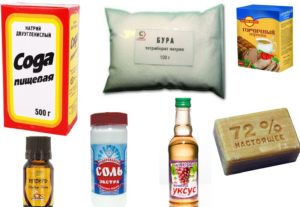 Gels and powders. Soap helps soften fabric fibers, and its components react with dirt stains, helping to remove them. 72% laundry soap is better for removing dirt, but it has an unpleasant odor. It's better to use baby soap; it removes dirt effectively and has a much nicer scent.
 - Sodium tetraborate, or simply "borax," is a chemical that is highly effective at removing stains of any origin from laundry. Borax is often found in modern detergents and cleaning products. Additionally, this substance is also a good disinfectant, so every housewife should have a bag of borax and keep it in her pantry. Unlike laundry soap, borax does not harm the washing machine, which is very important for us.
- Sodium bicarbonate (baking soda). This substance is found in every home, but few people use it as a cleaning agent, and in vain. You can use baking soda to clean a pot, stove, or sink, but in our case, it's interesting as an ingredient in household detergent. Baking soda, like borax, reacts with dirt and helps remove it from laundry.
- Washing soda. Like baking soda, washing soda removes dirt from clothes and does so much better. However, the problem is that when reacting too vigorously, washing soda particles can damage clothes, so it must be thoroughly dissolved before use and not exceed the maximum recommended concentration. Both baking soda and washing soda can be used in automatic washing machines.
- Various essential oils. To ensure your homemade laundry detergent leaves a pleasant scent on your clothes, add a small amount of essential oil. This is especially effective if you're making a laundry gel rather than a dry powder. You can choose any essential oil with any scent and add just a few drops to your homemade detergent—the effect will be stunning.
- Mustard. Dry mustard has a disinfectant effect and is effective at removing various stains. Mustard is also sometimes used as an ingredient in homemade laundry detergent, but only in hand-washing detergent. It is strictly not recommended to pour mustard into a semi-automatic washing machine, or especially into an automatic washing machine.
Mustard powder will quickly swell in hot water, and the mustard mass will clog the hoses and pipes, which can lead to damage to the washing machine.
- Table salt. Regular salt can also help fight stains. When used in combination with other ingredients, it can be very effective. Salt is completely safe for washing machines.
- Citric acid. Citric acid has excellent cleaning properties. Not only will it help remove various types of stains from your laundry, it will soften the fabric and leave it smelling pleasant.
- Table vinegar. This ingredient is added to household laundry detergent primarily to soften fabrics and impart a fresh scent. It is not recommended to use vinegar in an automatic washing machine.
For hand washing
Despite the abundance of automatic washing machines, modern housewives continue to wash some items by hand. There are many reasons for this: the item is very expensive and they want to preserve it for as long as possible, the fabric is delicate, or the item clashes in color with the rest of their laundry. For example, we wash a mountain of colored laundry in the washing machine, but hand-wash two or three white items to avoid having to re-run the washing machine. In short, there are always many reasons to hand-wash, but you don't want to buy separate hand-washing detergent.
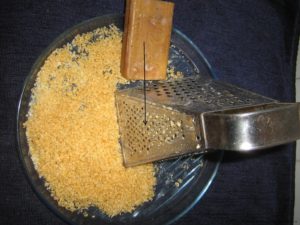 Let's skip the shopping and make a good laundry detergent ourselves. We have some great recipes for just that, which we've tested through experimentation. The first recipe is for hand-washing soap powder. To make it, you'll need:
- 300 g of soap shavings;
- 200 g of soda ash;
- 100 g baking soda;
- 250 g borax;
- About 10 drops of your favorite essential oil.
If you're making hand-washing detergent for your baby's clothes, you can omit the essential oil. This will make the detergent hypoallergenic.
This powder is very easy to prepare. First, mix together soap shavings, baking soda, and borax, then pour 10 drops of essential oil over the mixture. Place the mixture near a radiator or in the sun to dry, then pour into a dry, airtight container. Before use, the powder must be thoroughly dissolved in a basin of water, and only then added to the laundry. You cannot put laundry into the basin together with the powder.
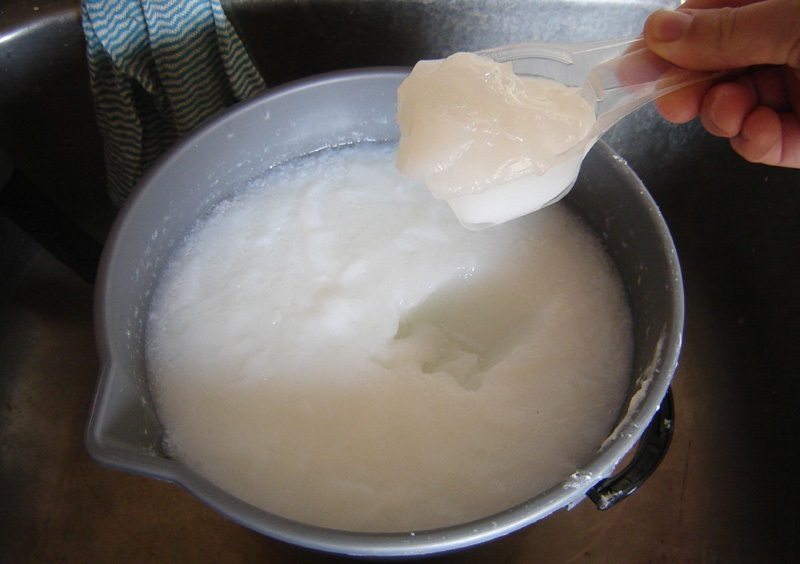
Making laundry detergent for hand washing is clear, but you can also make laundry gel from the above ingredients. In fact, it's almost as effective as powder. How is gel made?
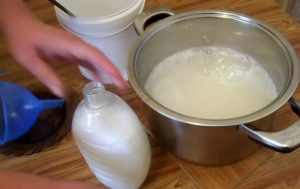
- Pour the soap shavings into the pan.
- Pour about 1 liter of hot water and place the pan on the stove.
- Heat the mixture over low heat, without bringing it to a boil, and stir constantly until the shavings melt.
- Add washing soda (up to 300 g) to the hot soap, but do not add baking soda at all.
- Add a little hot water and stir again until the soda dissolves.
- Now add borax and a little more water to maintain the gel-like consistency.
- Stir again and wait for the borax to dissolve.
- Once the borax has dissolved, you can add 10 drops of essential oil and remove from heat.
- Cool the gel and pour it into bottles.
Machine washable
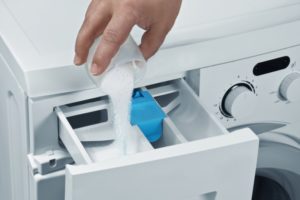 We've already determined that some of the above ingredients are not suitable for making homemade washing machine powder, meaning our powder should be soap-free, mustard-free, and preferably vinegar-free. You can find good recipes for homemade washing machine powder in the article. What can I use instead of washing powder for my automatic washing machine?In this publication, we discussed such recipes in detail, and we will not repeat them.
I'd just like to point out one thing: despite the eco-friendliness and considerable effectiveness of homemade laundry detergents, they are not recommended for regular use, especially in an automatic washing machine. The best option is to alternate home remedies with regular powder, and then you will always be satisfied with the washing results and the technical condition of your washing machine.
To summarize, there's nothing complicated about making homemade laundry detergent. Any homemaker can easily find all the necessary ingredients and make their own, but it's important to use it correctly. By using homemade detergents sparingly, you can save money and achieve excellent washing results!
Interesting:
2 reader comments
Add a comment
Headings
Washing machine repair




For buyers




For users


Dishwasher




Great article, otherwise I spend so much time trying to figure it out myself. There are so many contradictions and different opinions, even about baking soda and soap.
Hello, yesterday I tried making my own laundry detergent with vinegar and soap—Ushasty Nyan. I made it as a test for one wash, and you know, I'm very happy with the results. Now I'll make more and use it exclusively.