
Washing a printed T-shirt
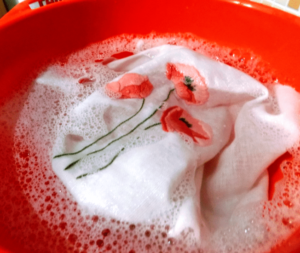
 The lifespan of any item depends largely on how it's cared for, and T-shirts are no exception. To prevent fading, stretching, and the design from slipping, it's essential to wash and dry them properly. This is especially true if the polo shirt has a print or lettering. Manufacturers recommend washing printed T-shirts differently than regular cotton items. Now it's time to learn the basic rules and nuances of caring for these "painted" garments.
General recommendations
Prints can be applied to T-shirts in different ways, and the type of print determines how to care for the design. Some paints can withstand any load and temperature, while others crack when pressed or exposed to excessive heat. To prevent the item from stretching or fading during washing, and to ensure the image remains bright and intact, it is recommended to follow these general rules:
- Handwash only;
- sort laundry before loading it into the drum (colored laundry separately from white and dark laundry);
- turn clothes inside out;
- use universal detergents (without bleaching components);
- remove stains with gentle cleaners (oxygen bleaches).

Particular attention should be paid to temperature. A temperature range of 30-40 degrees Celsius is considered optimal, although cold water is also acceptable. Heating to 60-90 degrees Celsius is rarely recommended, and only for cotton and cotton T-shirts with durable prints.
It is recommended to hand wash printed T-shirts to avoid shrinkage and fading of the material!
For stubborn stains, you can machine wash a printed T-shirt. Just follow these guidelines:
- turn on delicate cycle or hand wash;
- set the spin to minimum;
- set the maximum temperature to 30-40 degrees.
Much depends on the fabric the T-shirt is made of. If the T-shirt contains wool fibers, use special detergents and cold water. If washing cotton clothing, it's recommended to increase the temperature to 40 degrees Celsius and add salt or fabric softener. Items containing Lycra should never be spun; air-drying is recommended.
Drying a printed T-shirt requires special care. Firstly, any artificial drying is prohibited, whether in a washing machine, a hair dryer, or a radiator. Secondly, hang the items while wet to allow water to drain freely. Thirdly, do not stretch the fabric to protect the design from deformation.
Be sure to check the manufacturer's information.
Before washing any printed T-shirt, you should read the information on the label, which is sewn on the inside of the neck or side seam.The manufacturer must indicate the composition and care instructions on the label.The latter are often “encrypted” with special icons.
- Crossed-out basin. Do not wash by hand or in a machine.
- A basin with a hand dipped in water indicates the need for delicate care – hand washing.
- A basin of water marked "30" is in the basin. The manufacturer permits use in a washing machine, but only on the delicate cycle. The maximum water temperature is 30 degrees Celsius. Intensive spinning is prohibited.
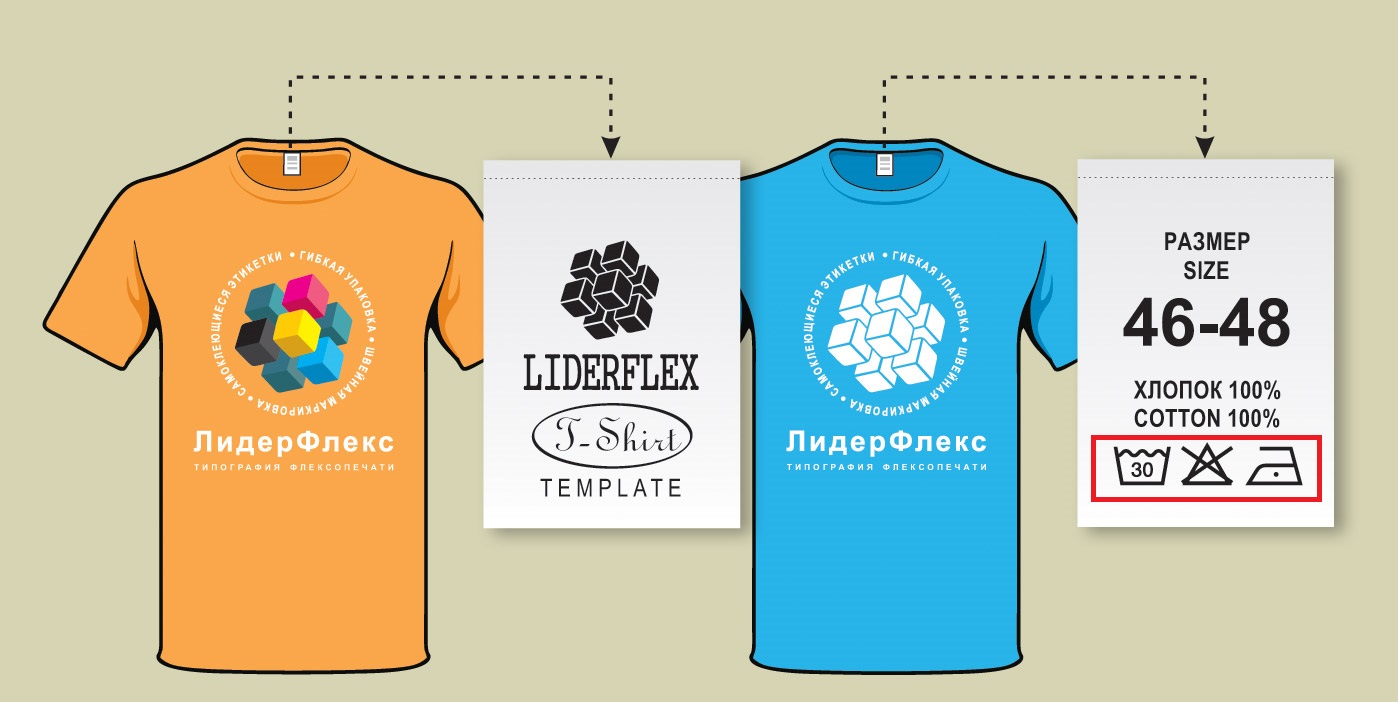
- The numbers "30" or "40" indicate the maximum heating level of the water.
- A circle with an "X" through it. This indicates that the T-shirt should not be dry cleaned or bleached. Do not use any bleaching agents.
Before washing, please read the information on the label – the manufacturer specifies the optimal cleaning conditions for the product!
- A triangle with a cross through it. Do not spin faster than 400 rpm.
- An iron with the word "steam" crossed out. This translates to "do not steam."
- Crossed-out iron. Ironing of the item and print is prohibited.
- Iron with one spot. Iron at a temperature no higher than 100 degrees Celsius and only on the reverse side.
- Iron with two dots. Iron at 100-150 degrees.
- Square with lines down the center. Lay flat to dry.
- A square with three lines. The T-shirt should be hung to dry.
- "Empty" circle. Indicates the need for dry cleaning.
To prevent shrinkage and damage to the design, strictly follow the manufacturer's recommendations. If the T-shirt has faded or stretched, the water was too hot or the spin cycle was too vigorous.
The technique of making a print is important
To prevent the print on your T-shirt from turning into a solid, shapeless stain, pay attention to the ink application technology before washing.The method of image transfer determines the pigment's resistance to cleaning and temperatures. The type of base fabric does not matter – the design will hold up equally well on both a white and a black T-shirt.
There are several possible options:
- sublimation (in this case, the paint is deeply “imprinted” into the structure of the fabric, making the design as resistant as possible to washing in a washing machine at any speed and temperature);
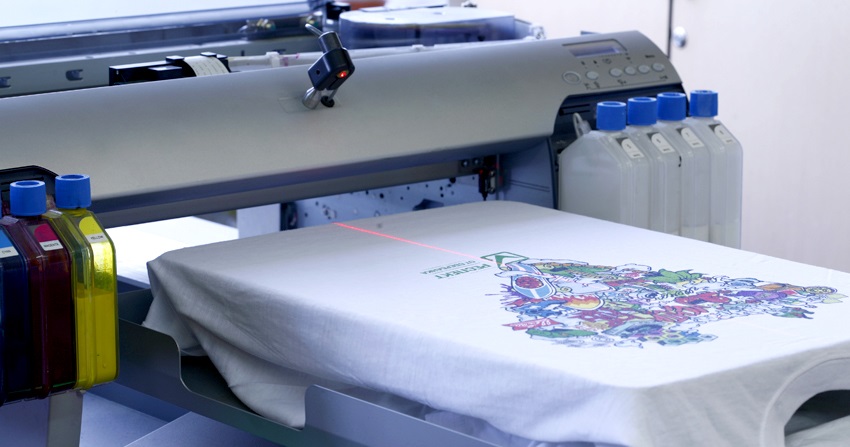
- silk-screen printing (the strength of paint adhesion directly depends on the type of pigment and the base fabric);
- silk transfer (this type of sticker does not adhere securely and cracks and peels off with frequent washing and intense friction, so hand cleaning is recommended);
- Direct digital printing (machine safe, but only on a delicate cycle).
T-shirts with sublimation and direct digital printing are machine washable!
Be sure to also consider the fabric type. Blended fabrics have been proven to hold dye better than pure cotton. Therefore, synthetic T-shirts can be washed and spun at the lowest setting, while cotton T-shirts cannot.
Interesting:





Readers' comments
Headings
Washing machine repair




For buyers




For users


Dishwasher




Add a comment