
Washing a mattress cover in a washing machine
 The purpose of a mattress protector is to protect the mattress from excess moisture, dust, bacteria, and other elements. However, if it's not properly cared for, the opposite will happen: the mattress's condition will deteriorate. This raises questions: can a mattress protector be machine-washed, and how should it be dried and ironed, especially if it's a sophisticated piece?
First, let's study the label
Good old tags aren't just sewn on. The icons on them are the result of lengthy and painstaking work, inspections, and testing on the manufacturer's part. As a rule, the label contains all the necessary care information: whether it can be washed, how to wash it, etc.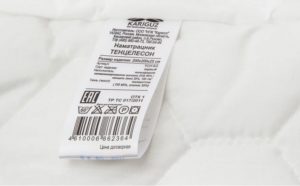
If for some reason the tag is no longer there (for example, you cut it off and threw it away when you bought it), try to find the mattress cover packaging, where the main information is often printed, or some kind of booklet that may have been preserved with the mattress.
Washing frequency is a highly individual matter. It all depends on who sleeps on the mattress, how they sleep, and so on. For example, if there's no sheet or bedspread on top, the mattress pad should be washed more frequently, as the human body carries various dirt particles. In this case, the mattress pad should be washed with the bed linen. Items used by people who sweat excessively should be washed equally frequently. Otherwise, you can wash the mattress pad once a quarter or even every six months, or only in the case of isolated, heavy stains.
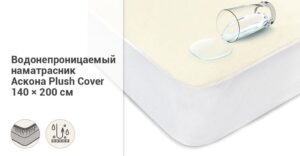
Washing a water-resistant product
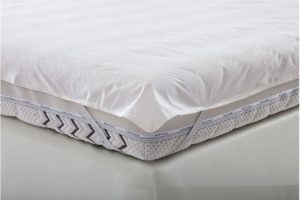 The term "waterproof" immediately conjures up images of a prohibition on washing. However, this is entirely unfounded. Such a product can and should be machine washed unless the manufacturer's label specifically prohibits it. Why are some waterproof covers washable while others aren't? It's all about their complex structure: one layer is a polyurethane membrane, while the other layers vary widely and differ from manufacturer to manufacturer. Some are machine washable, while others are not. If the label doesn't mention a prohibition on washing, follow these guidelines:
- wash at the coldest water temperature – limit 40 degrees;
- No bleaches, fabric softeners, conditioners, or other harsh household chemicals; find the gentlest product on your shelf, preferably something for baby care;
- It is generally better to wash off small stains with regular soap; to be on the safe side, you can use laundry soap;
- wash the item separately from other items;
- The cycle should also be the most gentle one; choose Delicate or Hand Wash, which does not include spinning or drying.
Wring out the mattress pad only by hand! Dry in a dark room away from heat and light sources. However, very low temperatures are also not recommended.
Important! Ironing a waterproof mattress cover is not recommended. However, you won't really need to iron it anyway. Thanks to the polyurethane layer, the product will be virtually wrinkle-free during washing, especially if you gently wring it out by hand.
We take into account the characteristics of the material
As you've probably already figured out, there are three types of mattress pads: synthetic, semi-synthetic, and purely natural. Naturally, the main washing parameters depend on the material.
- Covers made of cotton and other natural fabrics should be washed in cold water, as hot water can cause shrinkage. The optimal temperature is 30-40 degrees Celsius.
- Mattress toppers with bamboo fiber require the most gentle washing. Naturally, no wringing or tumble drying! Even when wringing the mattress by hand, avoid applying excessive force or twisting.
- The most low-maintenance material is microfiber. It can withstand temperatures up to 60 degrees Celsius and easily withstands common detergents and even bleach.
Please note: If you are unsure of the material of your mattress pad, follow the general washing instructions described in the section above.
If the material contains wool
Machine washing a mattress cover shouldn't be a problem, especially if it's wool, as almost every machine has a special program. Wool can be used as both filling and upholstery, and it can be camel or sheepskin. It doesn't matter.
The main thing in this case is not to set the spin or drying mode. The product must be wrung out strictly by hand and very gently, otherwise the fibers will be damaged and the mattress cover will become unusable.
If the stain is localized, it's best to scrub the area by hand with soap. Washing is necessary if the mattress pad has an unpleasant odor, and wool is highly odor-absorbent.
Thick mattress covers
Thick foam or latex covers cannot be machine washed! The same applies to coconut shell toppers. It's better to buy a mattress with similar characteristics and use a regular cover to avoid problems.
As for drying, hanging mattress pads is not recommended: it's better to lay them flat and straighten them out well. This isn't ideal in small apartments, but it's unavoidable.
Removing difficult stains
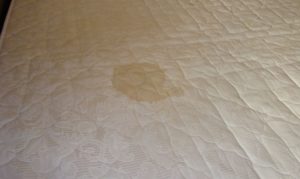 Of course, if the stain is small and the rest of the cover is clean, you need to know how to remove such stains manually.
- Urine stains usually come out the first time with cold water and laundry soap. In a pinch, you can make a solution of lemon and salt, let it sit for three hours, and then rinse. And it'll be gone!
- Blood. Blood is more difficult. A fresh stain will come out almost instantly with a stream of cold running water. But if the stain is old, you'll have to use a variety of stain removers.
- Coffee and tea stains are easily removed with vinegar. It will leave an unpleasant odor for a while, but it will quickly dissipate.
Don't let serious stains set into the fabric. Removing them will be much more difficult and expensive.
Interesting:


Readers' comments
Headings
Washing machine repair




For buyers




For users


Dishwasher




Add a comment