
Washing a down pillow in a washing machine
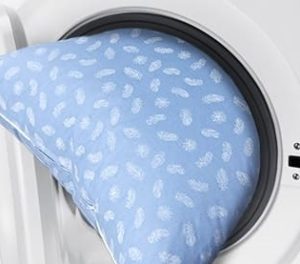 Today, housewives rely on automatic washing machines to wash literally everything: linens, hats, toys, shoes. Are washing machines really so powerful that you can trust them to care for anything? Let's find out whether down pillows can be washed in a washing machine. How should they be cleaned without damaging their shape and properties?
Let's prepare the pillow filling
In fact, it is easy to clean properly at home. If the down pillow is small and fits in the drum, you can wash it in the machine as a whole, pulling on an additional pillowcase. If the product is too large, you will have to rip the material, take out the filling and “twist” it in two or three passes.
So, first, cut open the pillowcase and place the down feathers in a dry basin. Next, take fabric bags; regular pillowcases will do. Fill them with the filling and sew the homemade pillowcases tightly shut. Be sure to check the tightness of the seam; it should be strong to prevent the bag from tearing and the down feathers from filling the washing machine drum, which could lead to disastrous consequences.
The less filling there is in a homemade bag, the better the down will be cleaned.
Next, wash each "new" pillow; it's best to throw 2-3 bags into the machine at a time. It's recommended to add down balls or tennis balls to the drum to help fluff up the filling. Don't compress the down—the looser it is before cleaning, the better.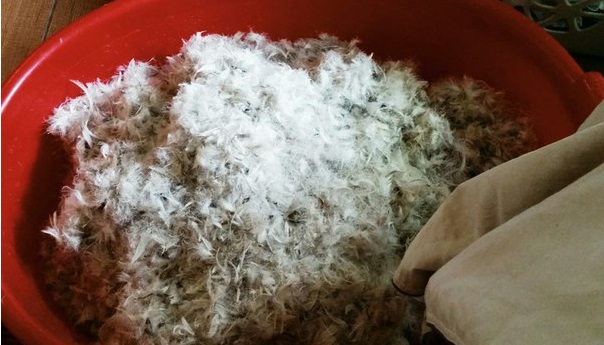
The washing process
It's acceptable to wash a down pillow in a washing machine. To avoid any problems, it's important to follow the care instructions for down pillows. These include the following:
- It is better to put 3-5 special balls in the drum with the pillow or bags with filler;
- Be sure to use dry powder. Liquid detergents will cause the pillow filling to stick together.
- You should pour half as much washing powder into the dispenser as you would use for a normal cycle;
- As for the programs, the best ones are “Down items”, “Hand wash” or a delicate cycle;
- the water should not be heated to a temperature above 40°C, ideally no more than 30°C;
- be sure to set the double rinse mode;
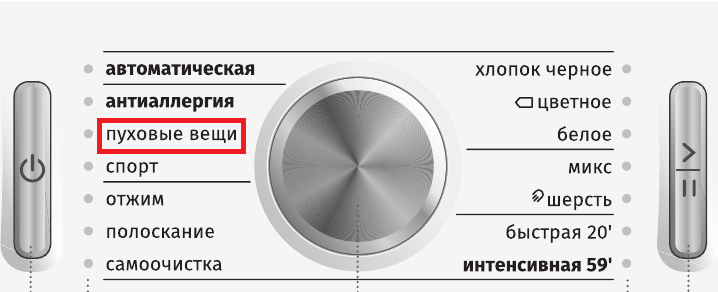
- If it is possible to adjust the spin speed in the program, reduce it to 400 rpm; if not, select the “No Spin” function.
By following these recommendations, you'll ensure proper washing. It's best to load two or three small pillows or homemade bags into the drum rather than just one item. This will help distribute the load evenly across the down filling, preventing clumping.
Removing moisture from the pillow
Proper washing is half the battle; it is equally important to dry the filler properly. Drying a down pillow will take about two days in good weather. This process also has its own nuances. It's important to follow these guidelines:
- Dry your pillows in a well-ventilated area with plenty of sunlight. This will prevent mold from forming.
- small pillows or bags of filler can be hung on a clothesline;
- Shake the pillows by hand every 4-5 hours to prevent the filling from clumping. If the down is drying separately from the pillowcase, stir it periodically.
- when drying, you can cover the filler with gauze to prevent the wind from blowing it around the room;
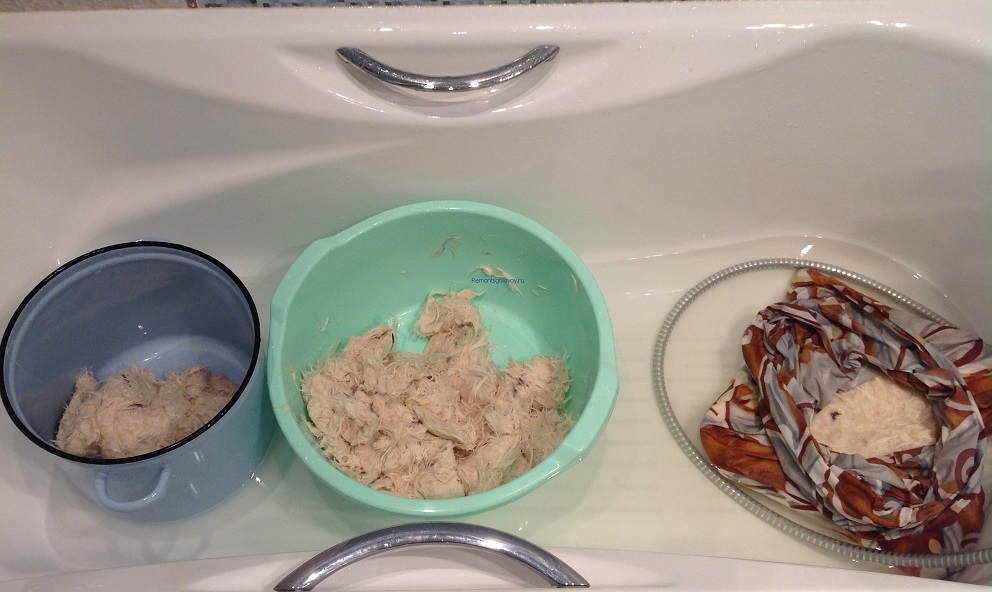
- In winter, it's recommended to leave the dried pillow outside for a few hours. The frosty air will not only refresh the pillow but also kill germs.
- You can dry a feather pillow on a radiator. Just remember to fluff it up to prevent the filling from compacting.
If the fluff does not dry within two days, it may begin to rot.
Therefore, if the weather turns bad and there's nowhere to dry the filling, it's best to wash the pillow again after two days. Once dry, transfer the down filling to a clean pillowcase and stitch it double-stitched.
What are we going to wash with?
To ensure proper washing, it's crucial to choose a high-quality detergent. As mentioned earlier, dry laundry detergents are preferable. Gels can cause the filler to stick together, which is highly undesirable.
The basic requirements for a laundry detergent are standard. The powder should be completely soluble in cold water, rinse well from the fabric fibers, and not contain any aggressive components. When washing down pillows at home, you can use any good detergent.
- BioMio BIO-WHITE is an eco-friendly laundry detergent with cotton extract. This hypoallergenic, biodegradable detergent easily removes stains. It's suitable for washing baby clothes, bedding, and clothes for people with sensitive skin. It's phosphate-free. The granules dissolve quickly, even in cool water, and rinse completely from the fabric.
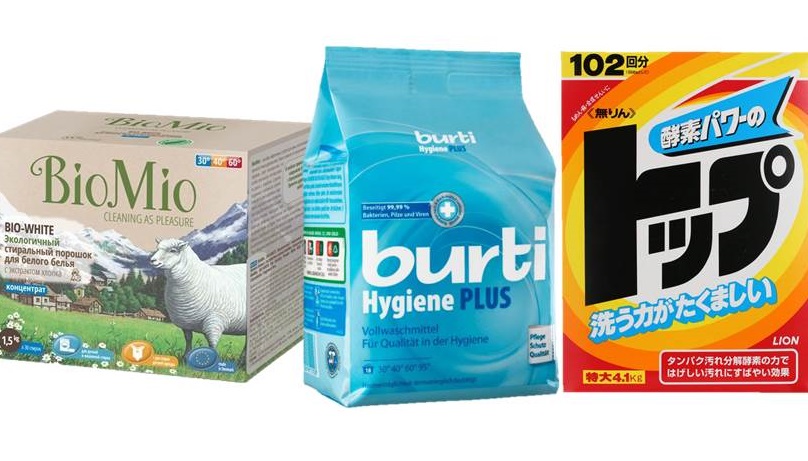
- Burti Hygiene Plus Disinfecting Powder. Helps eliminate up to 99% of harmful microorganisms and prevent their spread in fabrics, which is especially important when washing bedding. It can also be used for machine cleaning. It is hypoallergenic and does not irritate sensitive skin. It leaves linens with a light, subtle, fresh scent.
- Lion Top Phosphorus-Free Japanese Laundry Detergent. Ideal for cleaning both synthetic and natural materials. Its high effectiveness is achieved through plant-based ingredients and enzymes. Its special formula ensures effective cleaning in cold water.
- The new generation Nordland Laundry Powder ECO also features a hypoallergenic formula. It is free of phosphates, dyes, and shock absorbers. It is suitable for cleaning all types of fabric and can be used for washing feather pillows. It rinses easily from the fabric and dissolves quickly and completely. The manufacturer recommends using the product at a water temperature of at least 30°C.
It's best to wash bedding with hypoallergenic, eco-friendly detergents. You can choose one of the detergents described above, or find a suitable one at your local store. The main thing is to ensure that the detergents do not contain any unsafe or critical ingredients.
Interesting:


Readers' comments
Headings
Washing machine repair




For buyers




For users


Dishwasher




Add a comment