
How to wash a wedding dress at home in a washing machine
 A wedding is a momentous occasion, the memories of which newlyweds want to cherish for a lifetime. While the impressions and emotions will remain only in the spouses' memories, some traditional attributes, such as the bride's attire, can be preserved in person. It's rare for a bride to be able to protect her wedding dress from stains; usually, after the wedding ceremony and subsequent reception, various stains remain on the snow-white fabric. In this article, we'll discuss whether it's possible to machine wash a wedding dress and how to restore it to its pristine condition.
Basic recommendations
A stained bride's dress can ruin the wedding experience, but there's no need to despair over a "ruined" garment. A young bride can easily restore the gown to its former whiteness.
You can use the services of express cleaning stations, but, unfortunately, the results do not always meet the customers' expectations. The harsh chemicals used in modern dry cleaners can cause irreparable damage to the garment, especially if the dress is made from non-standard, delicate fabrics. After such processing, a luxurious formal dress can easily turn into a “Cinderella dress”.
Therefore, you should either contact a reputable dry cleaner, where each client receives individual attention and all wishes are taken into account, or clean the dress at home. By washing it yourself, you can analyze the type of stain on the fabric and choose the appropriate stain removal methods. This will ensure the best results and the safest cleaning possible.
Before cleaning your wedding dress, carefully read the label to understand which cleaning methods are acceptable and which are not.
 The owner should inspect the dress for stains. Road dust and dirt are almost always present on the hem. Yellow circles from sweat can also be seen under the arms. Staleness of the fabric can also be seen on the inside of the bodice. When preparing a dress for washing, examine the materials it is made of. Often, such items are made of synthetic fabrics that require hand cleaning only.
The corset of a wedding gown is usually decorated with lace, rhinestones, beads, sequins, and other embellishments. Decorative elements should be handled with care to avoid damaging the finished design. Rhinestones and certain types of beads are attached to the dress with a special adhesive, so the embellishments may simply fall off during washing. Don't worry, as any pattern or design can be repaired after cleaning by gluing the rhinestones back in place.
To restore the original decorative design embroidered or laid on the corset, take a photo of it before cleaning the wedding dress.
Choosing a laundry detergent
Luxurious bridal gowns are made from a variety of fabrics: silk, tulle, organza, nylon, satin, taffeta, and more. To avoid damaging the materials, it's important to wash the dress delicately. You also need to take a conscious approach to choosing detergents; their composition should be as safe and gentle as possible. The following are considered optimal for manual cleaning of wedding attire:
- salt or soda solutions;
- soft gels or powders;
- laundry or baby soap.
Never use bleach or other chlorine-containing products when washing. The components of these products can penetrate the fabric fibers, causing them to deform and significantly damaging the garment's appearance. When treating a dress with chlorine-containing products, be prepared for stains to appear on the garment. Colored items or inserts may permanently fade.
Automatic washing
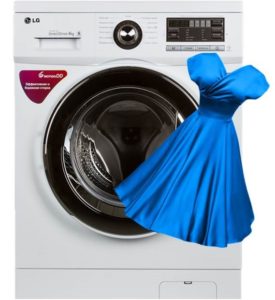
Some wedding dress designers, judging by the information on the label, allow machine washing. However, it's crucial to remove any stains before placing the dress in the washing machine. The basic rules for machine washing are as follows:
- the heating temperature at a given program should not exceed 30°C;
- you should choose a delicate cleaning mode;
- You shouldn't put regular washing powder into the tray; preference should be given to liquid transparent gels or special cleaning compounds intended for washing items made from delicate fabrics;
- It is recommended to cover areas of the dress decorated with rhinestones, beads or seed beads with thick gauze;
- It is advisable to use a special laundry bag and place your wedding dress in it to protect the item from possible damage;
- Fluffy dresses, such as those made of tulle, should be washed in water with added starch.
When spinning, keep the drum speed at a minimum, or better yet, skip this procedure altogether. Avoid spinning corset dresses at high speeds, as this may damage the metal inserts and delicate fabric.
Types of stains and how to deal with them
The next section of information should be devoted to types of stains and how to remove them. Dust and dirt trapped in the fibers can be easily removed with detergent. But what about specific stains, like spilled red wine? Let's find out.
Wine stains visible on a dress can be removed with a warm, soapy solution. Drape the stained area over a basin, saucepan, or other container. Prepare the hot solution and gently pour it onto the stain until the stain disappears. Then, you can proceed with the main wash.
A soap solution will also remove sweat stains from a bra. Apply the stained area generously with a sponge soaked in the solution. Avoid rubbing vigorously, as this can damage the fabric fibers. If the stains persist, try using a salt solution. Dissolve a tablespoon of salt in a glass of water and apply the solution to the fabric. Wipe the area with a cloth, then rinse the salt solution with water.
Other types of stains can be removed using a soapy solution based on laundry soap. The stains are soaked in the solution, worked with a soft brush, and then rinsed with clean water.
A unique solution for removing stains from delicate fabrics is baby powder. Sprinkle the powder on the stain and wait about three hours for the powder to take effect. Afterward, gently brush the powder off the fabric; the stain should be gone.
Potato starch can remove greasy stains. Apply it to the stained area like baby powder and then rub it thoroughly into the fabric. After ten minutes, any remaining starch can be removed.
If your wedding took place during the warmer months, you may notice grass stains on your dress. Ammonia can remove these stains. Apply a swab soaked in ammonia to the green spots on the skirt, then wash them with regular soap. Then you can proceed to the main wash cycle.
Some stubborn stains can't be removed with home remedies. In these cases, gentle industrial stain removers can come to the rescue. For example, OxyClean easily tackles most stains. It's also ideal for fabrics that require special care. Before using the stain remover, carefully read the instructions, dilute the solution according to the prescribed dosage, and apply it to the affected areas. Once the stain is completely gone, proceed with the main wash cycle.
Cleaning a dirty hem
Cleaning a wedding dress hem is usually straightforward. To remove stains, prepare a soapy solution. The steps for washing a wedding dress hem are as follows:
- dilute the required amount of soap or other liquid detergent in warm water;
- soak the hem in liquid for a couple of hours;
- Using a small brush, gently brush the edge of the dress along its entire length.
Once the main stains have been removed, you can wash the hem as usual. Rinse the petticoat thoroughly. If necessary, brush the hem a couple of times.
The nuances of hand washing
If you decide to hand wash your wedding dress at home, you should consider some expert recommendations. By following a few simple cleaning rules, you can achieve a stunning effect and maximum cleanliness of your bride's dress. What needs to be done?
- Fill a third of the bath with water heated to 25-30°C, no more.
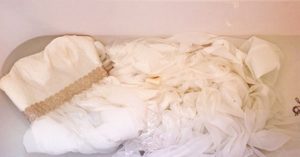
- Add the required amount of soap, liquid gel or soft powder, dissolve it well in water.
- Soak the dress in soapy water for 30-60 minutes.
- Using a sponge, gently press on the stains. Avoid rubbing the fabric vigorously when cleaning.
- After removing all visible dirt from the material, leave the garment in soapy water for another couple of hours.
- Drain the used water and fill it with clean water for further rinsing. Use a shower to actively remove any detergent residue from the fabric fibers.
Don't add any additional detergent to the water if the dress is already there, as this will negatively impact the washing results as the detergent will simply clog the garment before it has time to dissolve completely.
There's another method for cleaning a dress manually. Here are the detailed instructions:
- put the bride's dress on a hanger and hang it over the bathtub;
- take a shower head and wet the item thoroughly from all sides;
- in a separate container, make a soap solution;
- dip the sponge into the liquid and begin cleaning the dirty fabric;
- Once the item is treated, begin rinsing. To do this, raise the shower head and rinse the soap mixture from top to bottom.
If a dress has a decorative pattern or other embellishment, it's best to cover it with fabric or thick gauze before washing. This will protect the design from mechanical damage. Metal elements sewn onto the bodice or skirt are pre-treated with glycerin. This will prevent the embellishment from fading from water.
Drying Features
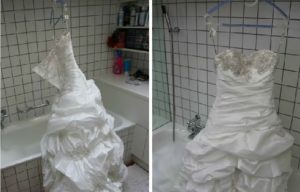 After washing, it is very important to dry the dress properly and iron the item well. It is strictly forbidden to wring out excess water from a wedding dress. After intensive spinning, the material may become deformed and permanently lose its original appearance. There are several ways to dry a bulky item.
- Using regular hangers, hang the dress on a hanger and place it over the bathtub. The creases will naturally flatten out when dried this way. However, it's important to remember that a wet dress hanging this way may suffer some deformation under its own weight.
- Lay the garment flat. This drying option is considered safer. A special rack can be placed on the bottom of the bathtub, and the bride's dress placed on top. This way, after a few hours, most of the water will drain safely into the drain. Only then should the gown be hung on hangers, straightened, and dried vertically.
It is important to straighten the fabric layers well to avoid the formation of folds and creases.
A wedding dress can be dried on the balcony, but be careful not to expose it to direct sunlight, otherwise the crisp white fabric may turn yellow. Drying a formal gown near heaters or radiators is also not recommended.
As you can see, cleaning a wedding dress yourself is quite simple. It's best to hand wash it in cool water with a mild detergent rather than putting it in the washing machine. Proper drying will prevent the dress from becoming misshapen and avoid the time-consuming and tedious ironing of unsmoothed creases.
Interesting:


Readers' comments
Headings
Washing machine repair




For buyers




For users


Dishwasher




Add a comment