
Washing a veil in a washing machine
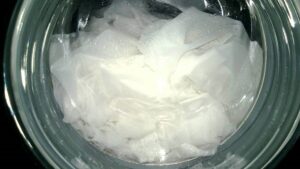 Voile is an airy, lightweight mesh fabric widely used in living rooms, nurseries, and bedrooms. However, its beauty requires constant care. Otherwise, the delicate material will become dirty or damaged due to improper washing. Voile can be machine-washed or hand-washed. Just follow a few important guidelines.
Stick to the basic rules
All delicate fabrics require special care, and veils are no exception. Ideally, you should follow the manufacturer's recommendations, which must be provided on the product label or packaging. If there is no specific information on the composition of the material and its washing conditions, then we adhere to the general rules:
- give preference to hand washing, as the most gentle;
- Before washing, it is better to soak the item for 1-2 hours;
- For soaking, use cold water with the addition of a mild detergent;
- avoid intensive friction, twisting and squeezing;
- To remove stains, choose bleaches that do not contain chlorine or other aggressive components;
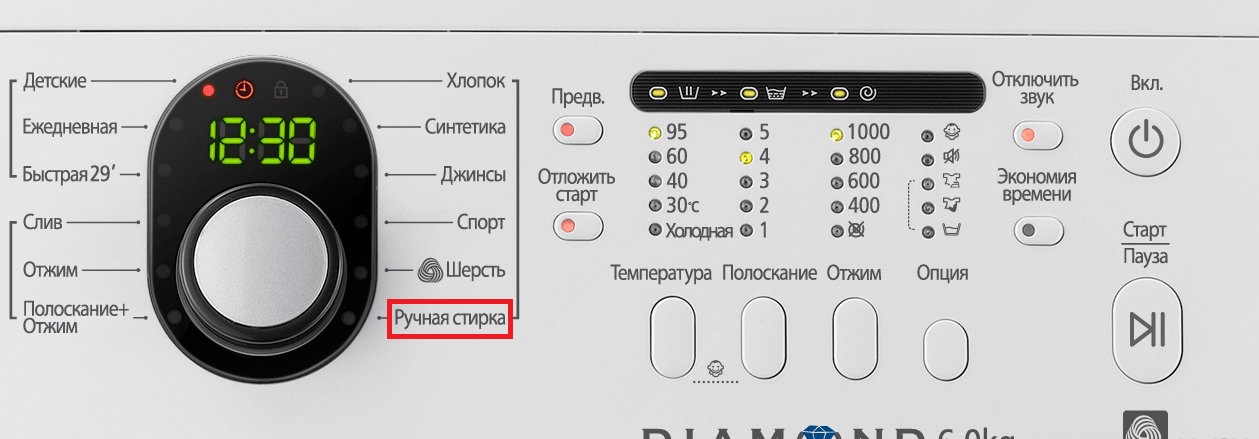
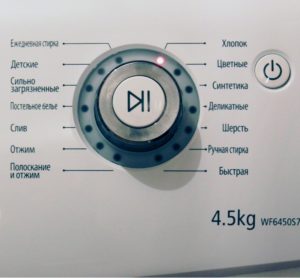
- Machine wash only on the "Delicate" or "Hand" cycle, excluding spinning and limiting water temperature to 30-40 degrees.
It is allowed to wash the veil in an automatic washing machine, but only on a delicate or hand wash cycle with minimal spinning and water heating.
It's important to dry synthetic voile properly. Drying it artificially, including in a machine, is prohibited, as it will damage the fibers due to high temperatures. The best place to dry is a ventilated area, balcony, or room protected from direct sunlight. Lay the clean fabric flat on a damp, horizontal surface and allow the water to drain freely from the fibers. Curtains and drapes can be hung on curtain rods while still wet, allowing the material to straighten naturally.
You can iron the veil, but only from the inside out and through cheesecloth. If the fabric won't be used immediately, it's recommended to roll it up before storing it in the closet.
Automatic care
Veils tolerate machine washing well, but only with the correct machine settings and taking into account the fabric's characteristics. Mesh fabrics, for example, have an airy structure, which leads to increased foaming. To thoroughly rinse the garment and protect the appliance from excessive foaming, you'll need to reduce the amount of detergent added by half. The second point concerns optimal washing conditions. Ideally, select a special program such as "Delicates," "Delicates," "Curtains," or "Hand Wash." If your washing machine doesn't have these settings, set the machine manually: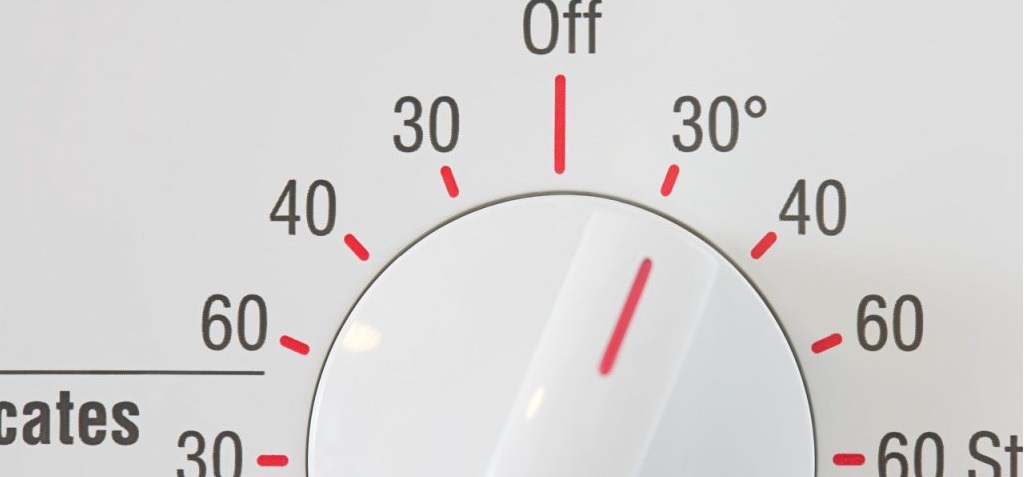
- spin – turn off or reduce to minimum;
- temperature – up to 30 degrees;
- cycle duration – from 30 minutes;
- additional functions – double rinse;
- soaking – if necessary.
When washing a veil in a machine, it is recommended to use liquid detergents.
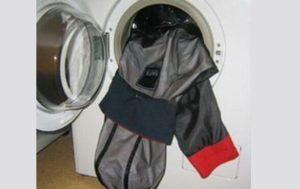
The third point is proper loading. The veil should only be placed in the drum rolled up. It's best to place the roll in a special bag to protect it from friction against the metal surfaces of the drum. Also, pay attention to the detergent. For delicate fabrics, gels are recommended, which dissolve better in cold water and are distinguished by gentle cleaning. Shampoos with an antistatic effect are ideal.
Traditional care
Experienced housewives advise playing it safe and hand-washing your veil. This method will ensure the delicate fabric is cleaned as gently as possible. To ensure "traditional" cleaning goes smoothly, it's recommended to follow a few rules:
- Before washing, the veil is thoroughly shaken to remove dust from the fibers;
- if there are stains, soak the fabric in a cold soapy solution for 30-60 minutes;
- liquid detergents are selected;
- If powder is used, the granules are first dissolved in water;
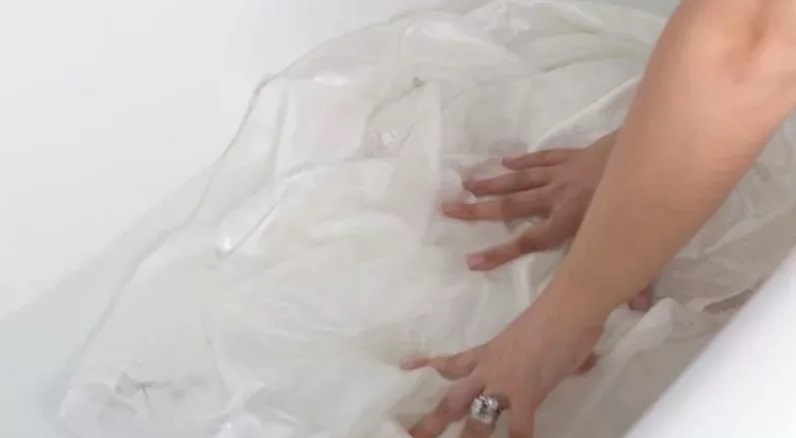
- washing takes place in a large container and in water heated to a temperature of 30 degrees;
- The material does not rub, but is easily compressed and pressed.
The rinsing, spinning, and drying instructions remain the same. Avoid wringing or stretching the fabric, and work as gently and smoothly as possible. Rinse at least twice, using plenty of cold water. Then hang the veil up and leave it until completely dry.
Restoring the whiteness of fabric
White and light-colored voile is most often used in interiors, used to make tulle. This is aesthetically pleasing, but not always practical – the curtains quickly become dirty, losing their original color. To restore the fabric's whiteness without damaging the weave, you'll need to gently bleach the material. A cheaper alternative is to use pharmacy products, following these instructions:
- fill the basin with water heated to 30 degrees;
- add hydrogen peroxide and ammonia to water in a 2 to 1 ratio;
- dip the veil into the resulting solution;
- soak the curtains for 30-40 minutes;
- rinse several times until the specific smell disappears;
- dry.
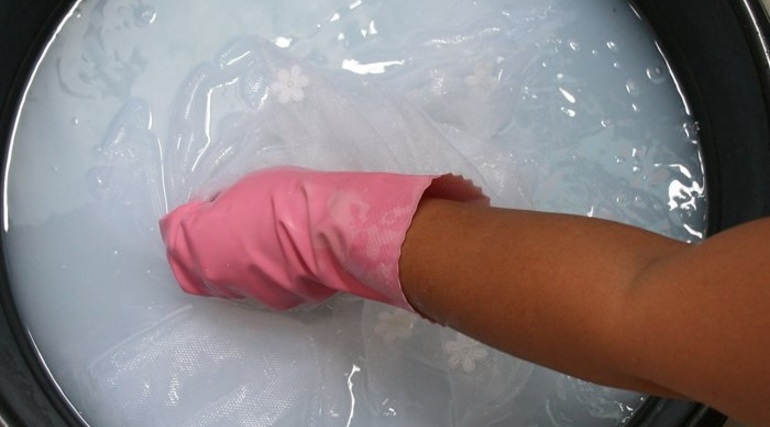
Another option is table salt. It is enough to add a salt solution to the powder container or basin each time you wash the veil. In this case, aggressive bleaching will not be necessary, as the light shade will be maintained.
For washing the veil, choose chlorine-free products!
If the veil is heavily soiled, professional chemicals can help restore its whiteness. These are special bleaches. Two options are suitable for delicate fabrics: optical and oxygen.
- Optical brightener. Thanks to its active ingredients, it quickly penetrates the fibers and removes dirt. After a single use, it restores the white color of yellowed and grayed items. Do not use on colored veils, as the particles will wash out the pigment.
- Oxygen bleach. It's extremely gentle and careful, allowing you to clean both white and colored voile items. Furthermore, this product is completely safe for curtains with patterns, designs, and inserts.
You can also whiten a veil using blueing: add the solution to warm water and rinse in the solution for 5 minutes. Another option is to soap the fabric, soak it for 40 minutes, and rinse in a lemon solution.
Interesting:




Readers' comments
Headings
Washing machine repair




For buyers




For users


Dishwasher




Add a comment