
Washing embroidery
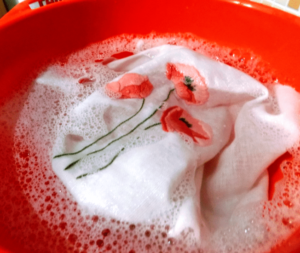 Embroidered thread patterns on tablecloths or shirts are beautiful and expensive, but also time-consuming. Regular machine washing can damage the item, break stitches, stain, or stretch the fabric. To preserve your hand-crafted designs, you need to know how to properly wash embroidery. We'll cover the nuances of washing, soaking, choosing detergents, drying, and ironing.
Preparatory work
Embroidered fabric is considered delicate and therefore requires special care. This primarily concerns preparation: the design must be reinforced, treated, and protected beforehand. This involves the following steps:
- After removing from your fingers, shake the product;
- remove the thread basting and markings;
- we process the canvas along the edges (we sew or cover the cuts with PVA glue or colorless nail polish);
- on the wrong side we secure all protruding threads with blind stitches;
- soak it in room temperature water for a couple of minutes to remove any remaining dust from the fabric.
Before washing, remove any basting or loose threads from the embroidered image, and treat the edges of the fabric with glue, overlock, or varnish.
Also, pay attention to the material the threads are made of. Remember that wool fibers wash differently than cotton: they require cooler water and more gentle care. There is no need to rush with additional decorative elements – beads, scarves, buttons, appliqués. It is better to first clean the item, dry it and iron it, and then complete the composition with volumetric details.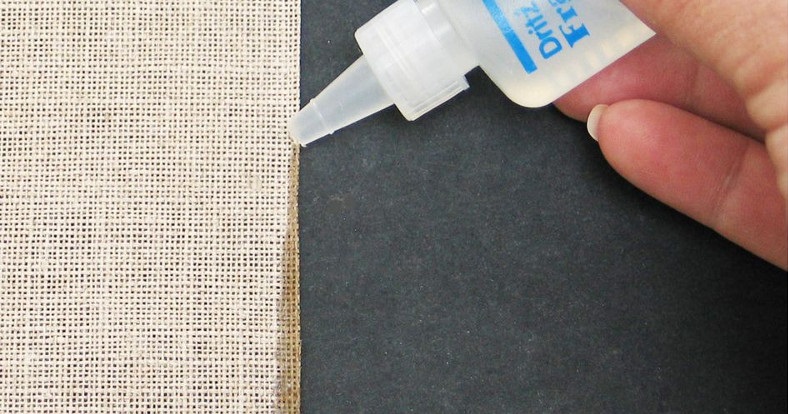
If you follow these recommendations, your cross-stitched tablecloth or shirt will retain its original shape and color. You just need to continue in the same spirit and properly organize subsequent washing, drying, and ironing. We'll discuss this further.
How to keep colors bright?
In addition to maintaining the integrity of the cross-stitch, needlewomen also strive to preserve the original color of the composition. As practice shows, preventing fading and discoloration is easy. The key is to choose the right detergent and water temperature.
It's even better to wash your embroidered piece according to a specific schedule. For example, wash the painting directly in the hoop or on a special wooden frame. It's easy to do:
- we stretch the fabric more tightly, avoiding folds and sagging;
- prepare a cleaning solution from laundry soap;
- We dip a sponge or hand into the prepared solution and then apply it to the embroidery using stroking movements;
- wash off the resulting foam with cold water;
- then we lower the hoop with the fabric into the soap solution and leave for 5-10 minutes;
- rinse the required number of times.
To prevent floss from fading, add a little table vinegar to the solution when washing.
It's best to prevent fading and fading. To do this, always purchase high-quality threads, and when working with embroidery, pay attention to the behavior of the floss.If pigment remains on your fingers from the material, you should take precautions immediately. Firstly, don't use any detergents, either chemical or natural. Secondly, add a little apple cider vinegar to the solution. table vinegarThirdly, rinse in cool water, as high temperatures increase the risk of staining and fading of the original shade.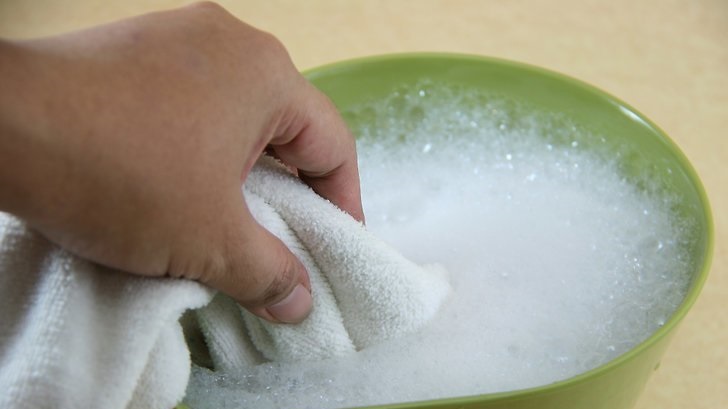
If you want to restore lost vibrancy, take a different approach. Prepare a solution of vinegar and water at a ratio of 20 g per 1 liter, then apply it to the faded areas with a cotton swab soaked in it. Also, keep in mind that it's best to avoid using powders and vigorous rubbing unless absolutely necessary. Generally, lightly refreshing the design with cool water is sufficient.
Traditional washing
Hand washing is considered safer than machine washing, especially when it comes to embroidered patterns. However, it's still important to approach the process responsibly, prepare properly, and avoid common mistakes. A few simple guidelines will help you cope.
- Find the right temperature. Ideally, the water should be between 30 and 40 degrees Celsius. If the temperature is too high, the colors in the embroidery floss may bleed and stain nearby threads.
- Removing marker correctly. Many crafters use a special marker pen for marking, which only washes out with cold water. If you try to erase the mark with a warm or hot solution, the pigment will settle into the material, making it difficult to remove.
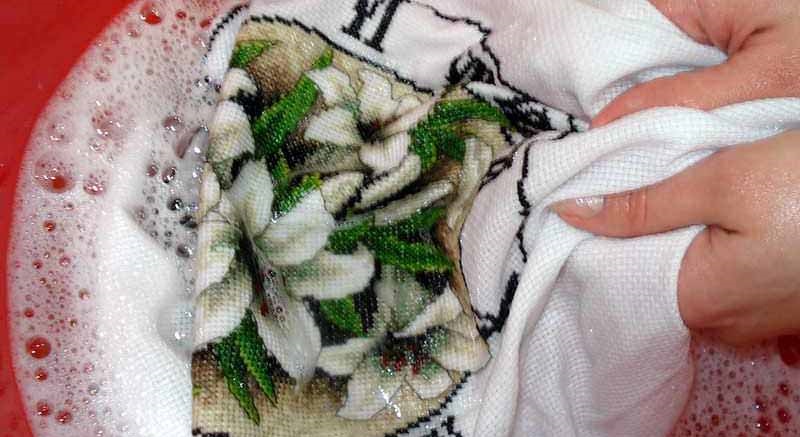
- Don't crease the design. Choose a wash basin with enough water to submerge the garment without wrinkling it. This will allow the design to be loose, absorb the solution better, and remove dirt more quickly.
- Avoid friction. No brushes required—just a soft sponge and gentle scrubbing.
Handmade embroidery can be washed in water heated to a temperature of no more than 30-40 degrees.
Embroidery generally doesn't require thorough cleaning. However, careless handling or drinking coffee or wine while working on it can necessitate more drastic measures. In these cases, removing stubborn stains will require more thorough cleaning.
- Ink. Ink stains can be removed by soaking the stain for five minutes in a solution of water and warmed glycerin. Another option is spot treatment with potassium permanganate.
- Blood. Disappears after treatment with hydrogen peroxide or ammonia.
- Tea or coffee. Dilute water with citric acid at a ratio of 10 to 1, apply the solution to the stain, and wash.
- Pencil. First, we rub the markings with soap, and then treat them with ammonia.
- Marker pen. Simply heat up some nail polish remover and apply it to the marks.
- Mold. We clean it by applying a baking soda paste.
- Rust. Remove with a cotton swab soaked in vinegar.
After spot cleaning, the entire item is thoroughly rinsed in water at 20-30 degrees. To get rid of creases left after using the hoop, wipe the folds with a sponge when washing.
Automatic washing
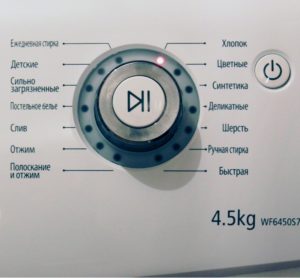
A washing machine and cross-stitch are incompatible. While a washing machine can help a housewife deal with stubborn stains with other items, it's doomed when it comes to embroidery floss. A machine will almost certainly ruin the entire design.
Embroidery can be damaged for several reasons: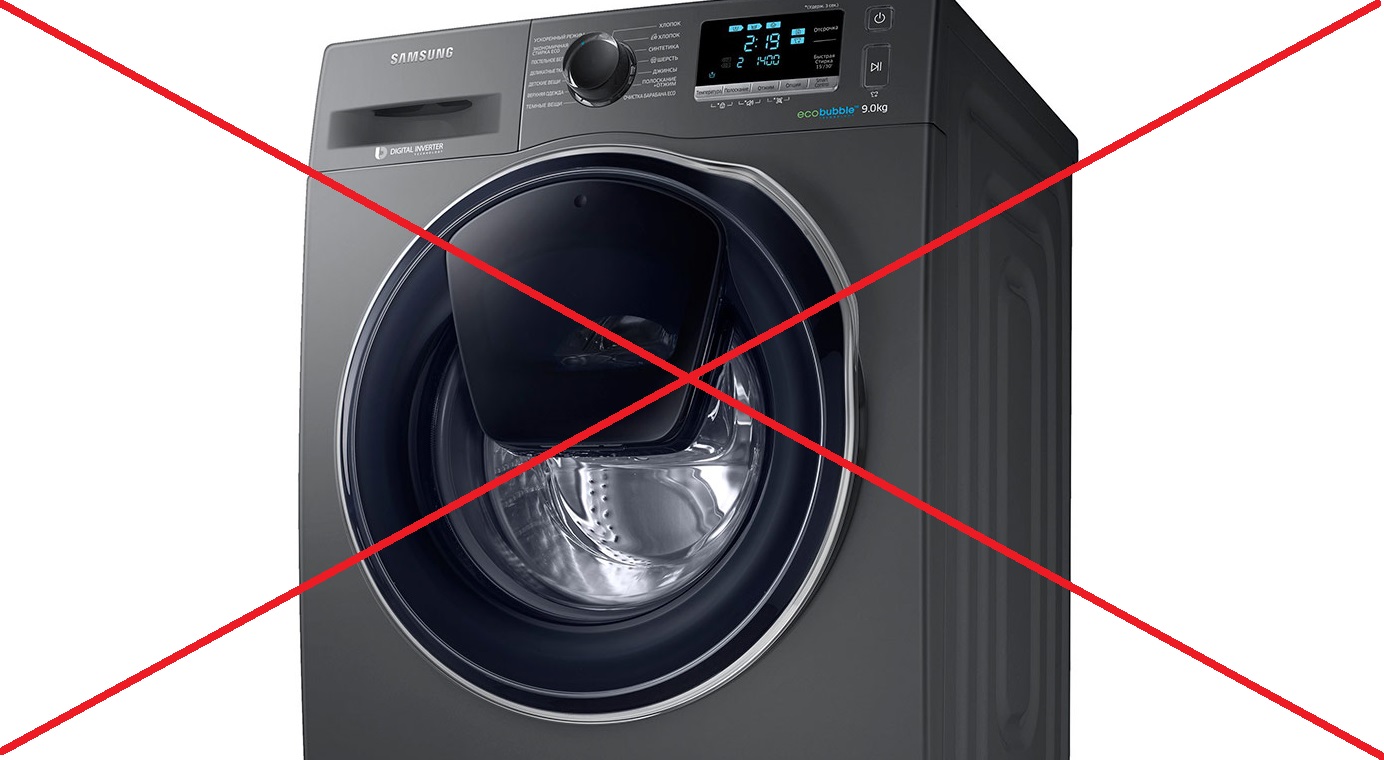
- floss is not suitable for machine washing;
- even high-quality pigments are washed out and mixed with neighboring ones during a long cycle;
- the knots and ties are not strong and may come undone when the drum rotates;
- Canvas is a very fragile material that can become deformed or fall apart in the machine.
Machine washing is not recommended for items with cross stitch embroidery.
Machine washing also doesn't allow you to wash individual sections of fabric. This is also a cost-saving measure, as embroidered garments are washed separately, which is not cost-effective in terms of resource consumption.
A washing machine can easily ruin all your efforts. So, it's best not to tempt fate and wash the item by hand.
What are we going to wash with?
In addition to the washing method and water temperature, it's important to pay special attention to the detergent used. Embroidery has a number of nuances that can damage the design using regular detergent. Rather than trying to save money, it's best to consider a few recommendations.
- Adding powder mixtures to water is not recommended. The granules dissolve poorly in cold water and become lodged between the screeds, disrupting the pattern and leaving white streaks on the surface.
- Gel concentrates, especially those designed for delicate washing, quickly dissolve in water and are completely rinsed out of the fabric.
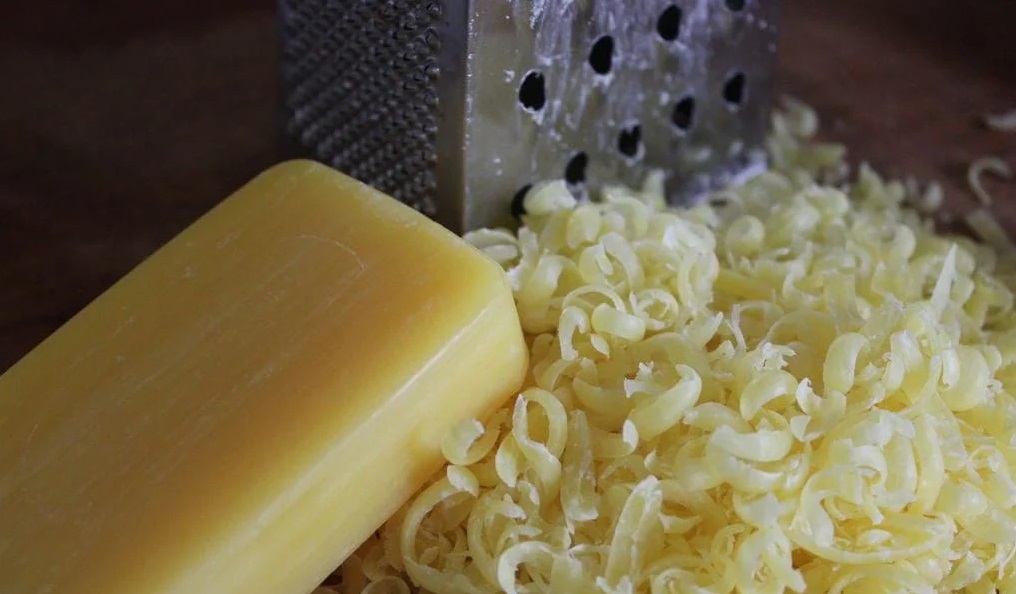
- Laundry soap, both liquid and solid, does an excellent job of cleaning threads while preserving their color and shape.
- Baby detergents, gels, and shampoos are ideal for cleaning items decorated with wool threads.
- Dishwashing gels are permitted, but with exceptions. For example, products containing aggressive components like chlorine are not suitable.
Items with embroidered patterns and designs are best washed with gel-based detergents – they clean more gently, dissolve faster, and are completely washed out of the fabric.
To ensure that the detergent does less damage to the fabric and embroidered design, you can follow the advice of experienced craftswomen and pre-soak the work in salt water. Salt will protect fabric fibers and prevent cleaning agents from sticking to the item.
The main rule when choosing a cleaning product is to carefully examine its ingredients. If the gel doesn't contain any harsh substances or compounds, the risk of damage and shedding is minimal.
Carefully remove moisture
Drying embroidered items also requires special attention. Firstly, it's strictly forbidden to wring them out, as this will cause deformation, stretching, and damage to the design. Secondly, avoid the usual hanging and hanging drying methods. Otherwise, creases and folds will appear, which even an iron won't be able to remove. Thirdly, it's important to avoid direct sunlight, which will negatively affect the color and shape of the embroidery.
Fabric that has been hand-embroidered with threads must not be wrung out!
But throwing away patterned fabric while it's wet is also a bad idea. Here's how:
- let the water drain on its own if the item was washed in a frame or hoop (hang the tool and leave it until it is completely dry);
- Place the material on a dry terry towel, which will absorb all the moisture over time;
- Carefully roll the fabric into a roll, pressing gently with your hands to remove water.
You can also speed up the drying process artificially by using a hairdryer. Cover the image with gauze, set the heat to medium, and direct the air flow toward the threads.
How to iron?
The embroidered design must be ironed. After ironing, the embroidery will acquire a finishing gloss and smoothness, which will have a positive effect on its appearance. But this manipulation will require a lot of concentration and caution, since the hot sole can irreparably ruin the composition.
The main thing is to follow a few recommendations: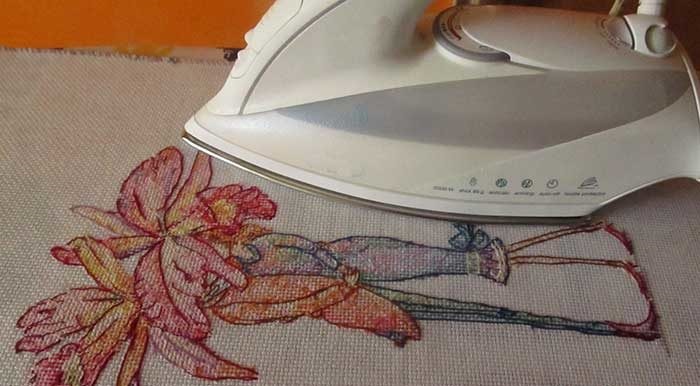
- Before ironing, make sure there is no detergent left on the fabric (otherwise the powder granules will penetrate deeper into the fibers, leave the fibers and weaken the color);
- turn the embroidery inside out;
- iron when slightly damp;
- Place a terry towel under the material to restore volume to the stitches;
- periodically straighten and align the fabric to prevent deformation;
- the temperature is set depending on the type of thread;
- We control the iron smoothly without sudden movements or pressure;
- We starch the item to give it rigidity.
Over time, embroidery accumulates dust, grease, and small debris, which negatively impacts its appearance. Fixing this is easy; the main thing is to follow the washing, drying, and ironing recommendations above.
Interesting:
Readers' comments
Headings
Washing machine repair




For buyers




For users


Dishwasher




Add a comment