
How to wash curtains in a washing machine
 Before washing curtains in the washing machine, you need to know how to do it. Universal press studs won't help here – delicate fabrics are easily damaged and lose their marketable appearance. To avoid learning from your mistakes and ruined curtains, we recommend following proven instructions and tips from the start. These are discussed below.
Features of automatic washing by fabric type
If your curtains aren't embroidered with beads or glass beads, or have any unnecessary embellishments or metal inserts, then deciding on a machine wash cycle isn't difficult. Just consider the fabric type. There are only a few.
- Delicates. These include organza, voile, semi-organza, and silk, which require extra care and strict temperature control. It's best to avoid machine washing altogether or wash at a maximum of 30°C on a delicate/hand cycle.There is no need to pre-soak curtains – delicate materials wash quickly without any extra effort.Next, we proceed as follows: place it in a special bag, do not use detergents, and turn off the spin cycle.
Silk and semi-organza can be ironed on the lowest setting and through a thin fabric, while organza and voile will dry and smooth out without any help.
- Acrylic and viscose. These fabrics should be washed at 30° to 40°C using special products. It's especially important to add fabric conditioner, which will restore softness and shine to fabrics that have become rough from the sun. Acrylic and viscose don't need to be wrung out, but you can iron them through a damp cloth in the direction of the nap, setting them to 150°C.
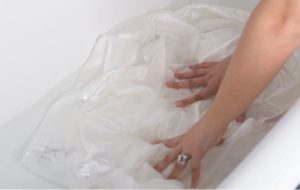
- Linen. Here, pay attention to the type of material: 40° is sufficient for dense, finished fabrics, while thin, dyed linens require at least 60°.
- Cotton. Wash with a general-purpose detergent at 50-60°C. Drying should be done carefully, without using a heater (otherwise, shrinkage will occur). Ironing is permitted, but only when damp.
- Polyester. Use gentle detergents and a temperature of up to 40°C to prevent creasing and creasing. Iron only on the "Silk" setting and with plenty of dampness.
- Taffeta. It tolerates hot water up to 50°C, but is significantly damaged by spinning and vigorous drum rotation. Therefore, choose a delicate cycle, avoid all-purpose detergents, and hang curtains damp.
- Velvet. Considered the most demanding material, professional care is essential. Dry cleaning is ideal. When choosing a home alternative, remember the basic rules: turn inside out, roll, cycle on a delicate cycle at 30 degrees, and set the cycle time to the minimum. Dry flat to dry, otherwise the material will stretch excessively and become misshapen.
Pay attention to the color of the item as well. If you have white curtains in the drum, use mild bleaches, and when washing colored fabrics, use only special detergents to prevent fading. We'll cover other important points to keep in mind when loading curtains into the washing machine in more detail below.
Caring for chintz curtains
There are often doubts about whether it is possible to use an automatic washing machine to clean chintz curtains. The uncertainty is explained simply: this fabric must be washed very carefully, especially in washing machines. This is possible only if the following conditions are met:
- Manual mode in cold water up to 30°.
- No detergents, shampoo at most.
- During washing, pour a little salt into the powder compartment.
- When rinsing, add a tablespoon of vinegar to the water.
- Minimum drum rotation.
Rubbing or wringing the chintz is strictly prohibited. Ideally, after the cycle is complete, place the curtains in a bathtub filled with cold water, rinse gently, and drain. Leave the fabric at the bottom, occasionally moving it until the bulk of the fabric drains naturally. Then hang it on a drying rack.
Washing products with eyelets
 If your curtains have eyelets, check their quality. If the inserted rings are made of inexpensive plastic, it's best to carefully remove them and replace them after they've completely dried. High-quality metal is completely safe to machine. Just follow these guidelines.
- Place the draperies in a protective bag.
- Set the temperature to 30°.
- Select the delicate mode.
- Replace powder with a universal shampoo.
After finishing washing, we take out the washed curtain immediately. Leaving it in the drum for a long time will cause the metal to become dull and lose its aesthetic appeal. It is advisable not to delay hanging it on the curtain rod.
Thread curtains and blackout
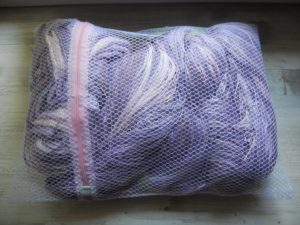
Thread curtains and blackout curtains are the easiest to care for. Before placing them in the drum, tie the threads several times to prevent them from tangling. Then place them in a special bag and select the fastest cycle. There's no point in washing them for long periods of time—synthetics wash out instantly. Wringing is fine, but ironing is unnecessary. It's best to hang them damp, where their own weight will allow them to straighten out completely.
Dense blackout drapes are unfazed by anything. They can be washed at any temperature and with any detergent. It's preferable to use a liquid gel, which is gentle and color-preserving. Here's a secret: semi-damp material will smooth out beautifully on its own, so it's best not to wring the curtains out and let them air dry while hanging on the rod.
Advice from experts
That's not all. Additional tips will help you achieve the perfect result and avoid unpleasant surprises and problems. For example, it's recommended to keep the following points in mind:
- First of all, pay attention to the label, where the manufacturer indicates the most suitable washing conditions for specific curtains;
- remove curtains carefully to avoid losing small fittings;
- Don't try to wash too much at once. It's better to load the drum halfway for better rinsing;
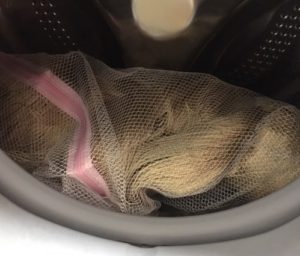
- If the fabric contains embroidery, decorative elements, or metal inserts, it is necessary to “hide” the curtains in a protective mesh bag. If you don’t have a special device, a regular pillowcase will do;
- If there is a greasy stain on the fabric, sprinkle it with starch for 5 minutes before loading;
- to remove yellowness, just soak in salt water for 2-3 hours;
- do not select a cycle with water heating above 60 degrees;
- wash regularly – at least twice a year.
And most importantly, don't take risks. If it's difficult to determine the fabric type or a single curtain contains multiple materials, don't rush into machine washing and opt for hand washing.
Interesting:

Readers' comments
Headings
Washing machine repair




For buyers




For users


Dishwasher




Add a comment