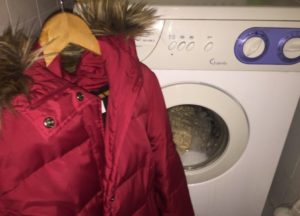
It's much faster and more convenient to wash a winter parka in a washing machine. But won't the lining, padding, and fur trim be damaged after being in the machine's drum? The answer is no, but only under one condition: load the outerwear and run the cycle strictly according to the instructions. We'll detail these rules and recommendations below.
Preparing the jacket for washing
It's easy to determine whether your parka is machine-washable: just look at the care label. This label is found on all garments and is located on the inside of the jacket, where the seams meet at the bottom. All washing instructions are provided here. If there is no image of a basin with a cross through it, then using a washing machine is permitted.
But don't rush into starting the cycle. Before turning on the machine, the laundry must be prepared for loading into the drum.
Check all pockets and remove small items, paper, coins, etc.
Remove all additional elements (hood, decorative elements, fur trim, lining, pockets).
Fasten the main and additional zippers, as well as buttons, snaps and other fasteners.
Turn inside out to prevent any metal inserts or other decoration from coming off and damaging the drum's finish.
Roll the parka, pressing lightly, and place it in a laundry bag. If you don't have one, use a pillowcase.
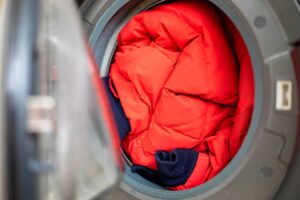
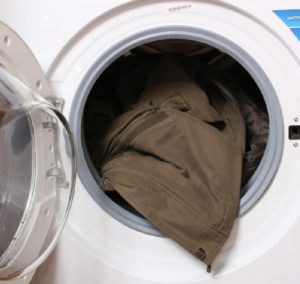
Load everything into the drum.
Caution! Be careful not to exceed the maximum load capacity of your washing machine model.
Now let's stop. To start washing, you'll need to select the appropriate system setting for your specific parka or customize it yourself. To do this, you'll need to consider the base fabric, the type of filler, the fur inserts, and other features. All the details and recommendations for each case are provided below.
Wash according to the instructions
Washing instructions for spring and winter parkas are based on a single principle: the most gentle conditions and non-aggressive cleaning agents. For most people, a delicate cycle with minimal spin and a temperature range of up to 40° will be suitable. This last point is crucial, as water that's too hot can damage synthetic and cotton fabrics, making them unattractive and less durable. Machine drying is also recommended, if your washing machine has one.
Important! If the label has an image of a basin with a bold dot in the middle, then wash only in cold water up to 30 degrees Celsius.
This is a general guideline, with some exceptions:
Only special powders are used, as ordinary ones leave strong stains;
Cotton items in white and light shades should be washed only using non-aggressive bleaches;
when using colored fabrics, gels and powders are required to prevent fading;
If the filling is synthetic, use a program for synthetics and a gel or powder appropriate for the material. Do not spin or dry the jacket; after washing, wring it out by hand.
Down filling is a bit more complicated. First, use down balls or tennis balls to prevent the down from clumping as it moves around the drum. Second, select a delicate wash cycle at 30 degrees Celsius, then remove and wring out the down by hand after the cycle is complete. Third, repeat the process, adding down filling gel to the drum and turning off the spin cycle.
For those who prefer to wash by hand
If there is the slightest doubt that the parka will not survive machine washing, don't risk it. It is better to wash the jacket by hand.But here too, it is important to adhere to a specific technology and act in strict sequence.
Pour warm water (no hotter than 40 degrees) into a suitable sized basin or bathtub and dissolve in it a powder or gel suitable for outerwear.
Shake the water until foam forms.
Immerse the item in the solution without pulling it out.
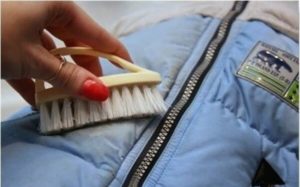
Rub particularly dirty areas, such as the collar, inside sleeves, cuffs, tops of pockets, and the area around the zipper.
Important! Do not use brushes with hard bristles or other hard objects for cleaning.
Rinse with warm water in the bath, and then rinse under a cold shower.
Straighten the jacket and leave it at the bottom of the bath until the water drains.
Wrap in a large terry towel until all remaining liquid is completely absorbed.
For stubborn stains, you'll need to perform a few more steps. To remove greasy stains, apply a solution of two tablespoons of ammonia and half a liter of water to the stained area with a cloth. Rub gently for no more than three minutes. Then, wipe with clean water using a sponge. A vinegar solution, diluted in the same proportions, has a similar effect. Another solution is dishwashing gel applied to a cotton pad.
What to do with fur elements?
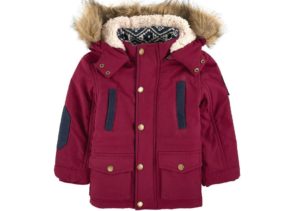
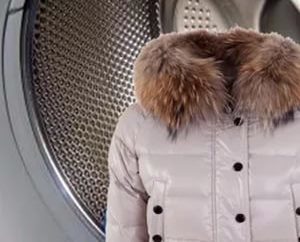
Fur trim on parkas can be a contentious issue, as not all fur can withstand machine washing. The fur trim still needs to be cleaned, so let's consider all available options. Before choosing the appropriate method, let's determine whether the fur trim on the jacket is natural or faux.
If the fur is genuine, any washing, whether machine or hand, is prohibited. When completely wet, it loses its protective properties, volume, and color. Therefore, immediately unzip it from the hood and pockets. If this is not possible, proceed differently: wrap it tightly in cellophane and securely fasten it. A few drops of water are fine, but avoid getting it too wet. Clean the unzipped fur as follows:
you need to take starch and water at low temperature;
mix the two ingredients until they become mushy;
apply the mixture evenly onto the pile;
let dry completely;
remove with a soft brush.
Important! Do not dry fur with a hairdryer, place it on a radiator, or expose it to direct sunlight. Do not iron it, or clean it with harsh household chemicals.
Faux fur is cleaned in a similar manner, but unlike its natural counterpart, it can withstand machine washing. The main thing is to thoroughly brush the fur afterwards to restore its original volume. Using a spray bottle, a wooden brush, and a steamer is recommended. To restore shine to your fur, you can spray it with lemon juice or walnut oil.
It needs to be dried properly
It's important not only to set the correct temperature and spin cycle on your washing machine, but also to dry your washed parka properly. This will determine the aesthetic appeal of the fabric, its size, and its color. To avoid damaging your jacket, keep the following guidelines in mind.
Dry the jacket only in a horizontal position, not hanging it up. A floor drying rack is ideal, allowing the parka to lay flat and allow any remaining liquid to drain gradually.
The drying area must be well ventilated or equipped with functioning ventilation. Loggias, balconies, and the outdoors are all acceptable options.
Important! Avoid exposing the parka to direct UV rays.
Make sure that there are no heating devices or radiators near the wet jacket.
Shake the item regularly and tug at the filling, otherwise it will become crumpled and felted.
Turn the parka over approximately every 2-3 hours to ensure even drying.
It's easy to check if a washed jacket is dry: just squeeze it in your hand and inspect the surface. A damp spot clearly indicates insufficient drying. Once the stain disappears, turn the iron on to the lowest setting and iron the inside. If the outer side is also very wrinkled, go over it with a warm sole, remembering to put a white cotton cloth underneath.
Washing a parka by hand is much safer, but using a washing machine correctly can speed up the process several times without unnecessary risks. Just pay attention to the label on the jacket and monitor the spin cycle and water temperature.

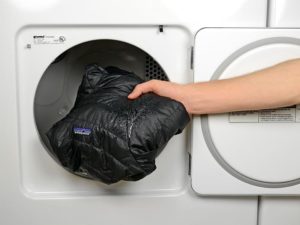 It's much faster and more convenient to wash a winter parka in a washing machine. But won't the lining, padding, and fur trim be damaged after being in the machine's drum? The answer is no, but only under one condition: load the outerwear and run the cycle strictly according to the instructions. We'll detail these rules and recommendations below.
















Add a comment