For every housewife, the kitchen is a special place where most of the time is spent preparing various dishes. And, of course, it's unimaginable to imagine a kitchen workspace without towels or potholders, which get dirty at an incredible rate.
It seems like you just hung up a freshly washed towel in the kitchen this morning, but before you know it, coffee stains, berry stains, or accidental greasy splashes have taken hold. That's why washing your kitchen towels is becoming a major concern for many women! After all, we all want to surround ourselves and our loved ones with cleanliness and freshness.
Basic rules for ensuring the long life of your kitchen towels
Today's textile market offers a wide range of kitchen towels, allowing any homemaker to choose the fabric that best suits their needs. Most often, the choice inevitably falls on soft, pleasant-to-touch towels that provide comfortable use. However, terry towels are far from ideal, as they take a long time to dry, which facilitates the accumulation and proliferation of germs and bacteria, which have no place in the kitchen.
Waffle or linen towels would be the optimal solution., the following tips will help extend the service life:
Buy 3-4 sets of kitchen towels and change them every two days. This will prevent the fabric from becoming too dirty, and any stains will be removed without much effort.
White kitchen linens are resistant to boiling and bleaching, so feel free to use them if necessary. Unless absolutely necessary, wash towels with other items that match the color scheme.
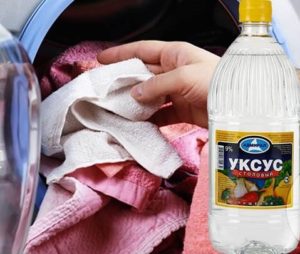
Mildewed towels can be washed as usual, but a small amount of vinegar or hydrogen peroxide should be added to the rinse water. However, don't worry about the beauty and richness of the color; the above-mentioned solutions will have absolutely no effect on it.
Use kitchen towels only for their intended purpose. This will prevent you from using harsh stain-removing products that can damage the fabric's structure. Remember, kitchen linens are not designed for wiping floors or greasy dishes.
After washing and drying kitchen towels, they should be ironed to prevent them from getting dirty.
If your dishes, hands, or kitchen utensils are very dirty, it's better to use disposable towels rather than cloth ones. This will save not only time but also money.
Homemade methods for removing stains from kitchen towels
Stains left on kitchen utensils are often terrifying, and it seems like no amount of washing will save them. However, several decades ago, our mothers and grandmothers developed methods that can remove virtually any stain.
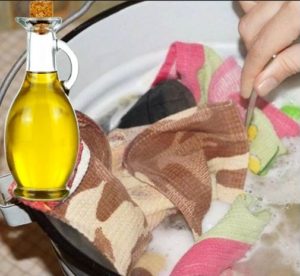
Washing a towel with vegetable oil
Fill a bucket with water and place it on the stove. Bring the liquid to a boil and add 2 tablespoons of dry bleach, 2 tablespoons of sunflower oil, and ½ cup of laundry detergent. Stir the mixture thoroughly and add dry kitchen linens. Remove the bucket from the stove and wait until the water has cooled completely. Then, remove the towels and simply rinse them.
Pour the required amount of hot water into a container. Then add equal amounts of baking soda, laundry detergent, sunflower oil, and bleach, using a ratio of 3 tablespoons per 3 liters of water. Soak the kitchen utensils in the mixture overnight, and wash them in the washing machine on a quick wash cycle in the morning.
Washing kitchen utensils with salt
Take any convenient container and fill it with cold water. Add enough salt to make the liquid slightly salty. For every 3 liters of water, you'll need about 3 tablespoons of salt. Depending on the degree of soiling, soak the kitchen linens in the prepared solution for several hours or overnight. Then wash them on your preferred cycle.
The result will impress even the most fastidious and discerning housewives. Kitchen towels will become sparkling white, unmatched even by boiled and bleached items.
We wash with laundry soap
Laundry soap is a laundry detergent that has been proven over many years of experience. It is capable of removing not only yellow stains from kitchen utensils, but also particularly greasy stains with an unpleasant odor.
To wash the towels, you'll need to purchase a soap that contains at least 72% fatty acids. Then, thoroughly lather the soiled towels with the soap and place them in a plastic bag, ensuring they're airtight. Leave the towels in this bag for 24 hours, then simply rinse them in warm water.
Wash with abrasives
Dishwashing detergents, also known as abrasives, can help restore your kitchen accessories to their original appearance.
Fill a container with warm water and dilute a small amount of any detergent for washing cutlery and utensils in it.
Soak kitchen linens in the prepared solution for about 15 minutes. Then wash them as usual. This method is ideal for removing greasy stains. If you're washing white towels, use ammonia to avoid not only boiling but also bleaching.
The main way to combat greasy stains and unpleasant odors
Take some laundry soap and grate it on a coarse grater.
Then add 2 tablespoons of soda ash to it.
Transfer the mixture to any enamel container and add enough water to fill half the container. Wait until the mixture is completely dissolved in the liquid, then transfer the tea towels to the pan and place it on the stove.
Bring the water solution to a boil, then reduce the heat and leave it at this level for about 15 minutes.
After completing this procedure, do not forget to wash the kitchen utensils in the washing machine.
Now, knowing these simple yet effective ways to wash kitchen towels, you can confidently take charge of your kitchen.

 For every housewife, the kitchen is a special place where most of the time is spent preparing various dishes. And, of course, it's unimaginable to imagine a kitchen workspace without towels or potholders, which get dirty at an incredible rate.
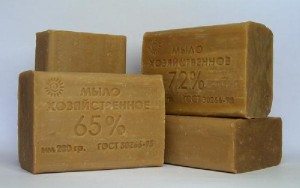 Laundry soap is a laundry detergent that has been proven over many years of experience. It is capable of removing not only yellow stains from kitchen utensils, but also particularly greasy stains with an unpleasant odor.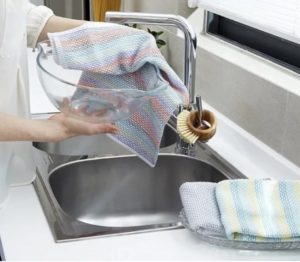

















I really liked it, thank you for having such a site where you can learn!