
Washing the Alize Puffy Blanket
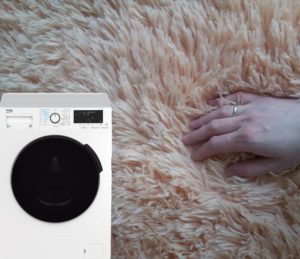
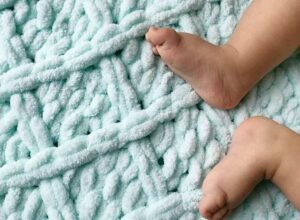 Turkish Alize Puffy yarn is becoming increasingly popular. This velvety, soft yarn is used to create everything from clothing to toys, rugs, and blankets. The ease of knitting is also appealing: pre-made stitches are "gathered" by hand, without the need for knitting needles or a crochet hook. There's only one drawback: care, as items made from this unusual material require special washing methods. Let's learn how to wash an Alize Puffy blanket to preserve its shape, softness, and color.
Is it acceptable to use a washing machine?
Alize Puffy yarn can be machine washed—the instructions indicate this. However, several conditions must be met. Machine cleaning is recommended:
- on the “Delicate”, “Hand” or “Wool” program;
- at temperatures up to 40 degrees (optimal value – 30);
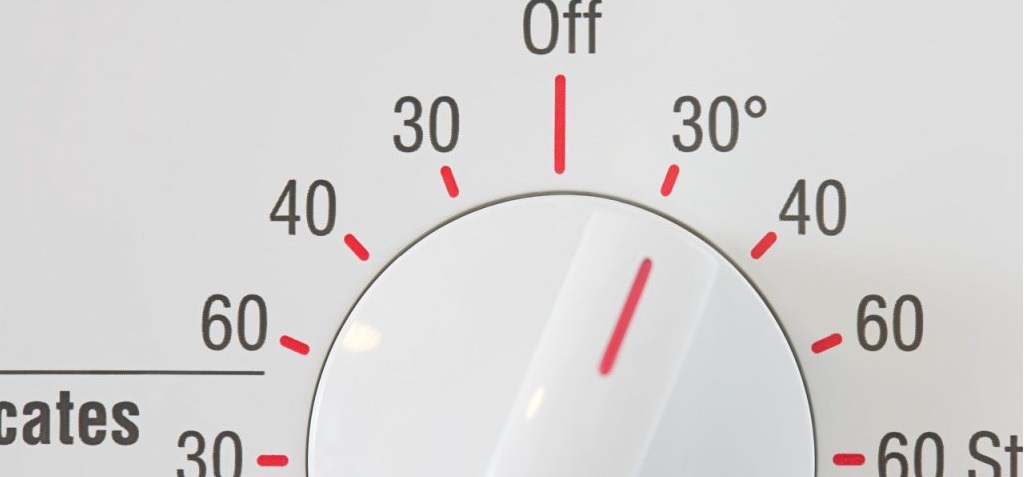
- with a minimum spin of 400-600 rpm;
- using special liquid detergents (powders are prohibited, as the granules get stuck in the viscous material).
Products made from Alize Puffy yarn can be washed in a washing machine, but only on a delicate cycle!
Ideally, it's best to avoid using a washing machine, choosing it only for cleaning bulky items like blankets, throws, and sweaters. For small woolen items, hand washing is preferable, as it reduces shrinkage and abrasion. You can't control the degree of washing in a washing machine—the program follows a preset algorithm.
Traditional washing
If you need to wash a small blanket, it's best to do it by hand. This is a gentler option and poses fewer risks to the item. However, there are some rules to follow. We recommend following these instructions:
- fill the bathtub with water (about 1/3 of the volume);
- adjust the water temperature within 30-40 degrees;
- dissolve the gel for washing woolen items;
- dip the blanket into the soap solution;
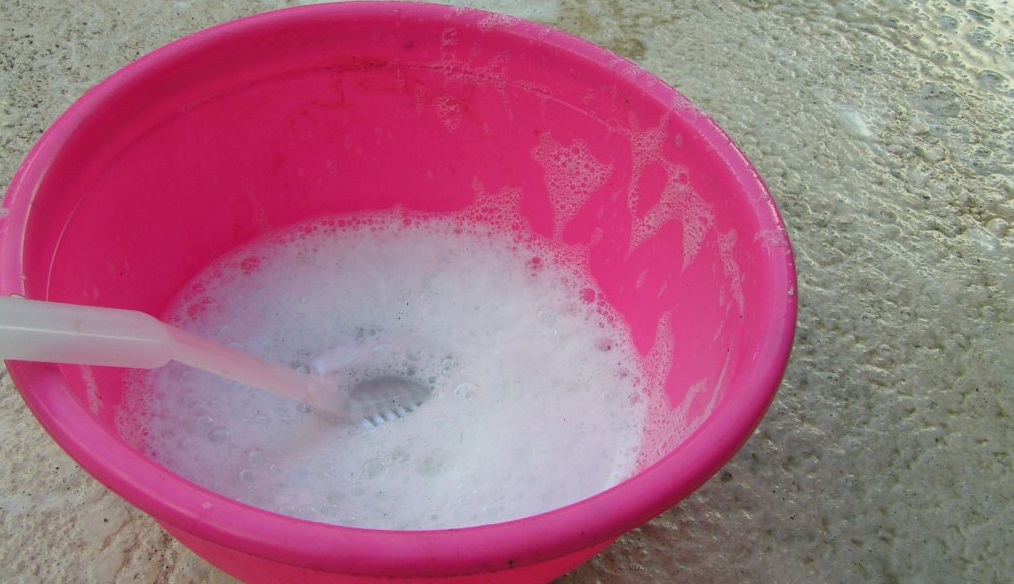
- start washing without soaking (for 15 minutes, using gentle movements, the item is crumpled and “unwound”, as in the drum of a washing machine);
- drain dirty water;
- fill up with a new portion of water (cold water is fine);
- repeat rinsing several times until the foam disappears;
- empty the bathtub, leaving the blanket at the bottom;
- squeeze the product by pressing on the knitting (you cannot twist the yarn, only crumple it!);
- Dry the bedspread by laying it out on a horizontal drying rack.
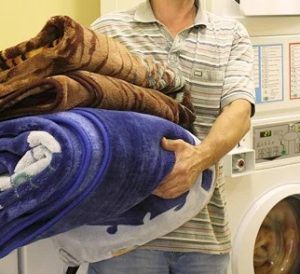
When wet, a blanket becomes very heavy. Carrying it to the dryer can be difficult, so it's best to enlist the help of someone else. To speed up drying, you can spin the blanket in the washing machine at minimum speed.
Blanket after washing: reviews from housewives
Anna:
"I knitted a blanket from Alize Puffy in the winter and used it as a sled mat for my child. We didn't get to go sledding with it much because there wasn't much snow, but we still had to wash it. The knitting wasn't particularly dirty, but I wanted to get rid of street dirt and dust.
I washed my clothes in the washing machine with some trepidation. I was worried about both the garment and the washing machine itself. I'd read the reviews beforehand, and they were quite mixed: some people's clothes were frayed, while others had everything working perfectly. I decided to give it a try, selected the "Bulky Items" cycle, set the spin to 800 rpm, added liquid detergent for colored laundry, and poured in a quarter capful of fabric softener.
The blanket looked unsightly immediately after washing. The wet plush yarn fluffs up and becomes untidy. I hung it out to dry on the door, and it was completely dry within three hours. However, it didn't improve its appearance, and even smoothing it out with my hand didn't help—the pile remained untidy. I solved the problem with a cat slicker brush: I “went” across the yarn crosswise. As a result, the loops became fluffy and soft.
I'll conclude that Alize Puffy is washable. It looks the same after washing and hasn't lost its original softness."
Gwalchca:
"I knitted a 190x180 cm blanket from Puffy, which turned out to be a 'king size' for a double bed. There was just one problem washing the blanket—I needed a washing machine with a 60 cm depth. My bulky item wouldn't fit in a narrow machine; I needed an 8 kg drum. I didn't risk hand washing it, knowing it would be very heavy, after all, it's a 'king size'. No other problems: I set it to a delicate cycle with a temperature of 30-40 degrees and a low spin cycle. The yarn dried in four hours, laying it flat. It survived the washing without any problems, without deforming or unraveling. It remained just as soft."
Oksana Makarova:
"Washing my Alize Puffy blanket turned into a nightmare for me. I washed it in the washing machine, then by hand. Not only was I barely able to get it out of the drum, but it was so wet it was practically impossible to lift. Afterwards, it was difficult to wring out! I scrunched it up, but it didn't help; the water took forever to drain... I spread it out on the bottom of the bathtub, then placed it in a bucket. I waited over a day before I could even begin to dry it.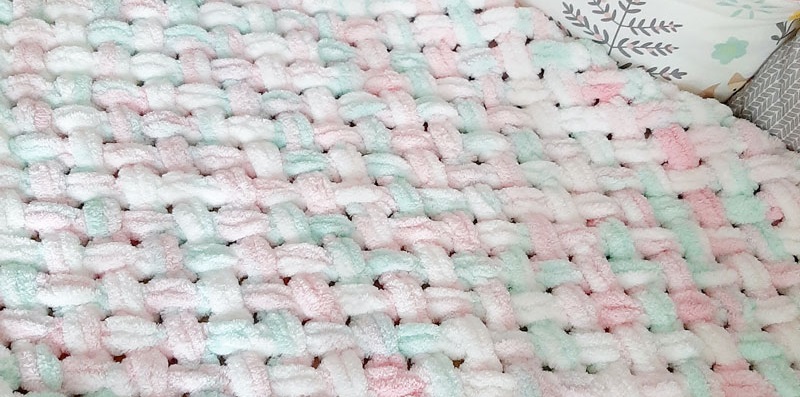
The blanket also took a long time to dry. In total, I spent about three days washing and drying it! And for what? To make the blanket rough! Whereas it used to be fluffy, soft, and airy, now it's stiff and hard. It also looks sloppy. I'm glad it retained its shape, as it didn't warp, the dimensions stayed the same, and the stitches didn't come out. But the yarn itself isn't the same anymore.
Maybe I washed it incorrectly. But I followed the manufacturer's care instructions on the label. I didn’t like it, I was very nervous and not happy with the end result. I decided for myself that I would get it dirty less so that I would have to wash it less often.”
Alena:
"I was unlucky: two of the five skeins of Alize Puffy yarn I bought were dirty. The threads turned from light purple to a grayish-brown. Plus, I was knitting a baby blanket, so I had to wash them.
I followed the instructions on the packaging and washed it by hand. The bedspread was 80x80 cm, so washing it wasn't particularly difficult. It was just difficult to lift the wet item. I didn't wring it out or twist it at all, just scrunched it up a couple of times. I didn't hang it up yet, but laid it horizontally on a drying rack. It took a long time to dry, over a day. Afterwards, I combed and fluffed it up.
Interesting:



Readers' comments
Headings
Washing machine repair




For buyers




For users


Dishwasher




Add a comment