
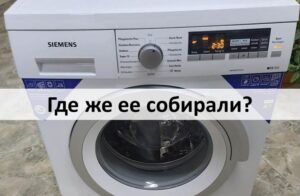
Where are Siemens washing machines manufactured?
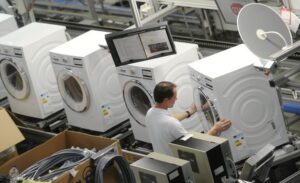 Everyone knows that appliances manufactured under a German brand aren't always assembled in Germany. Equipment from BSH Hausgerate GmbH is no exception, with factories in China, Poland, Turkey, and Russia. User reviews vary as to how this affects the quality of the appliances. So, what country are Siemens washing machines manufactured in? Should you pay attention to this when purchasing? Let's find out.
Factories around the world
Even the most honest manager can find it difficult to tell where Siemens washing machines are manufactured. Each specific model can have two or three origins. For example, the company's headquarters are located in one country, the trademark is registered in another, and the machine is assembled in a third. Furthermore, machine components and assemblies often have multinational origins.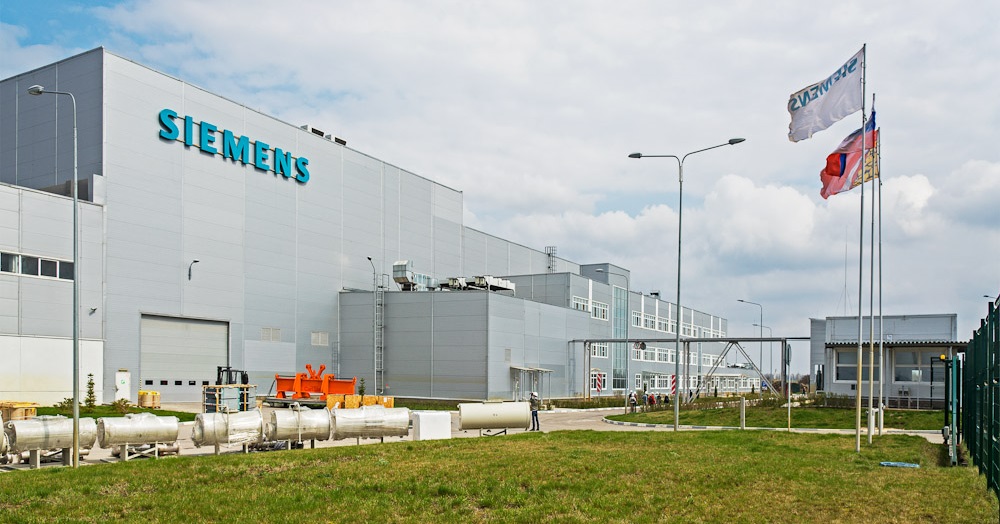
The reason for this is clear. Household appliance manufacturers strive to reduce production costs by all means possible. Therefore, factories are located where labor, rent, materials, and other resource costs are minimal. So, the BSH Hausger concernate GmbH is registered in Europe, but most of its washing machines are assembled in Asia, Russia or Poland.
The company doesn't advertise the fact that its appliances are assembled in other countries. Siemens models are emblazoned with the telling message: "Made in Germany." The manufacturer understands that customers may react to the less prestigious country of assembly, and immediately assures them of the impeccable quality of German-made household appliances.
A company with strong roots
The company's history began in 1847. It was then that Johann Halske and Werner Siemens founded a workshop where electrical and mechanical products were assembled and repaired. The first Siemens washing machine was introduced to customers in 1928. Gradually, innovative developments and technologies were incorporated into the production of the appliances, which became more sophisticated and their functionality expanded. Siemens washing machines are distinguished by: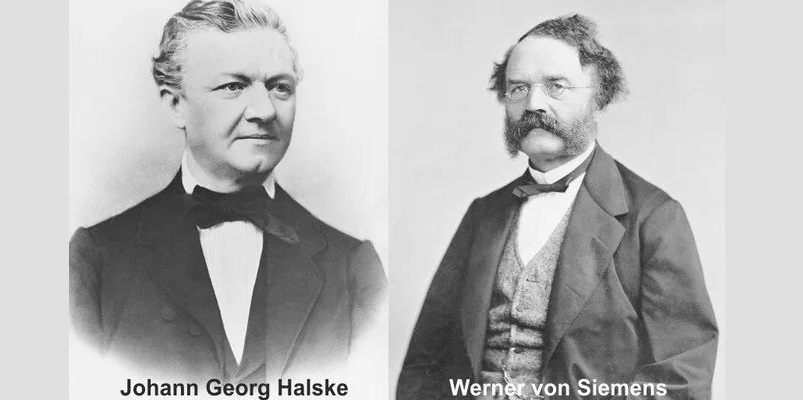
- high quality;
- ergonomics;
- multifunctionality;
- simple interface;
- cost-effectiveness.
Today, the corporation operates and offers equipment in more than 190 countries worldwide. According to Wikipedia, BSH Hausgerate GmbH is the leader in geographic reach, alongside the Coca-Cola Group.
In 1967, Siemens and Bosch merged. We received household appliances after this significant event, and customers praised the reliability and quality of the equipment. Demand for Siemens machines was high, so the company decided to begin production in Russia.
In Russia, the plant where Siemens automatic machines are assembled is located in the village of Neudorf-Strelna, near St. Petersburg.
Only the most essential components are assembled in Russia. Therefore, the cars leaving the Neudorf-Strelna plant are every bit as good as their European counterparts. The concern equips its equipment exclusively with German spare parts, which explains the high quality of its products.
How to avoid buying a fake?
Siemens automatic washing machines are among the top performers in terms of reliability and durability. According to statistics, no more than 5% of failures occur over 10 years of use. This is a very good indicator.
At both German and other factories, washing machine defects are monitored by both specialized computers and human workers. Equipment is tested equally well, whether in Germany, China, or Russia. It's worth noting that some automatic machines from the St. Petersburg plant are shipped to the European market, where "second-rate" products are definitely not accepted. You can find out where a particular machine is manufactured on the company's official website. To do this, simply enter the model name in the search bar and track the marketplaces.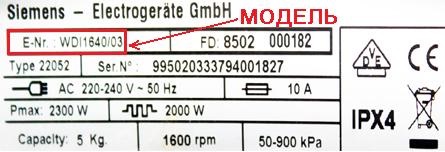
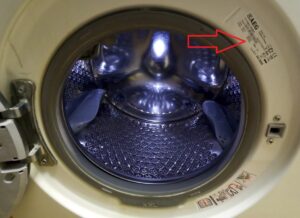
You can also check the information on the nameplate of your automatic washing machine. This is a special sticker that contains all the machine's details, including the serial number, model, power, and manufacturer information. On front-loading machines, the label can be located at the front, rear, or behind the hatch door. On vertical-loading machines, it's located on the rear panel or bottom bar.
Information about the manufacturer of an automatic machine can be obtained from the technical data sheet.
Buying a Siemens washing machine, no matter the model, risks absolutely nothing—the brand's products undergo several stages of testing. Counterfeiting is impossible, as opening even the most modest home appliance factory requires capital of at least one billion USD. According to current data, washing equipment Siemens is produced in Germany, Turkey, Poland and China, but in Russia, only 6-7 main models are assembled here.
There's no fundamental difference in where a Siemens washing machine was assembled. A company of this caliber does not tolerate the production of low-quality or defective products. BSH Hausgerate GmbH, the manufacturer of Siemens and Bosch washing machines, values its reputation and will not risk it. Even if a product is assembled in another country, such as Russia or China, the company remains fully responsible for it. The ISO quality control system dictates strict standards, which the company has been adhering to for many years. Therefore, when purchasing a Siemens washing machine, it's best to focus on the functionality and capabilities of the appliance rather than its origin.
Interesting:
Readers' comments
Headings
Washing machine repair




For buyers




For users


Dishwasher




Add a comment