Unpleasant noises from a washing machine don't just happen. There's a reason for this "musical" accompaniment to washing. Knocking sounds in the drum can occur for various reasons, especially when one of the machine's components has become dislodged.
As a result, it hits the drum and makes a knocking sound. What should I do? How can I find the problem and fix it?
Possible reasons
People may describe the sound of a drum differently. Indeed, in some cases it can be described as a knock, while in others the sound is more like a grinding or rumbling. Let's list the possible reasons why a drum might be beating:
There is a foreign object between the drum and the tub. In this case, the drum will rattle during both the wash and spin cycles;
An imbalance in the laundry can also cause a knocking sound, which most often occurs during spinning;
Incorrect installation of the washing machine relative to the floor can also cause the drum to rattle. This problem is easily solved: place a level on the machine and adjust the feet until the machine is level.
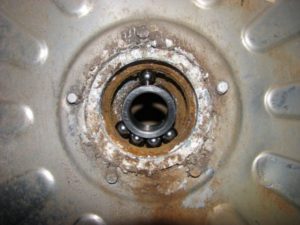
Bearing failure is one of the most serious and common causes of washing machine failure, regardless of the brand and model. Bearings wear out over time and therefore require replacement.
faulty shock absorbers cause the tank and drum to become warped and start knocking;
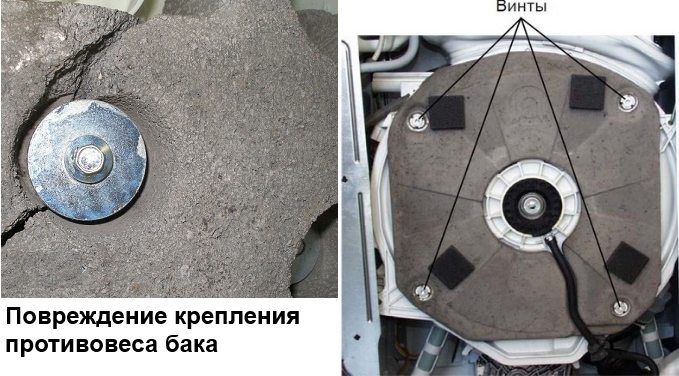
Deformation or weakening of the counterweight can also lead to the appearance of extraneous knocking noises. This problem is extremely rare and can be resolved by tightening the counterweight bolt. If the part breaks, it can be replaced.
A power filter that is torn off from the housing can also cause a knocking sound.
Linen imbalance
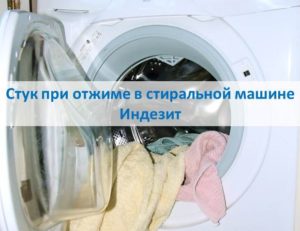
Uneven distribution of things most often occurs when there are too few things in the car, or the things are too small or, conversely, too large.
Please note! Modern washing machines do not have imbalance issues because they have a control system. This type of malfunction is typical for older generation washing machines.
To eliminate the cause, you need to open the drum of the machine and straighten the laundry in the drum by hand. If necessary, first drain the water through the drain filter or emergency drain hose, otherwise the hatch door will not open. You can also avoid imbalance by mixing large and small items in the washing machine drum, taking into account the type of fabric and color, of course.
Removing a foreign object
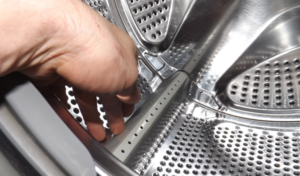
Do not operate the washing machine if a foreign object gets caught between the drum and the tub. It's easy to tell if something has gotten caught in the drum. Turn the drum from side to side by hand while the machine is turned off and empty. Metal objects such as coins, bra wires, safety pins, metal buttons, and rivets will make an unmistakable clanking sound. In addition to metal objects, debris, such as sunflower seeds that haven't been shaken out of your pocket, can get stuck in the tank.
Be careful when loading items into the drum, checking pockets and making sure small items are securely sewn on. Don't forget to check the drum itself and the detergent drawer, as small children may place objects in them.
Removing a foreign object isn't easy. In some cases, it's impossible to remove the object without removing the tank from the machine and disassembling it. Moreover, tanks are sometimes non-detachable, which complicates matters. Various methods for removing objects, using an example bra underwire, are described in the article on our website.
Checking and replacing bearings
Knocking noises from bearings are usually preceded by a creaking sound. Therefore, it's important to listen carefully to how the washing machine operates. If you suspect bearing wear, do not use the machine. The part may fail beyond repair.
You can determine if the bearings are broken by turning the drum by hand from side to side and rocking it up and down. If you find any play and hear a knocking sound, then the bearings definitely need to be replaced. Bearings have a service life of approximately 5 years, so repairs may be inevitable. Replacement is a complex repair, so a specialist is often consulted. However, if you'd like to repair your equipment yourself, read the article. How to change bearings in a washing machine.
Shock absorbers and FPS
If your washing machine is making knocking and vibrating noises, faulty shock absorbers may be the cause. Shock absorbers dampen vibrations that occur at high speeds, and if they wear out over time, the drum and tub will swing like a pendulum, causing unusual noise.
In most cases, repairing shock absorbers is not practical; it is better to replace them.
Moreover, it is not that difficult to do this in almost all washing machines, with the exception of Samsung and Hansa brand appliances. To replace a part in these machines, you will have to remove the tank from the housing. In all other cases, replacement is performed without removing the tank. Detailed instructions for this are provided in the video below.
If the power filter is the cause of the drum noise, it must be securely attached to the machine body. It is located behind the rear panel of the machine body. To remove and secure it, remove the top cover, locate the torn filter, and secure it to the side panel using screws.
So, to figure out why your automatic washing machine is knocking, you need to listen carefully and spin the drum by hand. Even if you can't pinpoint the exact cause of the problem, you can at least narrow it down. Only then should you seek professional help.

 Unpleasant noises from a washing machine don't just happen. There's a reason for this "musical" accompaniment to washing. Knocking sounds in the drum can occur for various reasons, especially when one of the machine's components has become dislodged.
 Knocking noises from bearings are usually preceded by a creaking sound. Therefore, it's important to listen carefully to how the washing machine operates. If you suspect bearing wear, do not use the machine. The part may fail beyond repair.














Add a comment