
How to place a dryer in the kitchen?
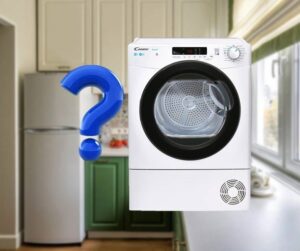 Not every family can boast modern washing and drying equipment. Some homes have bathrooms so small that there's not enough space even for a washing machine, let alone a dryer. That's why people often try to install this equipment in other rooms where it not only has the space but also looks appropriate. So today, we'll look at one common and effective option: a stacked dryer in the kitchen.
Column arrangement in the kitchen
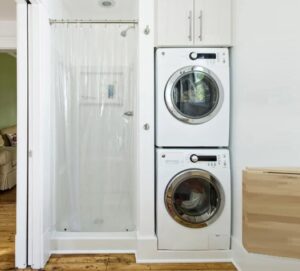
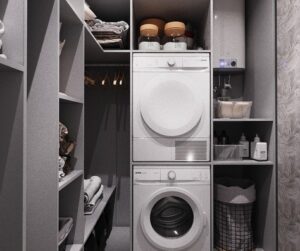
It's easy to conveniently place a dryer and washing machine in the kitchen if there's plenty of space for appliances. Installing the equipment in a small kitchen where there's already barely room for a refrigerator and stove is quite a different matter. In this case, the best option is to install it not under the countertop, as is often done, but in a column.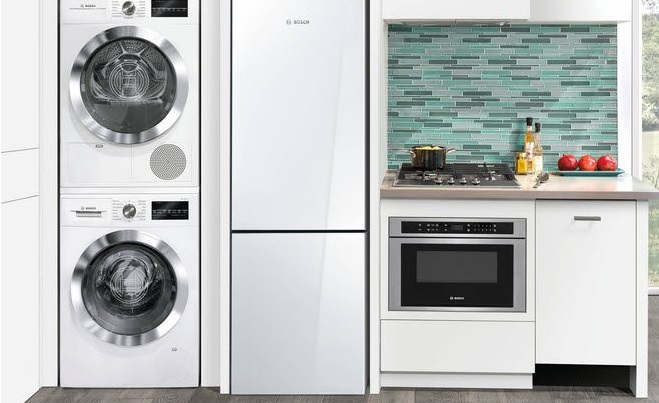
To ensure a clean look for their washer and dryer in the kitchen, owners typically either build or order a tall cabinet that complements the kitchen's design. Ideally, the cabinet should have doors that can be closed, thus concealing the appliances that don't fit the interior, but this option is significantly more expensive than a cabinet without doors.
When equipment has an attractive, modern design, you can save on cabinetry and order it without doors.
With this type of installation, built-in appliances will not only take up minimal space and look good, but will also be connected to all utilities located behind the cabinet. Furthermore, this setup simplifies dryer use, as it can be loaded with wet laundry immediately after a washing cycle, even without a basin, simply by transferring items from one door to the other. However, this installation option has a significant drawback: complicated installation, as you can't simply place the dryer on top of the washing machine without damaging both machines.
How are the two devices connected together?
Without a special connector, it's impossible to place a dryer on top of a washing machine because excessive vibration during the spin cycle can damage the delicate dryer. Furthermore, strong vibration can cause the dryer to fall to the floor and break. Therefore, it's important to carefully calculate the load on the dryer installed underneath and securely fasten the unit placed above. Mounting can be accomplished using one of the following methods:
- Install the drying equipment in a column using the special fasteners that come with the dryer;
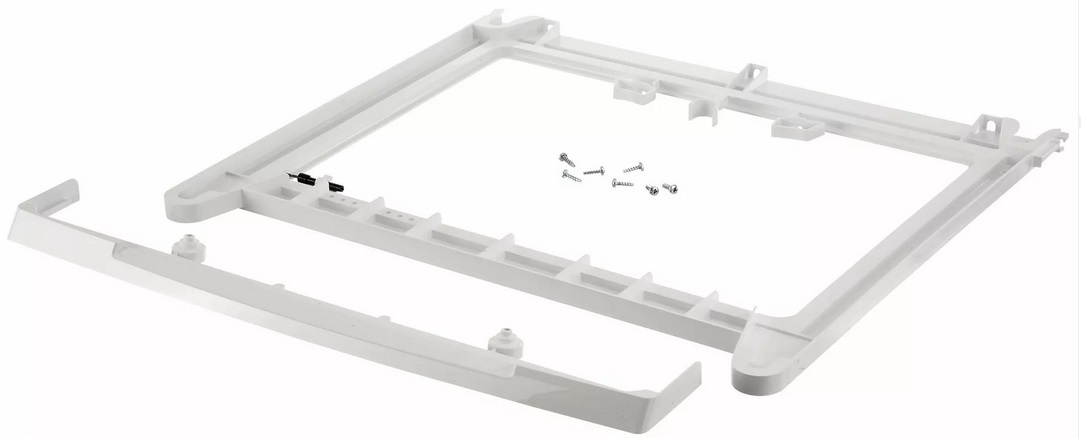
- Use wall mounting rails to secure the equipment to the column;
- Place the equipment in a niche or frame made of plasterboard or other similar materials.
Never take any risks and do not install the dryer on top of the washing machine without securing it.
It's essential to securely fasten the dryer to prevent damage during use. Also, don't swap the appliances; the washing machine should always be on the bottom, as it's much heavier and can't support the dryer's weight, unlike the other appliance.
The nuances of installing a dryer and washing machine in a column
Placing a washing machine and dryer in the kitchen without any preparation is quite difficult, especially because there are so many small details to consider. If you approach the process carelessly, you can damage both the built-in equipment and the floor covering. That is why it is best to carefully study the following recommendations and follow them strictly.
- Try to buy appliances in pairs—this way, you can choose machines with matching dimensions. If you're buying a dryer to go with an existing washing machine, its size should be either the same or slightly smaller.
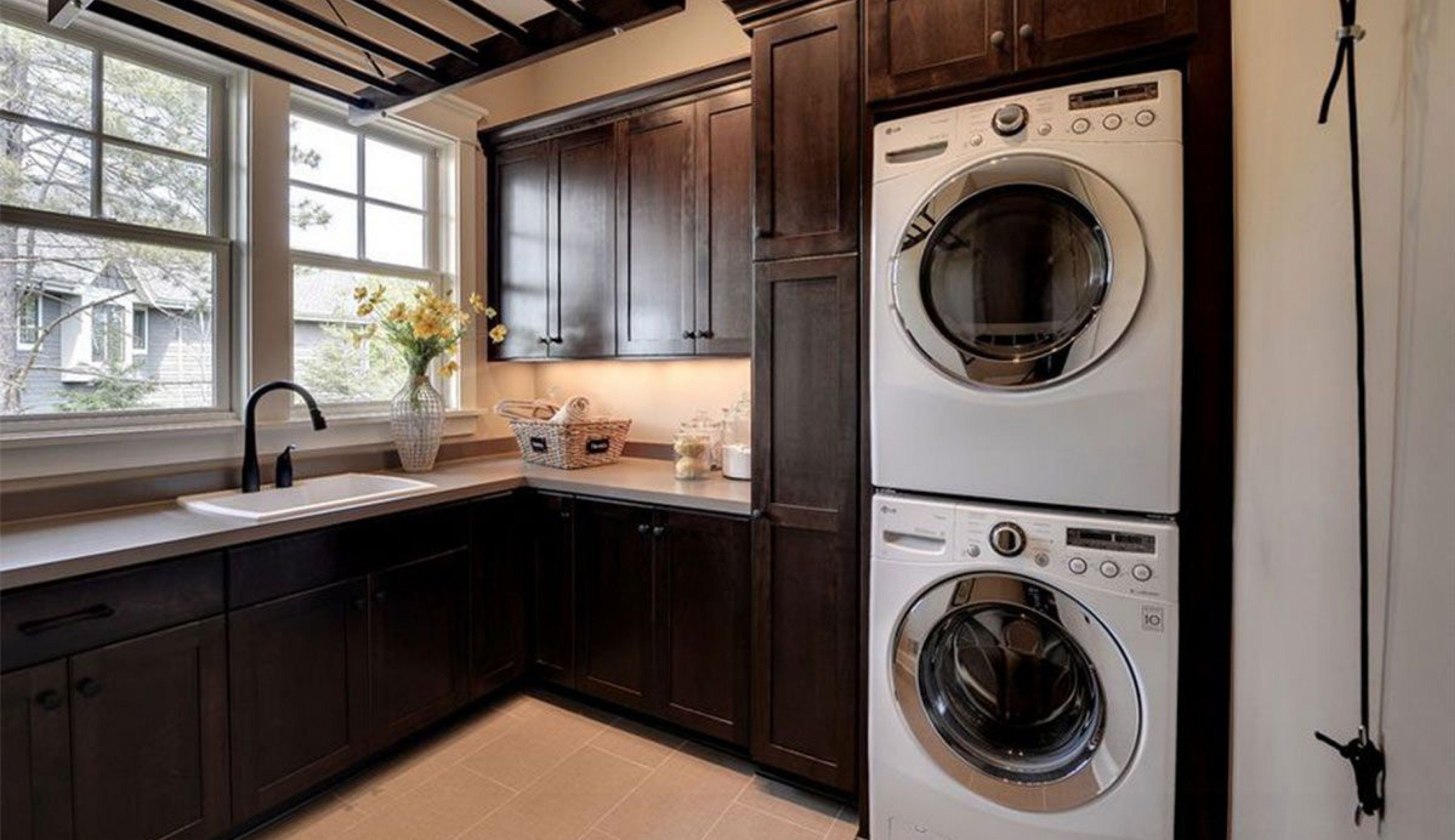
- Be sure to calculate the load capacity of the washing machine to select the correct mounting system. If the appliance will be installed in a recess, it's best to order a cabinet from a furniture workshop or have a professional assemble a durable tall unit for you. Alternatively, you can purchase all the necessary components to assemble the cabinet yourself.
- Finally, equipment should only be placed in close proximity to all necessary utilities. This includes dedicated grounded and moisture-protected outlets, sewer lines, and water pipes.
It's also worth exploring the nuances of different dryer models, as they vary significantly. Some units require a ventilation connection or a window connection. Others have a special condensate tank that must be emptied manually or configured to drain automatically.
Last but not least, it's important to avoid using appliances stacked together. As a precaution, using a dryer and washing machine at the same time is prohibited, as this can significantly shorten the lifespan of the appliances. Therefore, take your time and run your appliances one at a time to ensure long-lasting service.
Interesting:

Readers' comments
Headings
Washing machine repair




For buyers




For users


Dishwasher




Add a comment