
Which dryer is better: heat pump or condenser?
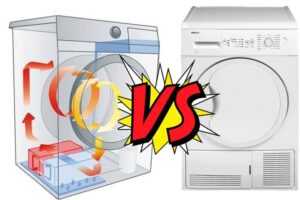 Currently, there are three types of tumble dryers on the market: vented, condenser, and heat pump models. The first type is almost impossible to find in stores due to its age, while the second and third are in high demand. Therefore, buyers are faced with a difficult choice: heat pump or condenser tumble dryers. To help you choose, we've prepared an article explaining which is better.
About the structure and operation of a condensation dryer
Condenser dryers allow homeowners to dry clothes without a water supply. Their key feature is that the device simply needs to be plugged into an electrical outlet to begin drying. Some unique models, such as the Gorenje DP7B, can be connected to a water supply to drain condensate, but this is the exception rather than the rule.
Such units consist of a number of components.
- The drum holds the clothes. During drying, it rotates with the help of a motor and drive belt, ensuring that the warm air blowing in dries the clothes evenly.
- A heating element that heats the air inside the dryer.
- A hair dryer that allows hot air to circulate through the drum of the machine.
- A pump required for pumping out condensate.
- A tank where condensate is stored.
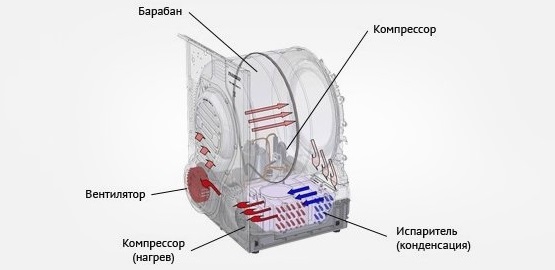
This dryer works as follows:
- The heating element significantly increases the air temperature inside the device;
- the hair dryer helps heated air get into the drum of the device;
- The high temperature in the device causes moisture to evaporate from the laundry;
- the pump removes moisture into a special tank, where it settles in the form of water;
- The dryer starts heating the air again to repeat the process from scratch until all the clothes are dry.
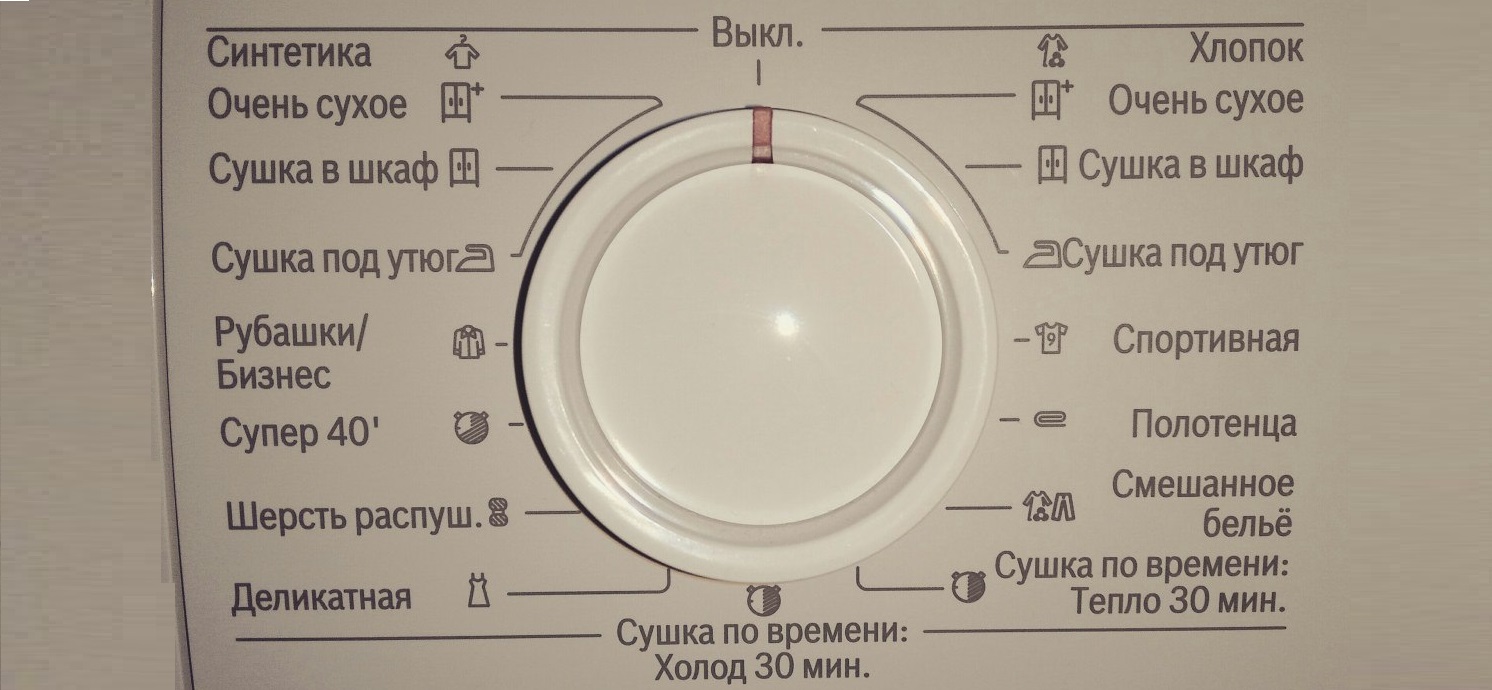
Depending on the model, customers may have access to the following additional features:
- drying clothes made of different materials, such as cotton, wool, jeans, etc.;
- drying to a certain level so that the clothes are completely dry or ready for ironing;
- delicate drying;
- accelerated work;
- timer for control;
- light ironing or anti-crease treatment of clothes;
- delayed start;
- drying shoes and outerwear.
A huge advantage of these dryers is their ease of operation. They're easy to install and even easier to use. All you need to do is regularly empty the condensate container when the machine indicates it's full, and clean the lint filter, which only needs to be done once every few weeks if the machine is used heavily.
If you connect the machine to the water supply, you won't even have to clean the tank of condensate; you'll only have to occasionally clean the lint filter.
The main disadvantage of condensation dryers is their increased energy consumption. Because this home assistant must constantly maintain a high air temperature, it consumes a lot of electricity. Therefore, before purchasing, it is worth considering whether you are prepared to pay a significant increase in your electricity bill, or whether it would be better to look for a more energy-efficient model.
Equipment equipped with heat pumps
Heat pump dryers are modern appliances that combine two types of moisture removal: condensation and ventilation. In these models, the moist air is not exhausted from the dryer after the drying cycle. Instead, the dryer passes this air through a heat pump for reuse. This means that the moisture either remains in the drum or is discharged into the drain, and the previously used air is reheated to continue processing the laundry.
A huge advantage of devices with such a system is the implementation of a closed heat exchange system. This type of device draws in and heats air much less frequently, therefore consuming less energy and allowing users to save on drying costs.
The design of such devices is more complex than those described above.
- The drum for clothes, which, as in condensation dryers, rotates with the help of a motor and a drive belt.
- The evaporator is the area at the bottom of the unit where the air loses moisture and becomes cooler so it can be reused.
- A pump with a condenser in which the air is heated again.
- A fan is needed to redirect warm air into the storage compartment.
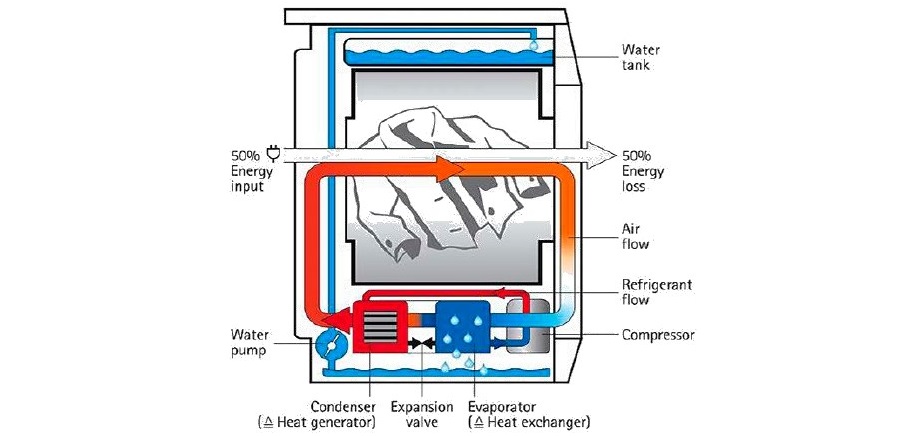
The complete operating cycle of the device consists of the following points.
- The condenser heats the air.
- The fan redirects heated air into the drum to the wet items.
- The clothes are dried, the hot air causes the moisture to evaporate.
- The moist air passes into the evaporator, loses moisture, and cools. The condensate drains either into the water supply or into a container.
- Dry air goes back into the pump, and then the work cycle starts again.
Machines with a heat pump dry clothes more gently, as the heated air temperature typically only reaches 40 degrees Celsius and is gentle on items made from any type of fabric.
The evaporator also maintains a low temperature—just 15-20 degrees Celsius. Furthermore, the processed moist air flow doesn't cool very much—the temperature typically drops to just 30 degrees Celsius. Because of this, the air reenters the pump at a cooler temperature, so it warms up more quickly.
A heat pump dryer is specifically designed to be gentler on both clothes and energy consumption. It helps save on energy bills and dries clothes more gently. However, due to its environmentally responsible nature, this type of dryer is significantly more expensive than condenser models.
Choosing a device
After this article, any question about which is better, a heat pump dryer or a condenser dryer, should be answered. The current situation is that heat pump dryers are far superior to any other type of dryer.
This machine dries laundry and clothing carefully, keeping them in good condition longer. It doesn't consume much electricity, helps save on electricity bills, and doesn't put a strain on the grid, so there's virtually no risk of a short circuit when using it. Finally, modern models are equipped with a number of useful programs and functions that make drying clothes simple and convenient.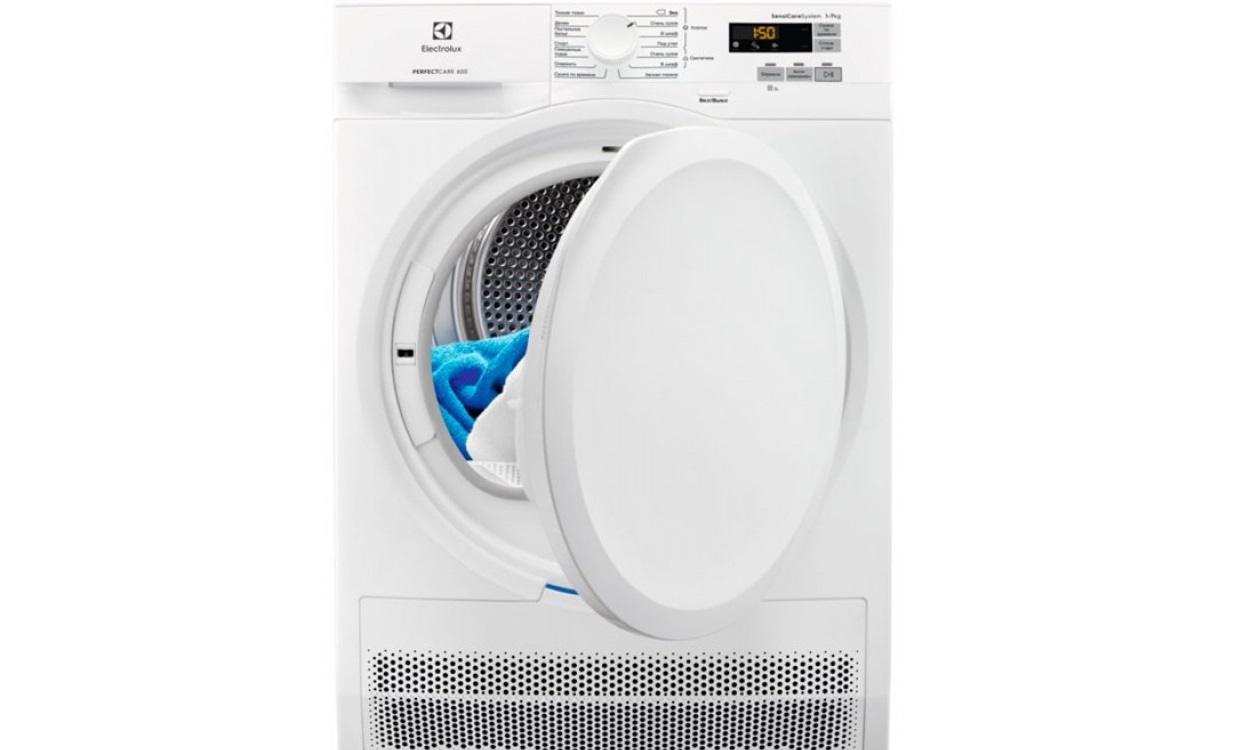
It has exactly two obvious drawbacks, both stemming from the unit's complex design. High-tech devices always cost more than their conventional counterparts, so it's no surprise that a model with a pump will cost a pretty penny. Furthermore, spare parts and repair technicians for these dryers aren't always easy to find. But even with these drawbacks out of the way, it's clear that a heat pump dryer is far superior to a standard condenser dryer.
Interesting:

Readers' comments
Headings
Washing machine repair




For buyers




For users


Dishwasher




Add a comment