
Knocking noise when the dryer is running
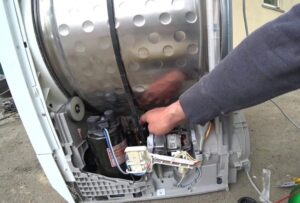 No dryer can operate silently. Humming noise is caused by the drum rotating, the fan operating, and other processes. Normally, a dryer's noise level should not exceed 70 dB, although this will vary depending on the model.
A steady humming sound is considered acceptable during operation. A specific knocking sound from a dryer is not considered normal. Let's look at what might be causing the rattling noise and which dryer parts need to be checked.
Let's look into the reasons for the "bad" sound
First, you need to determine the nature of the knocking sound. If it's a uniform, barely perceptible hum, then the machine is fine. When the dryer makes a distinct knocking sound, accompanied by vibration of the body, diagnostics should not be postponed.
In fact, a dryer can make a knocking noise for a variety of reasons. Each guess will need to be verified.
- The machine isn't level. If installed incorrectly, the dryer will rattle, vibrate, and shift. Therefore, it's crucial to level the unit before using it.
- Overloading. When using a dryer, it's crucial to adhere to the manufacturer's maximum load capacity. If the drum is rated for a maximum of 6 kg of laundry, don't try to cram more items in. This will ultimately lead to damage. Meanwhile, the dryer will make a loud banging noise.
- Unbalance. Large items can clump together during the drying process. The "ball" of laundry will bounce around inside the machine, hitting the drum walls, and making a banging sound. In this case, the solution is to evenly distribute the laundry inside the dryer.
- Foreign object inside the drum. Coins, keys, or hairpins left in a pocket can easily end up in the machine and cause a rattling noise. In this case, don't worry—just remove the rattling items from the dryer.
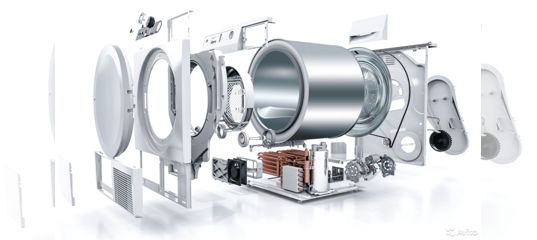
- An object caught between the drum and the tub. This is the worst-case scenario of the situation described above. For example, a bra underwire, a bobby pin, or a nail can easily get stuck even deeper and end up in the dryer tub.
- A stretched drive belt. When the elastic breaks, the dryer stops running and the drum stops spinning. If the belt is stretched, the machine will continue the cycle, but will make a loud, whistling noise.
- Damaged support rollers. This happens when the machine sits idle for a long time. The rollers become deformed and flat. The solution is to replace the components.
- Bearing wear. This condition is characterized by loud knocking and grinding noises when the dryer is running, especially when the drum is spinning at maximum speed. Replacing the bearing assembly will require almost complete disassembly of the dryer.
If you notice a rattling noise in your dryer drum, first check the most basic things. Check to see if your dryer is level and if any items are lumped together. Also, make sure there's no foreign object inside that's causing the noise.
Dryer diagnostics are performed from simple to more complex.
You can also check the drive belt yourself and, if necessary, replace it. The job doesn't require any special knowledge or skills. For bearings and rollers, it's best to seek professional help.
Changing the belt yourself
This is one of the problems that's easy to fix at home. The rubber band is what keeps the dryer drum spinning, causing it to rotate. When the drive belt stretches, the mechanism malfunctions and the dryer begins to knock and creak.
To check the condition of the drive belt:
- unplug the dryer;
- If the machine is connected to a sewer system, disconnect the drain hose;
- move the dryer away from the wall;
- remove the top cover of the CM housing by unscrewing the bolts that secure it;
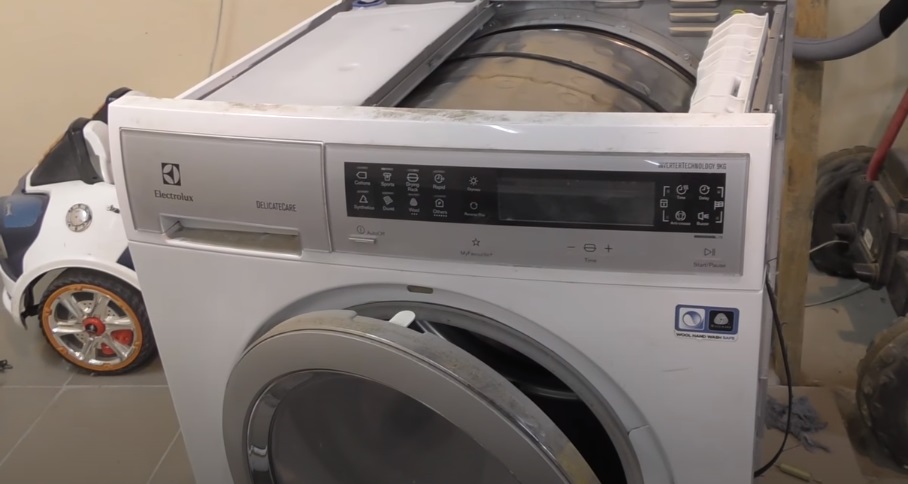
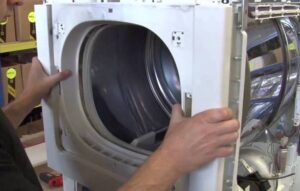
- Unscrew the screws holding the side or back wall (depending on the CM model), move the panel to the side.
Inspect the drive belt. Its stretch is visible to the naked eye. The rubber will be loose and may also appear frayed. The solution is to replace the belt.
The algorithm of actions will be as follows:
- detach the shock spring from the dryer motor;
- remove the drive belt from the motor pulley;
- remove the belt from the drum;
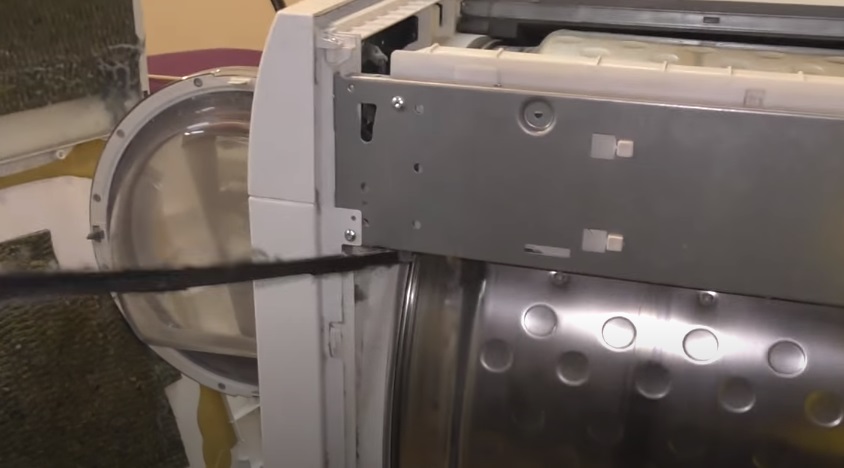
- press on the drum, moving it back a little (due to this, a small gap will form between the front wall of the housing and the drum);
- insert the new drive belt into the gap;
- pull the rubber band through the rollers, gently rotating the drum with your hand;
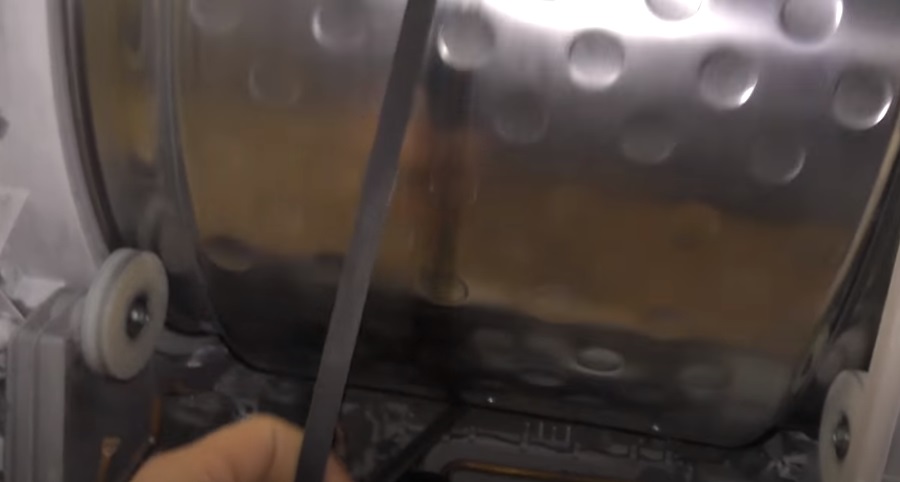
- move the drive belt into its place (closer to the middle of the drum) and pull it onto the engine pulley;
- put the shock absorber spring back in place.
To check the drive mechanism, rotate the drum by hand. The drum should rotate smoothly, without any unusual noise or creaking. If all is well, reassemble the dryer body in reverse order.
If you notice your dryer making a noise, don't immediately call a technician. Often, unusual noise is caused by simple reasons: overloading, a foreign object caught in the drum, or an imbalance. These problems are easy to fix yourself.
You can also remove any foreign objects from the dryer's drum yourself and replace the drive belt. If the bearing assembly is worn out, a complete disassembly of the machine will be required, so it's best to have it done by a professional.
Interesting:


Readers' comments
Headings
Washing machine repair




For buyers




For users


Dishwasher




Add a comment