
Placement of a dryer in a small apartment
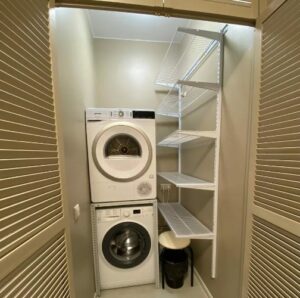 Large homes and apartments are always easy to install large appliances. However, installing a dryer in a small apartment can be quite challenging, as users often have to spend a long time finding a place for a washing machine, let alone a dryer. However, a small living space isn't a reason to give up on modern "home helpers," as there are a number of excellent installation options. Let's look at the most popular ones that will help you conveniently organize your home.
Room requirements and dryer installation options
The advantage of condensation dryers is that they do not require connection to a water supply or sewerage system. Moreover, such equipment can be installed anywhere as long as there is a grounded outlet with a separate circuit breaker.This is because a large machine consumes a lot of electricity, placing a significant strain on the line. To avoid an emergency, the power must be able to be automatically shut off at any time.
However, automatic tumble dryers should not be placed in small rooms with poor ventilation, as most devices generate a lot of heat during drying. If the heat has no way to escape, it will negatively impact both the dryer and the surrounding items. Therefore, the unspoken installation rule is to install the dryer in a room at least 2 by 2 meters. Installation methods vary depending on the type.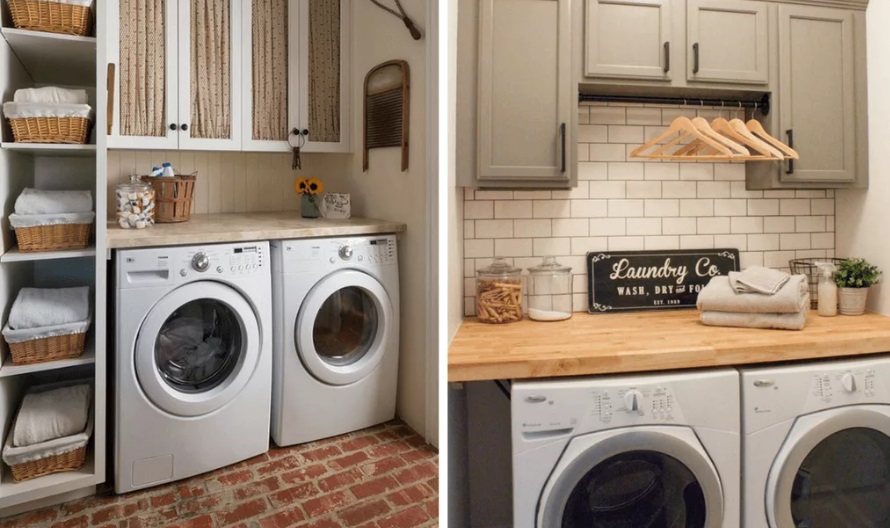
- Linear installation in a single row. In this case, the washer and dryer are installed next to each other, requiring ample space in the room. Suitable locations for this type of installation include the kitchen, hallway, bathroom, or closet. This type of installation is considered very practical, as the appliance's surface can be used for other household tasks, such as cooking, by installing a shelf or cabinet above it.
To save space, the machine can be installed in kitchen furniture under the countertop.
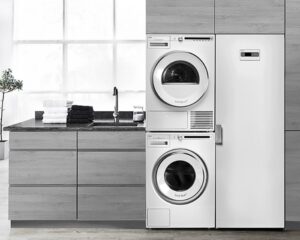
- Vertical stacking. To achieve this, the appliances must be stacked on top of each other. The washing machine should always be on the bottom, as it weighs significantly more than the dryer. This type of installation requires careful floor preparation, which must be level and durable, preferably concrete. Uneven, unstable, or slippery floors will cause excessive vibrations, which could cause the appliances to fall.
To prevent the washer from falling to the floor during operation, it must be securely fastened to the top of the washing machine. You can't simply stack the machines on top of each other without additional hardware and fasteners, which can be purchased at a hardware store or made yourself. If you're unsure, it's best to call a repair technician to attach special fasteners to the washer and mount the dryer on top of them. This is the only way to ensure these expensive "home helpers" are safe during their cycles.
In which room and how should I place the dryer?
Despite the small size of bathrooms, housewives often try to find a place for a dryer and washing machine there. Most often, in this room there is only enough space to install a sink and a shower stall or a bathtub. As a solution, users sometimes install a washing machine instead of a cabinet under the sink. This is quite practical, as it leaves the room with a bathtub or shower and sink, plus the washing machine, which practically does not hinder movement in the room.
But what if the user wants to place a dryer in the bathroom so that the appliances are close together? Most often, the only way to achieve this is to install the appliances in a column. This option is feasible, but it will likely require the removal of the sink and the mirrored cabinet that typically hangs above it. This leaves only the bathtub and appliances in the room.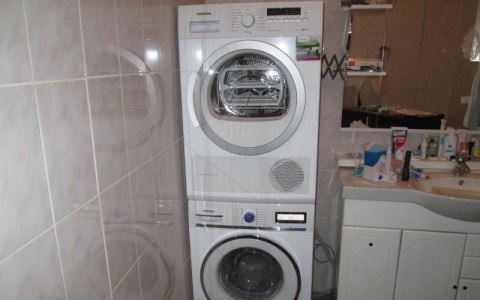
An alternative option is to replace the bathtub with a shower stall or shower enclosure. A shower takes up much less space than a bathtub, so you can fit not only a shower stall but also a tall cabinet or niche for a washer and dryer.
This solution is ideal for those with a combined bathroom, where a shower and toilet are installed in the same room. A shower stall is also very convenient because its installation in place of a bathtub frees up space for both appliances and cabinets. A bathroom without furniture is not ideal, as you need somewhere to store household chemicals, personal hygiene products, dirty laundry, and much more. However, this option is not suitable for those who are accustomed to taking baths. In this case, you will either have to give up your habits or find another place for the washer and dryer.
For example, you might consider the kitchen, which typically has plenty of space for appliances. This can be challenging if the kitchen is also small and already cluttered with a refrigerator, stove, and sink. In this case, a column-style installation might be a better option, as it will save space.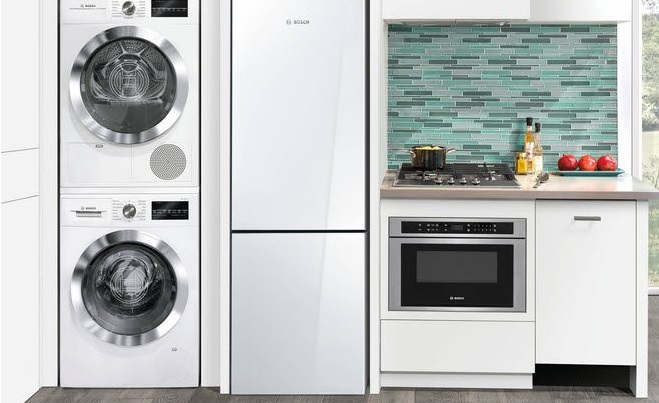
To maintain a unified style, users either create their own tall cabinets or order them from a store. This way, the furniture complements rather than disrupts the kitchen's design, especially if the cabinet has doors that can be used to conceal appliances. However, if the appearance of the "home helpers" fits the kitchen's style, doors can be omitted, significantly reducing the cost of the unit.
A tall cabinet allows your washing and drying equipment to take up minimal space, look great, and be conveniently located near all necessary utilities located behind the cabinetry. An additional benefit is the simplified drying process: you can remove wet items from the washer after the cycle is complete and transfer them directly to the dryer. This eliminates the need for a basin for wet laundry.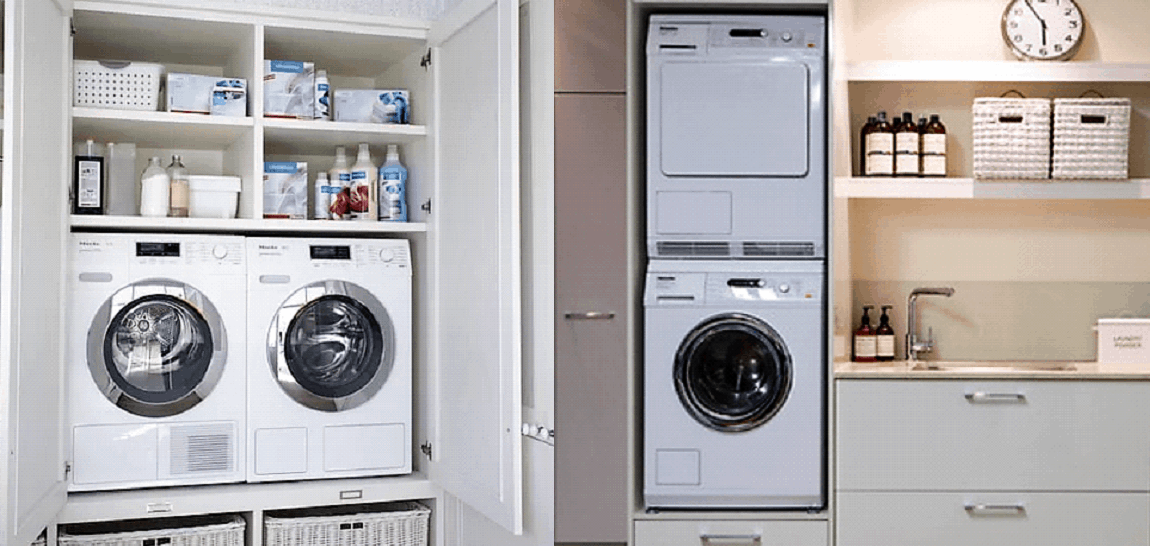
Household appliances are also sometimes installed in the entryway or hallway, where a large wardrobe that takes up almost the entire space is placed first, and then a dryer is placed in a special compartment. This is very simple because the dryer often only needs a free outlet, so the user won't have any trouble connecting to utilities. An additional advantage is that the wardrobe doors will conceal the dryer, eliminating the need to try and blend it into the home's interior.
Finally, a loggia or balcony is sometimes used to house a dryer. In the latter case, this is possible if the balcony is glazed and the winter temperature is 10 degrees Celsius or higher. The equipment clearly won't interfere with anyone on the balcony or loggia, so this option is worth serious consideration if you have limited space in the bathroom, hallway, or kitchen.
As for the bedroom and living room, it's best to avoid installing noisy appliances there. Firstly, they will interfere with normal living, and secondly, you'll have to think carefully about where to place them so they won't spoil the room's design.
Full-size dryer vs. washer-dryer
Even for a small house or apartment, it's preferable to purchase a separate dryer and washing machine, as this is the only way to effectively dry and wash clothes without restrictions. The device allows you to dry many more items at once than can be processed in hybrid models. Washing machines with a drying function can typically dry approximately 2-3 kilograms less than their maximum capacity. If you have a separate dryer, you can dry the same amount of laundry in it in one go as you would have just washed in a separate washing machine, saving you significant time.
Stand dryers have a large drum, even if they're inexpensive, like the Indesit YT CM08 8B for $310 with a 8-kilogram capacity. Premium units typically have a drum capacity of over 10 kilograms. This figure is ideal for drying cotton items, which are lighter than other fabrics. If you're drying jeans or other synthetic or blended items, the load will be smaller, but only by a couple of kilograms. Even so, the capacity is significantly larger than that of a washing machine with an automatic drying option.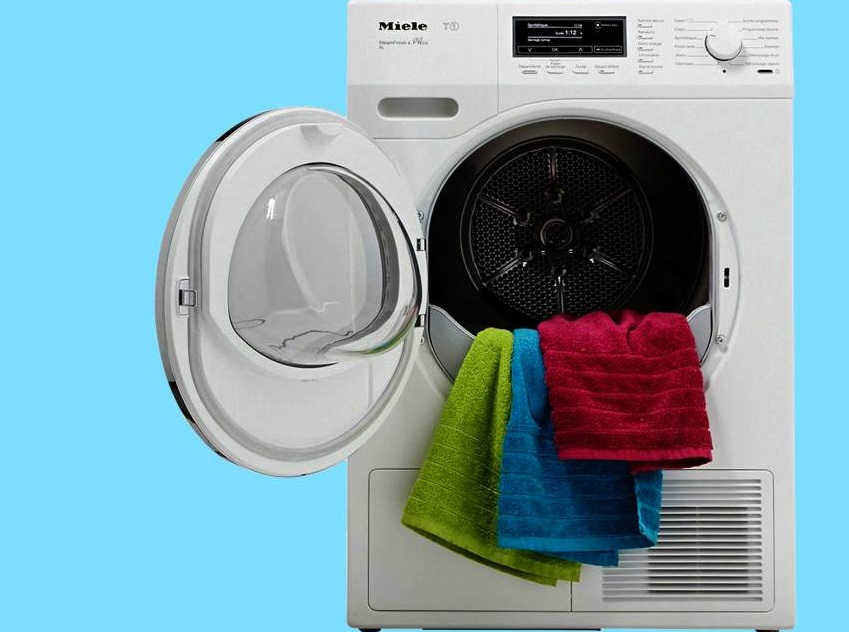
It's also worth noting that standalone dryers offer a variety of operating modes. Even budget-friendly models offer significantly more cycles than hybrid units. This allows for effective care of a wide variety of clothing.
Freestanding tumble dryers have cycles for cotton, synthetic, wool, footwear, winter clothing, bedding, and more.
Some dryers also often offer additional features, such as ironing aids, quick cycles, wrinkle-free treatment, and more. Furthermore, some dryers can eliminate tobacco, food, and smoke odors. Finally, you can find options that can steam clothes to refresh laundry that's been sitting in the closet for too long.
Using separate dryers has another significant advantage: they prevent wrinkles, as the manufacturer has included a wrinkle protection feature. Therefore, even on intensive settings, items won't develop creases and wrinkles that will require a lot of ironing later.
Standalone dryers also feature a delicate cycle. This cycle rotates the drum very slowly, so clothes don't even need ironing after use.
Interesting:



1 reader comment
Add a comment
Headings
Washing machine repair




For buyers




For users


Dishwasher




How to maintain your dryer hood during the winter