
Which dryer is better: vented or condensed?
 Having a modern washing machine in the home is no longer a luxury: dirty clothes, shoes, and hats are clean in just an hour or an hour and a half. The next step is drying. Appliance manufacturers have solved this problem, too: no more need for clotheslines on the balcony or bulky dryers; simply buy another "home helper." However, there's still something to consider: which dryer should you choose: a vented or condenser dryer, one with or without a heat pump, what are the differences between them, and which is better?
Conventional ventilation or modern condensation?
For people in Europe and America, tumble dryers are a familiar household appliance. They appeared in the 1940s and remained virtually unchanged for many years. The only changes were the introduction of modern designs and the replacement of mechanical controls with electronic ones. While these devices arrived in post-Soviet countries in the 2000s, they're still not found in every home.
There are several reasons:
- small apartments where it is difficult to place a large amount of equipment;
- the need to pay for electricity: the sun and wind dry clothes for free;
- distrust of such household appliances.
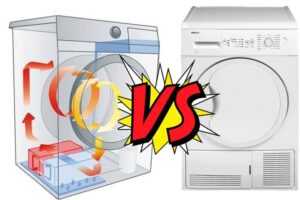
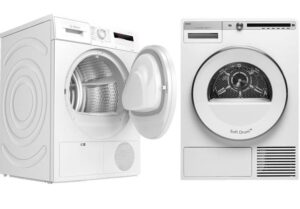
If you're desperate to buy a dryer, consider the available models and decide which is best. Dryers are categorized as either vented or condensed, and each has its own advantages.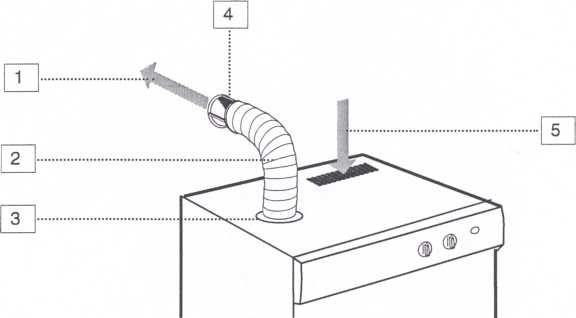
Ventilation. Requires connection to the home's ventilation system: the appliance's pipe is routed either directly to the outside or through a corresponding opening in the bathroom. Installation requires additional installation work, often quite complex and expensive, and once connected, moving the appliance to another location is virtually impossible.
Residents of countries where the air temperature drops below zero should also not choose this model, as using such a dryer at sub-zero temperatures is prohibited.
The reason is simple: the condensate discharged outside will freeze on the outlet pipe, which will lead to breakdown of the unit.
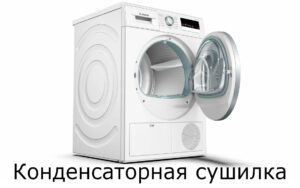
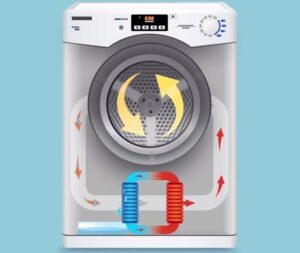
Condenser. A more convenient dryer model that doesn't require complex components. Moisture from wet items passes through a heat exchanger, which converts it back into liquid. This liquid is collected in a reservoir, from where it is removed at the end of the cycle. This is done manually or automatically, if a modern model is equipped with a special device that discharges the water directly into the sewer pipe.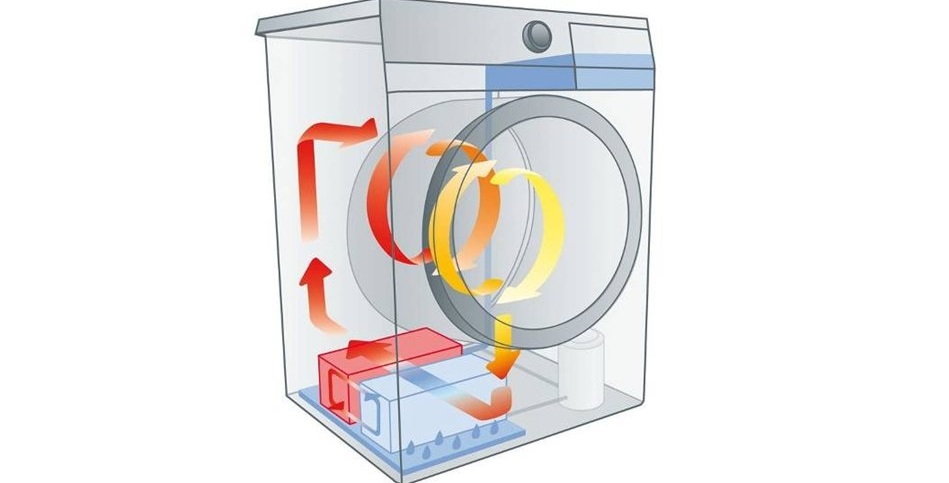
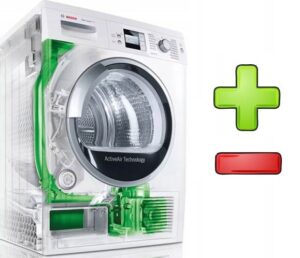
Heat pump. A more modern and convenient condensing model. It features a dedicated compressor designed to cool the moist air coming from the drum. This achieves three goals:
- the condensate is converted into liquid;
- excess heat is removed from the incoming moist air;
- a new batch of air is heated for further entry into the drum.
The downside of heat pump dryers is their cost, which is significantly higher than condenser and vented models. However, they are more energy-efficient and indispensable if you don't have a balcony. Modern dryers can easily be installed on top of a washing machine, saving space in small apartments.
Condenser dryers are the ideal choice for families living in the middle zone and wanting to use their equipment year-round. Modern models can dry up to 8 kilograms of laundry in one hour, and the availability of additional options will significantly facilitate subsequent clothing care.
What to look for when buying a dryer?
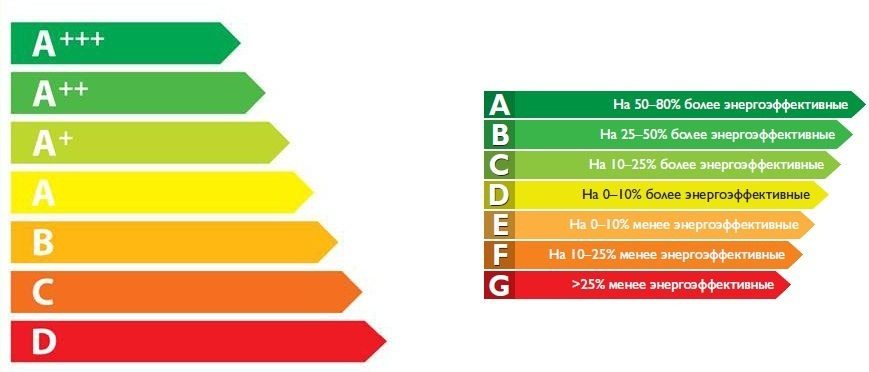
The first and most important thing to consider when purchasing a tumble dryer is its operating cost, or energy consumption. This is indicated by the energy efficiency class listed in the product's technical data sheet. Most modern household appliances are quite energy-efficient and have an energy efficiency rating of A, but some tumble dryers are still sold in class C. It's best to avoid these, as their energy consumption and subsequent bills will be exorbitant: a tumble dryer consumes 3-4 times more energy than a washing machine.
Machines with energy efficiency class A have a "+" sign next to the letter. The more "pluses" the machine has, the less electricity it consumes during operation. On average, the figures are as follows:
- A+++ — 150-200 kW/year;
- A++- 160-230 kW/year;
- A+ — 180-250 kW/year;
- A - from 200 to 290 kW/year;
- B – from 450 to 650 kW/year;
- C – over 650 kW/year.
Energy efficiency class affects the cost of household appliances, but only slightly: choosing an economical assistant is easy even in the mid-price category. Another important parameter is the programs. They allow you to change the drying time, select the fabric type, and adjust various settings. Manufacturers also equip their models with additional options, such as "Steam Smoothing," "Airing," and others.
The next selection criterion is the loading type. Like washing machines, it can be front-loading or top-loading. This doesn't affect drying performance, but it does affect the placement of the unit. A front-loading machine can be placed on top of a washing machine, while a top-loading machine requires installation on a low surface.
For small apartments, the dimensions of the product will also be important. Average drying chamber sizes:
- width from 55 to 70 cm;
- depth from 55 to 65 cm;
- average height 85 cm.
In addition, the drum volume is also important: with a capacity of 100 liters, a household appliance can dry 5-6 kilograms of items at a time.
Dryers are quite noisy; even the most reputable manufacturers have failed to reduce noise levels below 65-70 dB. Compared to other household appliances, a dryer produces noise similar to that of a vacuum cleaner. This should be taken into account when installing them: it's not recommended to place them near a bedroom, a child's room, or a study.
Interesting:

Readers' comments
Headings
Washing machine repair




For buyers




For users


Dishwasher




Add a comment