
Differences between heat pump and condenser tumble dryers
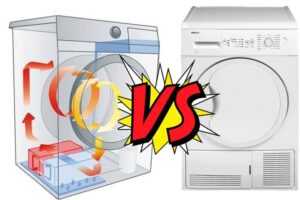
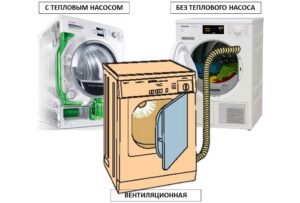
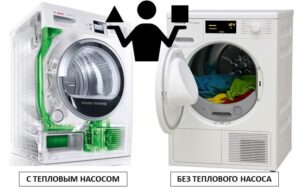 Nowadays, there are many technological advances that can make life easier for modern homemakers. These include tumble dryers, which are divided into three main types: vented, condenser, and heat pump. Vented dryers are not very popular because they take up a lot of space and are not well-suited to harsh winter climates. Other types of dryers are a different matter! This article will discuss the differences between heat pump and condenser dryers, which can influence buyers' choices.
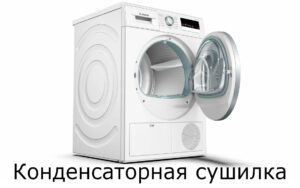
Features of condensation type machines
A condensation dryer heats the air using a tubular electric heater (TEH), which consumes a significant amount of energy. The TTH alone can consume approximately 2.5 kilowatts per hour of operation.
The combined power consumption of a washing machine itself is approximately 4.5-5 kilowatts. If appliances are connected to the same or adjacent outlets, the wiring is subject to a very high load. Not every cable can handle this voltage, which can lead to short circuits or fires. Therefore, connecting such an appliance not only entails high energy consumption but also poses a potential hazard if a dedicated outlet is not provided and the cable is properly sized and protected by a circuit breaker.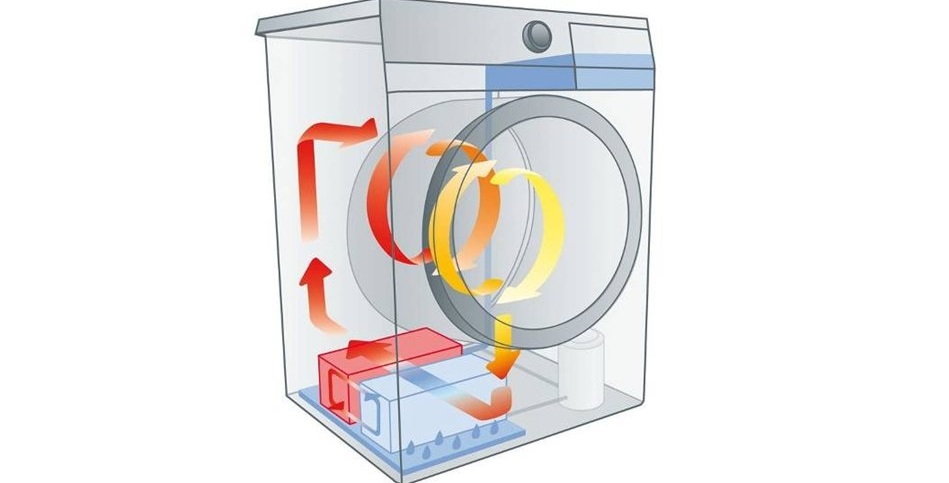
A tumble dryer with a tubular electric heater works as follows:
- The heating element heats the air, and it then absorbs moisture from the washed laundry;
- heated air, having absorbed moisture, ends up in the condenser;
- To ensure condensation occurs, the machine draws air from the room it's in. This air cools the heat exchanger;
- After the heat exchanger has cooled, condensation of moisture from the warm air begins.
Since there is an active heat exchange process going on in the room, it can become very hot there. In the cold season this may be good, but in the heat, a heated room is completely unnecessary. Despite all the disadvantages outlined, a significant advantage of such equipment is its low price compared to other types of dryers.
Modern heat pump dryers
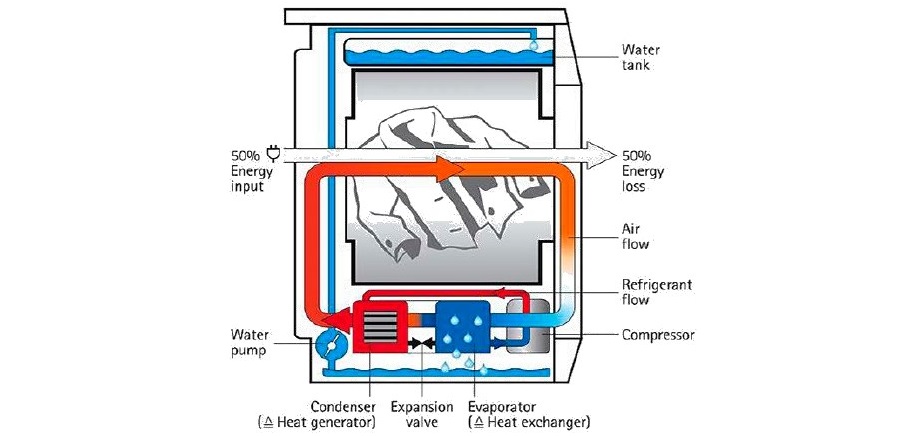
What's the difference between heat pump dryers and condenser dryers? These dryers don't have a tubular electric heater. Simply put, they consist of a "cooler" and a heat pump. The refrigeration section contains a compressor, a condenser (a zone with higher pressure), and an evaporator (a zone with lower refrigerant pressure).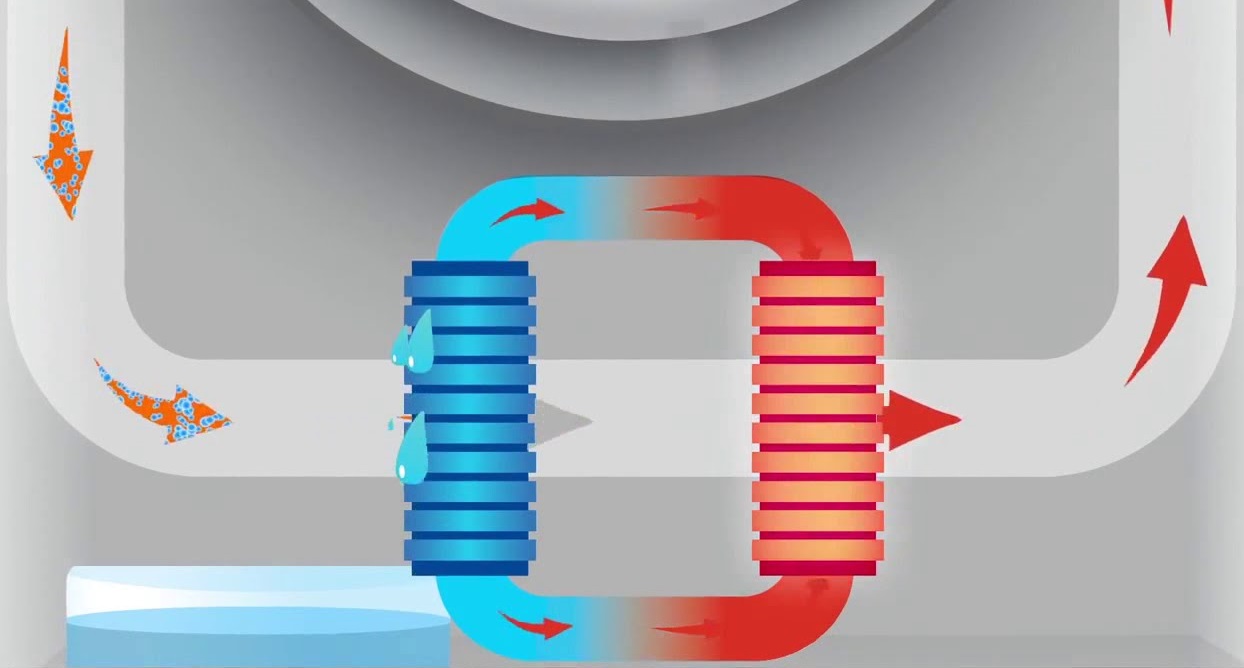
Let's try to describe the operating principle of this device in the simplest possible way.
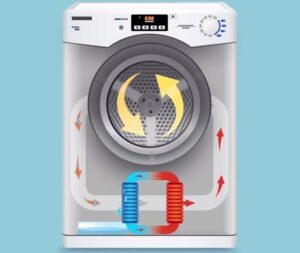
- Air from the drum first passes through a cooling radiator or evaporator radiator. Because the radiator is very cold, moisture condenses on it.
- The air then enters the condenser radiator. Since this section of the "refrigerator" is warm or even hot, the air there heats up.
- The heated air begins to absorb moisture again and passes through the evaporator core again. This is how the moisture is released again.
- The process continues in a circle. The air continues to heat up and then cool down.
This type of equipment has many advantages. Its power consumption is significantly lower than that of condensing units, with an approximate energy consumption of 600-1100 watts. Furthermore, these units do not heat the air in the room where they are installed.
Since drying does not require such high temperatures as in dryers with heating elements, the laundry is exposed to less stress and lasts longer.
The disadvantages include a relatively high cost compared to other types of equipment, as well as a longer drying time. Machine maintenance is also more difficult, as its design is more complex and not all technicians have mastered this type of equipment.
Which dryer option should I choose?
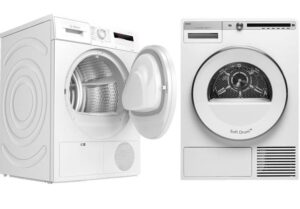
Choosing one of the available dryer types is quite difficult. Each has its pros and cons. But by understanding the differences between condenser and heat pump dryers, you can draw some subjective conclusions.
- Condenser dryers are ideal for those looking to save money and for whom functionality is less important. These dryers are ideal for large loads of clothes that need to be dried in a minimum amount of time. Models such as the Electrolux EW6CR527P, Gorenje DP7B, and Candy GVS4H7A1TCEX-S are good choices.

- A heat pump dryer is ideal for those who can afford to pay more but don't want to invest in the appliance over time. This type is recommended for those who prefer delicate clothes that require a low temperature and a long drying time. The following models are good choices: Bosch WTW85540EU, Samsung DV90N8287AW, and Siemens WT47Y782OE.
Ultimately, both types of dryers are high-quality and functional, and they do an excellent job. Choosing the right type and model depends on your budget, the room you'll be using the dryer in, and the quantity and quality of your clothes.
Interesting:

Readers' comments
Headings
Washing machine repair




For buyers




For users


Dishwasher




Add a comment