
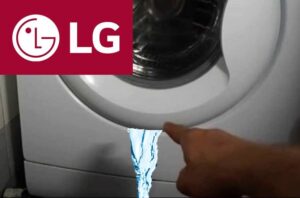
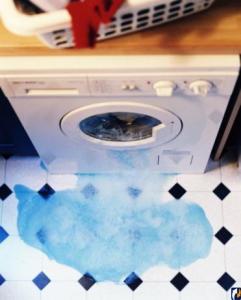
The washing machine door is leaking.
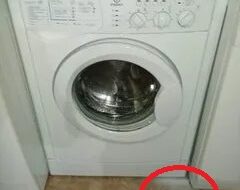
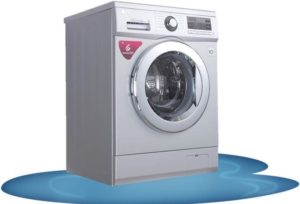
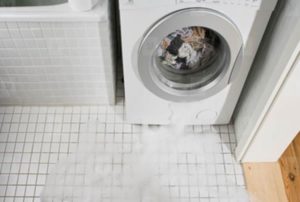 If you notice your washing machine leaking from under the door, it's best to fix it immediately. Don't delay repairs by placing an empty container or rags under the door; over time, the leak will only worsen. Let's look at what to do if you discover a problem, the possible causes of the leak, and how to resolve the problem of water leaking from the drum.
Dirt on the hatch door
To eliminate a water leak, you need to figure out what caused the leak. In some cases, a leak is not due to a malfunction of the machine, but to banal contamination of the machine door. Limescale deposits accumulate on the lower part of the door glass. While the buildup is thin, it doesn't affect the washing machine's normal operation. However, many homeowners simply don't notice it, and over time, the deposits become firmly entrenched on the glass as a limescale crust.
The resulting buildup will only thicken. When it reaches a few millimeters in thickness, the door will no longer fit snugly against the washing machine body, and the buildup will prevent the door from closing properly.
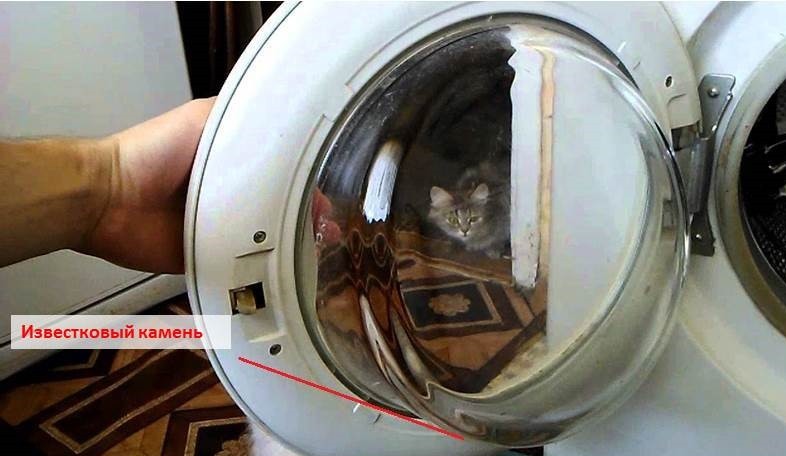
You can detect limescale build-up by carefully examining the convex part of the hatch from below.
There's only one conclusion: water is leaking from under the washer door due to a loose seal between the door and the sealing cuff. In this case, the problem is easy to solve. Carefully inspect the door surface, find the area where the limescale has formed, and scrape it off with a wire brush. Once most of the scale has been removed, remove any remaining residue with an abrasive sponge or regular cloth. After cleaning the glass, the door will close smoothly and the machine will resume normal operation.
The cuff is damaged
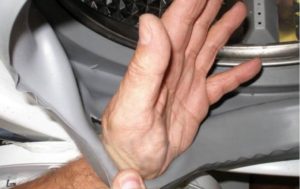 In the vast majority of cases, water leaks from a washing machine are caused by damage to the rubber seal around the drum loading opening. The seal tends to wear out, causing small cracks, holes, and abrasions to form on its surface. A damaged seal cannot perform its functions one hundred percent, resulting in water leakage from the machine drum..
If water is leaking down the front of the washing machine, make sure it's coming from the door and not the detergent drawer. Small streams of water may originate from the dispenser, form a thin stream around the control panel, and then run down to the door, creating the appearance of a leak originating there.
If you're certain the hatch door is leaking, it's worth examining the seal. Leaks can occur due to severe wear of the seal. The system should seal when the hatch is closed, but if the seal is chipped or cracked, this won't happen. The seal doesn't necessarily have to be torn; in some cases, it can become wavy or excessively stiff, which can also cause leaks.
If damage is found during inspection of the sealing cuff, the rubber should be replaced to eliminate the leak.
Replacement of the cuff You can do it yourself or hire a professional. If you thoroughly study the process of installing a new rubber seal and removing the old one, replacing the element will be straightforward.
Sometimes a leak can be caused by a foreign object lodged between the sunroof glass and the seal, thereby compromising the seal. If the seal is flexible and appears to be in good condition, try simply cleaning the seal itself and the sunroof surface in contact with it to remove any debris, such as lint, hair, fabric particles, or undissolved laundry detergent.
Problems with the door lock or hinges
In rare cases, water leaks from the washing machine door due to a manufacturing defect or careless use of the unit. The root cause of a sunroof leak could be a deformed machine hinge. That is, the hinge mount had bent slightly, and this defect was the cause of the door not closing properly. And a leaky connection between the hatch and the body, as we've already understood, will inevitably lead to a leak.
When this happens, fixing the situation is easy. The solution is to replace the hinge with a new one. Especially savvy owners can try to determine where the deformation occurred and try to straighten the surface without replacing the part. To replace the fastener, you'll need two screwdrivers (a Phillips head and a slotted head) and an open-end wrench.
You can buy a loop in a specialized store or order it through online websites.
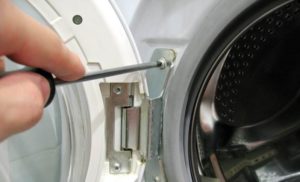 The washing machine may also leak due to a faulty door lock. The cause of the lock's failure will be strictly individual, depending on the make and model of your washing machine. In some cases, this is caused by a broken spring, while in others, it's a torn gasket, causing increased play. It's best to entrust the troubleshooting to a professional to avoid wasting a lot of time digging around inside the machine. However, if you still want to fix the problem yourself, follow these steps:
- Using a Phillips screwdriver, remove the plastic panel located on the inside around the glass of the hatch door;
- loosen the door fastening and detach it from the body;
- examine the lock, check the movement of the movable tongue;
- If wear or other damage is detected on elements, repair them.
If you notice water leaking from under your washing machine's hatch, take action immediately. You can investigate the leak yourself or call a technician who specializes in washing machine repair. It's important to fix the problem immediately after detection to avoid more serious leaks and minimize the risk of electric shock.
Interesting:

3 reader comments
Add a comment
Headings
Washing machine repair




For buyers




For users


Dishwasher




Thank you
Thank you.
Thank you