You don't need to be a master of washing machines or have extensive experience repairing them to understand that a drain pump is needed to remove wastewater. It's also clear that if your washing machine's pump is leaking, it's best not to use your "home helper" unless you want to flood your floors and the neighbors below with dirty water. In this situation, you should diagnose and repair the damage yourself or have it repaired by a service center technician. We'll take a detailed look at the causes of the leak and what to do in such a case.
In the first minutes after the problem is detected
If you discover that your washing machine's drain pump is leaking, you need to take decisive action as quickly as possible. This is due to the fact that not only the aforementioned drain pump can leak, but also the pipes, tank, and other key components of the device. But immediately after the problem is discovered, there is no time to look for the cause of the leak, because a number of urgent actions need to be taken.
Unplug the washing machine. If you can't access the power plug, turn off the power to the appliance by turning off the power in the electrical panel.
For safety reasons, never touch the equipment with wet hands or step into a puddle under the machine.
After de-energizing the equipment, you can disconnect it from the water supply.
After removing water from the floor and placing rags under the washing machine, remove the waste filter and drain the liquid from the appliance into a pre-prepared container.
Once the door lock device opens, you need to remove all clothes from the drum.
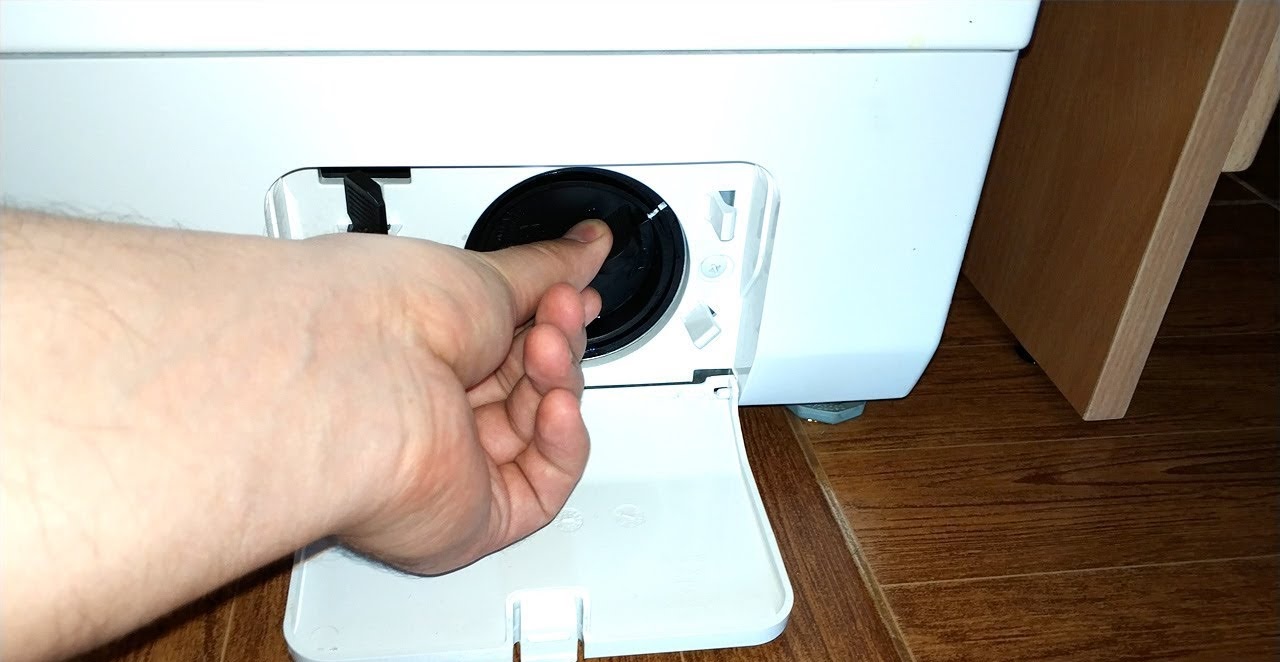
The filter housing is located at the bottom of the washing machine, at the front. It's often hidden behind a decorative panel, which is easily removed. Behind the decorative plinth on the right, you'll find the filter, which looks like a round hole with a large plug.
Let's get to the pump
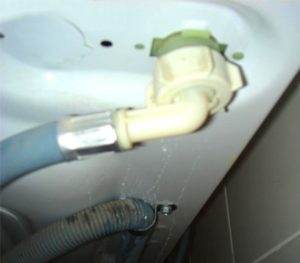
Disconnecting the appliance from all utilities and repairing the leak is only the first step. Next, remove the drain and inlet hoses, which are connected directly to the water and sewer pipes. In washing machines, these components are often hidden at the bottom of the machine, concealed by a decorative panel or a small hatch.
If you can't open the element with your bare hands, use a small flat-head screwdriver to carefully pry up the bottom of the unit and remove the panel.
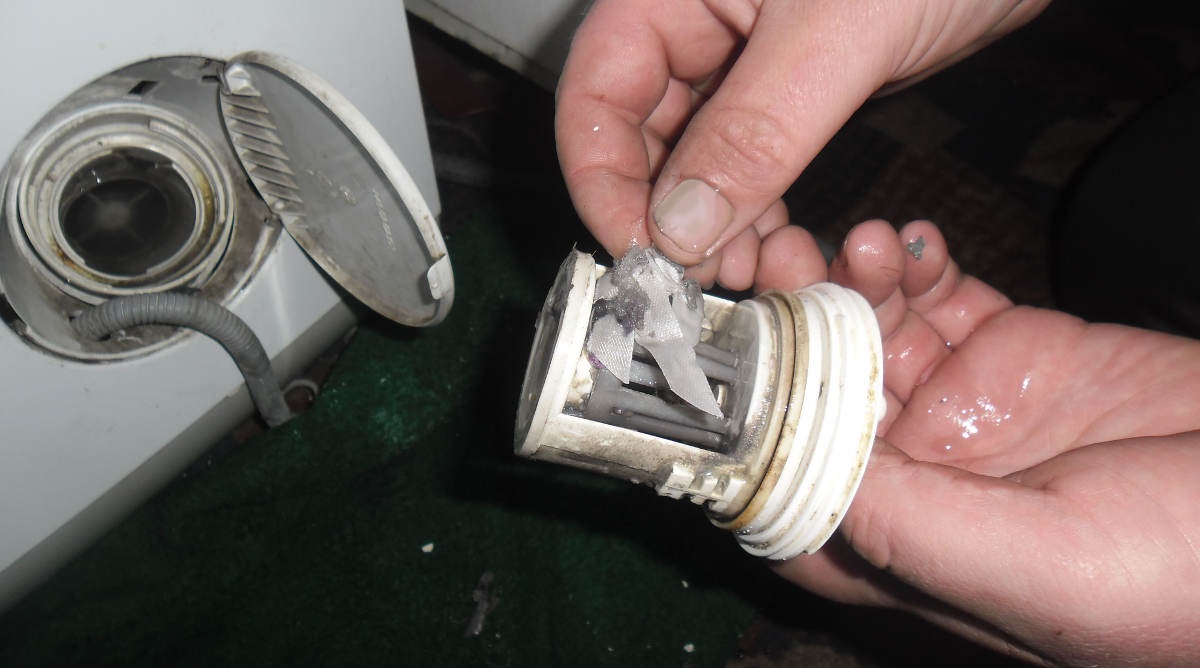
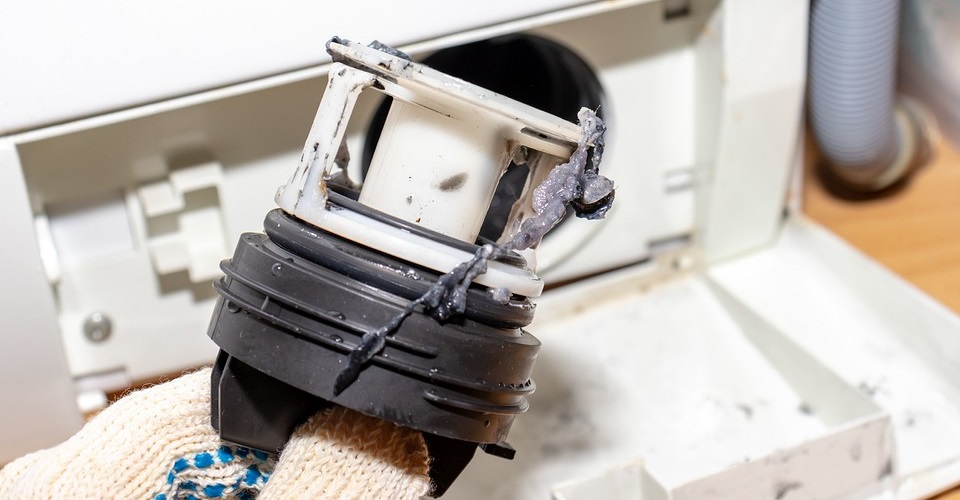
Next, you'll see the drain filter area. It's a plastic structure that protects the impeller and pump from dirt and foreign objects. You need to remove the filter and thoroughly clean it of any dirt and debris. Before cleaning, it's a good idea to lay a rag near the washing machine, as dirty water may remain in the filter and pipes, which will begin to drain onto the floor immediately after the filter is removed.
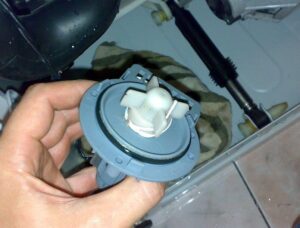
The drain pump impeller can be seen in the hole that appears. Try turning it with your finger, a toothpick, or a cotton swab—the impeller should rotate easily without any obstruction. If the rotation is difficult, then most likely there is hair, thread or other debris caught in it that needs to be removed. This can only be done after you remove the pump.
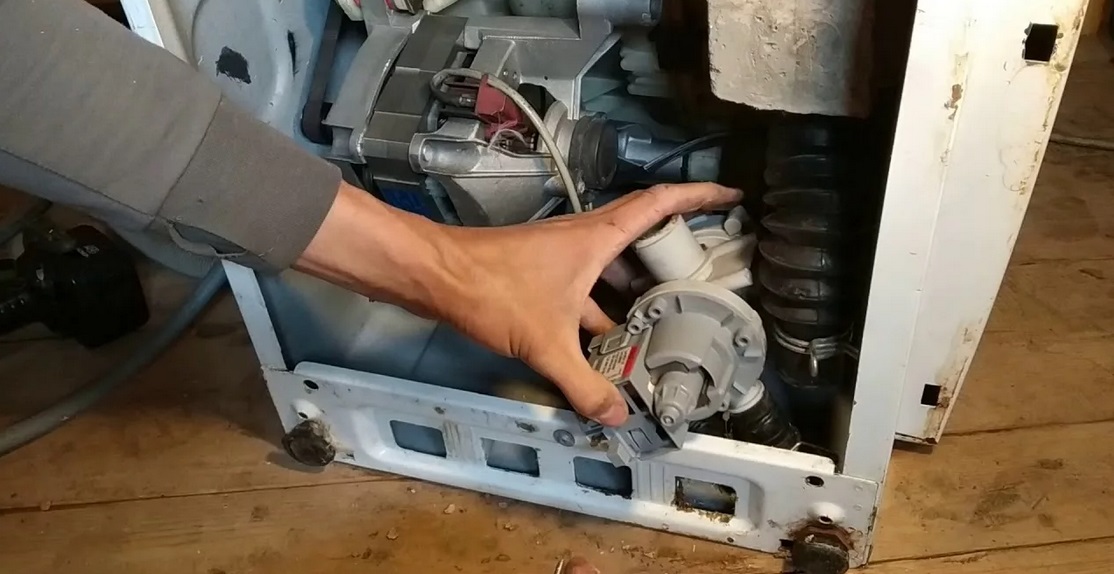
The next step is to lay the washing machine on its side, which must be done very carefully to avoid scratching the casing. Beforehand, place a rug, large towel, or other soft surface under the side of the machine to prevent it from resting on the floor. Now, if you look under the base of the machine, you'll find the drain pump, the volute, and the pump.
We find the leak and fix it
The next step is diagnosing and repairing the damaged component. It's not always easy to find the leaking washing machine pump on the first try, so it's important to carefully inspect all possible areas. First, check the screws connecting the pump to the volute—are they intact, securely tightened, and whether the sealing rubber is in place or damaged. If the sealing rubber is worn or simply slipped, the resulting gap will cause the drain pump to leak.
Since the snail and pump housing are made of plastic with seams, the parts can become depressurized over time due to increased vibration during washing and spinning. In some cases, these components serve the user reliably for many years, but sometimes they fail after just a year or two.
It is also worth examining the pipes located near the snail and pump, since leaks often appear because of them. If the leak is caused by a faulty pump or snail, it's best to replace the components immediately with new ones—repairs in this situation are impractical, as the soldered part can quickly become unusable again.
Actually, the filter is leaking.
A debris filter is screwed into the snail of the "home assistant," so it's possible that the problem isn't with the pump, as often seems at first glance, but with the debris filter. The filter usually fails for two reasons:
The plug was screwed in incorrectly. This can happen if the filter was initially installed incorrectly, creating a small gap in the machine through which liquid began to leak. This can also happen if the plug was not screwed in properly;
The rubber seals have become worn out. These are the rubber seals located along the edges of the spool and on the debris filter. These elements prevent water from penetrating through the cracks, but the rubber parts dry out and wear out over time, which also leads to a loss of seal.
If an incorrectly screwed filter is to blame, fixing the problem will take just minutes. To fix it, first cover the kitchen or bathroom floor with towels, prepare a container for the water from the waste filter, and then follow our instructions:
First you need to remove the decorative panel from the washing machine;
carefully and slowly unscrew the filter;
carefully install it in its place, making sure that the part fits evenly into the groove.
Despite the fact that this is a basic action, many housewives suffer from leaks precisely because of this problem. The problem is that this part is often removed to clean it of debris and drain any remaining fluid, and then, due to carelessness, it is carelessly reinstalled.
Moreover, it's easy to fix not only the first cause of the leak, but also the second, which is caused by damaged rubber seals. In this case, you need to:
take the damaged parts to the store as an example, or ask a sales consultant for help;
use our instructions for removing the trash filter;
replace damaged rubber seals with new elements;
carefully install the filter into its seat.
So, if your washing machine's drain pump is leaking, there's no need to call a service center. You can handle this problem yourself with patience and our detailed instructions.

 You don't need to be a master of washing machines or have extensive experience repairing them to understand that a drain pump is needed to remove wastewater. It's also clear that if your washing machine's pump is leaking, it's best not to use your "home helper" unless you want to flood your floors and the neighbors below with dirty water. In this situation, you should diagnose and repair the damage yourself or have it repaired by a service center technician. We'll take a detailed look at the causes of the leak and what to do in such a case.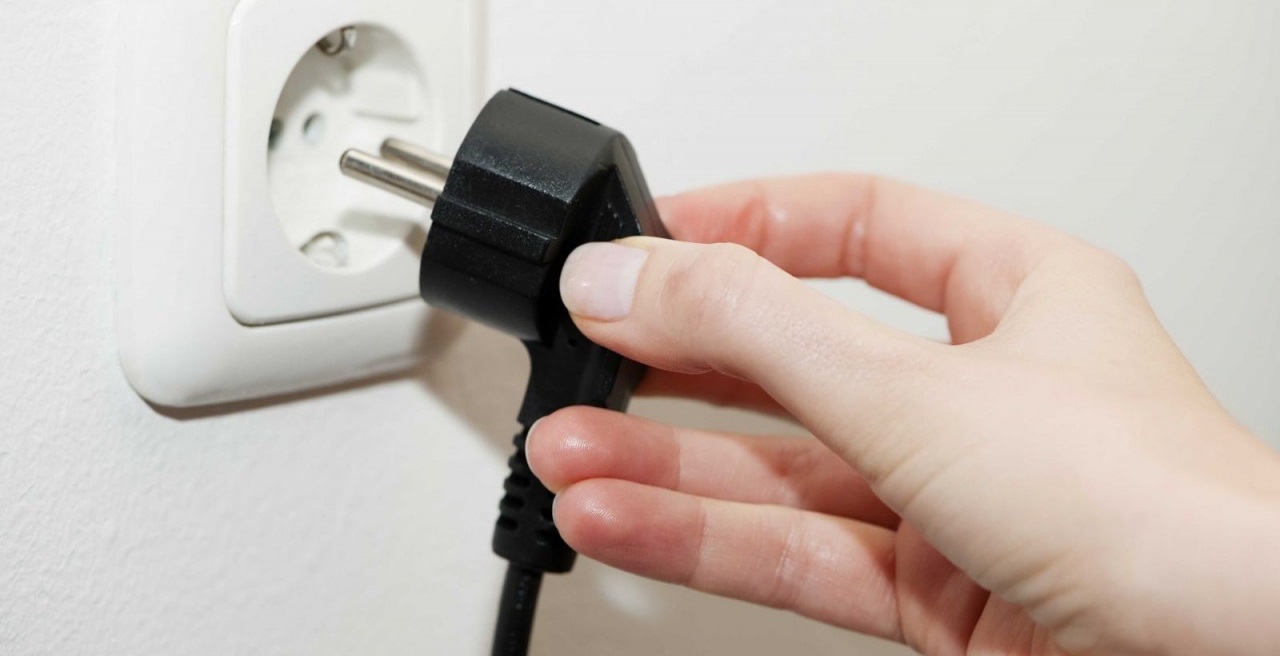















Add a comment