
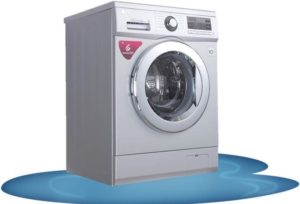
The washing machine is leaking under the front leg.
 Manufacturers claim that modern appliances are becoming more reliable and safer, but this doesn't guarantee a trouble-free life. It's quite common for a washing machine to leak during a wash cycle. Most often, you'll notice water leaking from under the front foot, coming from beneath the front panel. Why is it leaking from underneath the machine, and how can you check and fix it?
The source of the problem is the filter
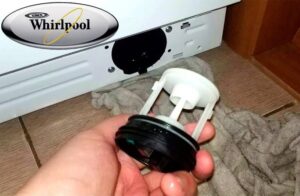
If your washing machine leaks while it's running, it doesn't necessarily mean a component is broken. Sometimes water leaking from below is purely due to human error. If water appears on the floor during a wash cycle, check the dust filter cover to make sure it's tightly closed. Also, pay special attention to the emergency drain hose. If you recently cleaned the debris filter, it's quite possible that you simply installed the plug in the hose poorly, which is why it's now leaking.
If there are no problems with the hose and filter, the filter's rubber gasket may be the culprit. Sometimes it simply stops working properly if it's crooked during filter installation. To check its functionality, follow the instructions.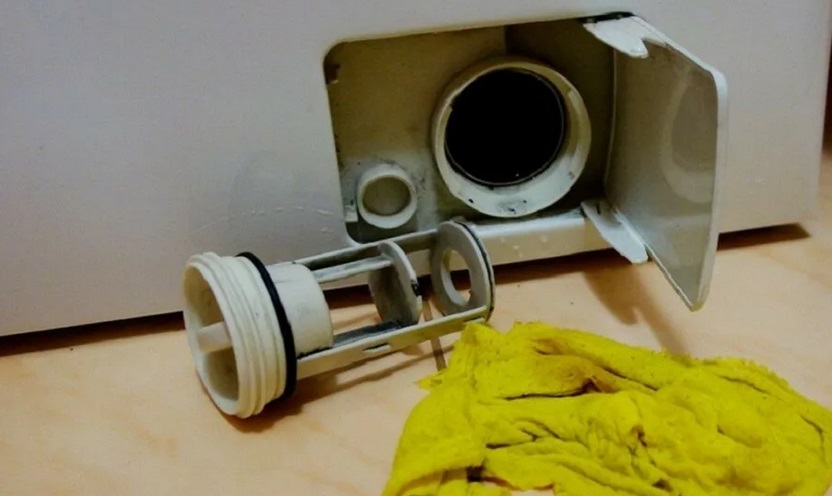
- Visually assess the space next to the filter plug to see if there is any water there.
- Using a dry cloth, collect all the water around the filter.
- Run the washing machine to check if the filter becomes wet again and if water appears around it.
If water starts to appear again, it’s time to change either the gasket or the filter plug itself.
Stopper problems often arise because users wash the filter parts in boiling water when cleaning. While this can kill all bacteria and remove dirt from the stopper, the boiling water can cause the plastic part to become slightly deformed and begin to leak. There's only one solution: buying a new stopper.
The powder tray may leak.
Another common cause of leaks is the detergent drawer. In this case, water does leak from the bottom during washing, but the leak is located near the very top of the machine. Carefully inspect the detergent drawer—if it's completely dirty, that's likely the cause of the leak. Liquid overflows into the dispenser cavity, where it drips onto the floor. Inspect the entire part, both outside and inside, paying particular attention to the corners where leaks usually appear.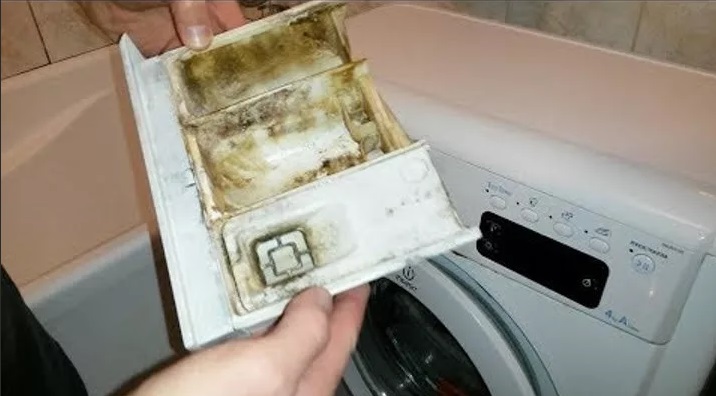
To check, simply fill all sections of the tray with water, after wiping the bottom with a dry cloth. If the problem was with the tray all along, water will quickly begin leaking.
The hatch cuff is to blame
Finally, a deformed sunroof seal can be a problem. When a small tear, invisible to the naked eye, appears in the seal, even this small hole can cause a serious leak.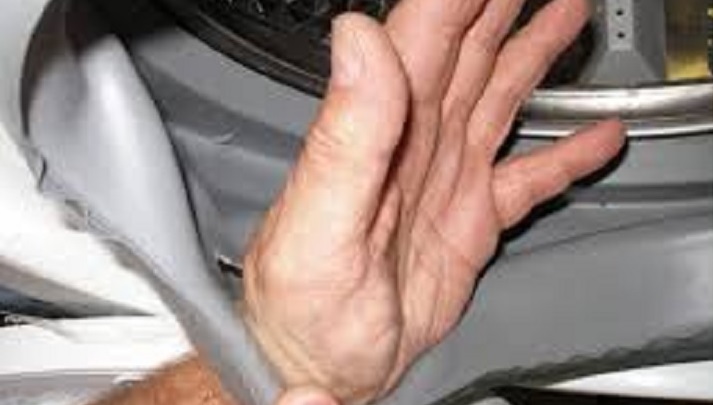
If you suspect the sunroof rubber is the problem, carefully inspect it from underneath. If there is indeed a tear, turn it over so the damaged area is facing up. Follow the instructions carefully to fix the problem.
- Completely disconnect the washing machine from the power supply, turn off the water supply and open the hatch.
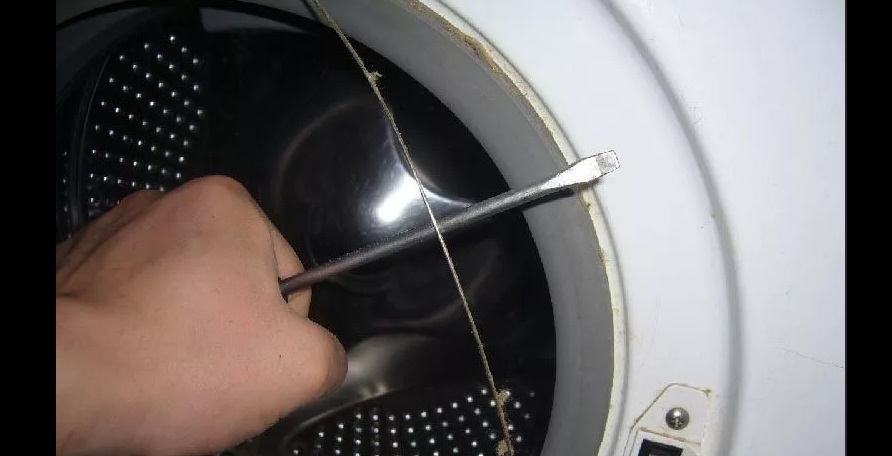 Using a thin screwdriver, pry up the outer clamp of the cuff to loosen it.
- Now loosen the inner elastic band in the same way.
- Grasp the edges of the cuff firmly with your hands and twist it clockwise so that the hole is on top.
- We secure the outer and inner elastic band clamps, close the hatch and turn on the test wash.
If the machine stops leaking after this procedure, further repair or replacement of the seal is not required. This can be used to fix even a large tear – 1 centimeter or more. However, if the hole in the elastic is much larger than a centimeter, it is best to replace it with a new one.
Interesting:




Readers' comments
Headings
Washing machine repair




For buyers




For users


Dishwasher




Add a comment