
What is a heat exchanger in a dishwasher?
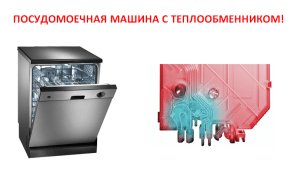 The first dishwasher appeared quite a while ago, but much has changed since then. Modern dishwashers clean dishes more thoroughly and gently, using less water and time. How does this happen? One of the elements that has taken dishwashing to a new level is called a heat exchanger. What this unit is, how it works, and which dishwashers use it—we'll discuss these topics in this article.
What is a dishwasher with a heat exchanger?
A heat exchanger is a special component built into a dishwasher, making it energy efficient. Experts estimate that a heat exchanger can save tens of kWh of electricity per month, not to mention hot water consumption if the dishwasher is connected to a hot water supply. The heat exchanger is a wide, flat container that is directly adjacent to the wash tank. The tank contains cold water, which is added at the very beginning of the washing program. What happens next?
- The dishwasher is filling with water.
- Then the heating element starts, which heats it up to the temperature specified by the program.
- Next, the washing process begins, the circulation pump pushes hot water from the reservoir through the sprinklers into the washing tank.
- Hot water flows from the dishes down to the bottom of the tank, accumulating there and heating the cold water located in the heat exchanger.
- Next, the water goes through the filters back into the tank, and then is fed back into the washing tank by the circulation pump, and so on in a circle.
- During the wash cycle, the tank heats up significantly, transferring heat to the flat water container. This is how the heat exchanger accumulates heat.
Important! In conventional dishwashers, a large amount of heat energy is wasted, heating the air in the kitchen. Machines with a heat exchanger utilize this heat most efficiently.
The main advantages of a heat exchanger
We've established what a heat exchanger is and how it works, but what's unclear is its purpose, what functions it performs, and what, in general, the benefits of heat capture are. To answer these questions, we need to examine the main advantages of a heat exchanger. In this article, we'll outline the key functions of this innovative unit.
- The heat exchanger ensures gradual cooling of the water used for washing dishes. As a result, there are no temperature fluctuations in the dishwasher tank, and as a result, ceramic and glassware does not crack, but retains its original appearance.
- Discharging hot water into the sewer pipe can damage it over time. The heat exchanger ensures gradual cooling of the water, so that warm, rather than hot, wastewater is discharged into the sewer.
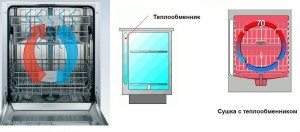
- Warm water, gradually heated in the heat exchanger, is used by the dishwasher for the final rinse at the end of the wash cycle. This eliminates the need to heat the final portion of water, wasting precious electricity.
- Fluctuations in water temperature inside the dishwasher negatively impact not only the dishes but also the ion exchanger. Temperature fluctuations cause the ion exchanger, or more precisely the resin it contains, to deteriorate significantly faster. Consequently, after a while, the ion exchanger ceases to function properly.
Saving your dishwasher's ion exchanger requires more than just the heat exchanger itself. To ensure long-lasting, trouble-free operation, follow the recommendations in this article. Why do you need salt in your dishwasher?.
Please note! The ion exchanger is designed to improve the quality of hard water. Minerals found in large quantities in the water are deposited in the ion exchanger, resulting in softer water and improved dishwashing performance.
The heat exchanger not only saves the ion exchanger, it also plays a role in the dish drying process. After the final rinse, the heated dishes remain in the tank to dry, but the moisture that evaporates from them condenses on the ceiling of the tank and drips back onto the dishes. This leaves drops and streaks on the dishes. After the final rinse, the heat exchanger is filled with cold water, preventing the moisture evaporating from the dishes from condensing on the wall of the heat exchanger and from settling back onto plates and glasses.
Experts have proven that dishwashers with a heat exchanger dry dishes 1.5 times faster, leaving far fewer drips and streaks. And if you use a high-quality detergent and rinse aid, there will be no drips or streaks left at all.
Review of dishwashers with a heat exchanger
Finally, we decided to share a few examples of dishwasher models that already have a heat exchanger installed and working perfectly. It's worth noting that a dishwasher with a heat exchanger is quite expensive, but with careful consideration, the investment will pay for itself over time.
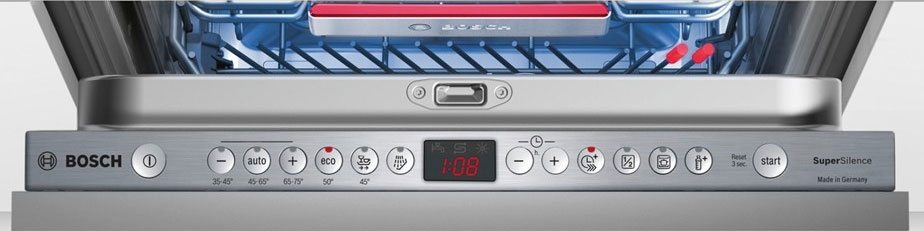
The Bosch SMV 59T10 built-in dishwasher with a heat exchanger is a mid-range dishwasher from a renowned German manufacturer. Average price: $470. This machine has several very interesting features that give it a clear advantage over its competitors.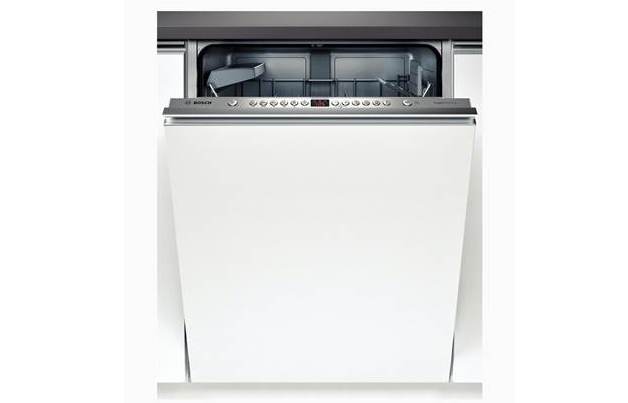
- Firstly, of course, the heat exchanger, and the second generation heat exchanger is more advanced.
- Secondly, it offers the most comprehensive leak protection. With this machine, even in the event of a serious breakdown, your property is safe.
- Third, the quality of washing and drying. This model provides excellent dishwashing results and dries quickly. Only premium-class dishwashers offer such washing and drying performance.
In addition to the above, the Bosch SMV 59T10 dishwasher can wash 13 place settings simultaneously, features a high-quality digital display, touch-sensitive controls, and a load sensor. A child lock can also be activated if needed. The noise level produced by a working dishwasher is quite low, only 44 dB. Rest assured, this machine will not disturb you or your household.
The Bosch SMI 65M65 semi-integrated dishwasher is slightly less expensive than the model described above, at around $400. However, because it's semi-integrated, the number of integration options is significantly limited. The Bosch SMI 65M65 offers the same advantages as the Bosch SMV 59T10, even matching its specifications, so we won't repeat them. The main difference is that the Bosch SMV 59T10 is fully integrated, while the Bosch SMI 65M65 we're reviewing today is partially integrated.
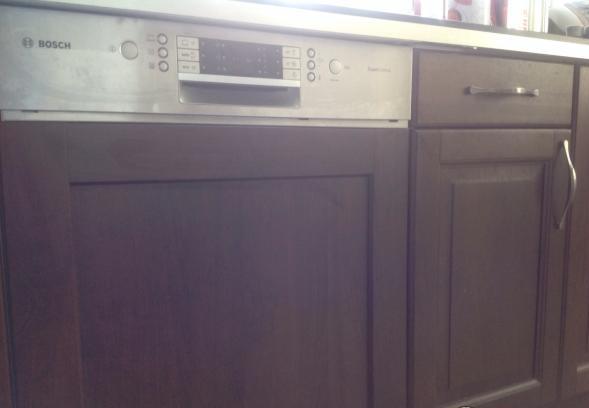
Please note: Semi-integrated dishwashers are rapidly losing popularity with consumers, so to attract consumers, manufacturers are forced to reduce prices slightly, even on models with the latest features.
The next model is the fully integrated Bosch SPV69X10 dishwasher. Its unique feature is that it's not full-size like the models described above, but rather slimline. Its dimensions are only 82 x 45 x 55 cm. However, its technical specifications are almost identical to those of the Bosch SMV 59T10 and Bosch SMI 65M65 models. The slimline Bosch SPV69X10 retails for an average of $580. This dishwasher also has another distinctive feature: a very convenient "express wash" program, which housewives absolutely love.
In conclusion, a heat exchanger is a simple yet highly useful innovative feature that can significantly improve not only the energy efficiency of a dishwasher but also the quality of dishwashing. Currently, dishwashers equipped with a heat exchanger are quite expensive, but this will likely change over time.
Interesting:


Readers' comments
Headings
Washing machine repair




For buyers




For users


Dishwasher




Add a comment