
Technical characteristics of dishwashers
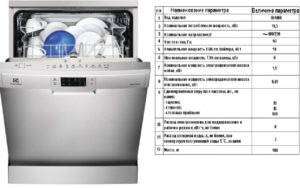 Dishwasher specifications are fairly standard and are set by the manufacturer. Based on these specifications, buyers can determine which dishwasher model is best for them. However, not everyone is able to accurately assess these specifications, especially if they've never used a dishwasher before. In this article, we'll discuss the characteristics of dishwashers and what to consider when making the right choice.
How to prioritize?
People often ask: which technical characteristics of a dishwasher should they pay attention to first, and which ones can be compromised? Answering this question isn't always easy, as it turns out that everyone chooses a dishwasher based on, sometimes, the most unexpected considerations:
- so that the dishwasher has minimal dimensions and fits into a small kitchen;
- so that the dishwasher body has a color that matches the color of the kitchen furniture or other appliances;
- so that the dishwasher can be connected to hot water;
- so that the dishwasher does not make too much noise, since the living rooms in the apartment are combined with the kitchen;
The noise level of a particular dishwasher model is indicated in dB.
- to make sure the dishwasher has a delayed start;
- to ensure that the dishwasher is child-proof;
- so that the machine has protection against leaks and so on.
However, despite the subjectivity of a buyer's approach to choosing a dishwasher, there are objective factors that everyone should consider, as they are of utmost importance. Let's take a look at them.
Overview of key features
Objectively, the most important functions of a dishwasher are those that reflect the essence of the appliance's operation. These key characteristics directly impact the operation of your "home assistant," defining its key features and characteristics. Enough theory, let's move on to a description of these characteristics.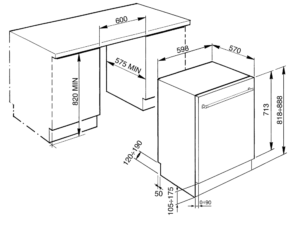
- Dimensions. A crucial parameter that buyers almost always pay attention to. Firstly, the room where the dishwasher is planned is often limited in space, and secondly, dishwashers are often built-in, and when installing this type of appliance, every centimeter counts.
- Loading volume.How much laundry can I load into my washing machine? The manufacturer specifies the number of kilograms; everyone is accustomed to this, and there are no questions about it. The dishwasher load capacity, however, is determined not by the weight of the dishes, but by their quantity. Moreover, the quantity is specified in sets. One set is eight items: 4 plates, one cup, one saucer, a spoon and a fork. This may not be entirely accurate, but that is the accepted calculation.
- Machine type and installation type. This is also a crucial factor, as the dishwasher type directly affects its appearance, functionality, and size. Machines come in full-size, compact, and slimline configurations. Installation types include fully integrated, partially integrated, and freestanding. Fully integrated dishwashers have a removable cabinet front, while partially integrated models have a standard front with removable components.
- Drying type. Many consumers are eager to buy dishwashers with turbo drying, as turbo drying speeds up the dishwashing cycle. However, there are also turbo drying options, including condensation drying and intensive drying. In the former, dishes are dried in a bin using hot air, while in the latter, they dry naturally.
- Design. Consumers typically prefer a dishwasher with a simple, versatile design that fits any space. However, in some cases, something special is required.
Having studied the needs of people, some dishwasher manufacturers offer machines with an original front design.
- Safety. Many people living in apartment buildings fear flooding and therefore require their dishwashers to be protected against leaks. Young mothers, on the other hand, are more concerned about their children damaging the dishwasher by pressing buttons. Responding to this need, manufacturers have equipped most dishwasher models with child safety locks.
- Energy consumption. Senior buyers often ask how much water and electricity their dishwasher uses. They're worried that such a machine will ruin their finances, which is completely unnecessary. Washing dirty dishes by hand uses significantly more water than using a dishwasher.
Overview of secondary characteristics
Now let's talk about secondary characteristics, which, however, for some buyers are not at all secondary. Let's give some practical examples.
- Noise level. Unlike a washing machine, a dishwasher operates quite quietly. Not everyone will
 Don't bother looking for a model that produces 48 dB, rather than 52 dB. Especially since the difference isn't significant. If you're so concerned about quietness in your home, it's best to stack dishes more carefully in the baskets to reduce the noise during washing.
 - The number and composition of programs. This aspect is very important when choosing a washing machine. Dishwashers, on the other hand, have a limited number of programs, 2-6 at most, and frankly, they're not very useful, so people don't pay much attention to them.
- Delayed start. An interesting feature, although not everyone uses it. It's often enabled by people who prefer to wash dishes at night, when electricity rates are lower.
- The ability to use a 3-in-1 product. If the machine recognizes the product and can use it as effectively as possible, that's great, but in reality, very few people bother with this, preferring to control the addition of certain products themselves.
3 in 1 – this is salt, rinse aid and detergent, combined in one package.
- Alternating water supply. In an effort to save on water, some people buy dishwashers with this feature.
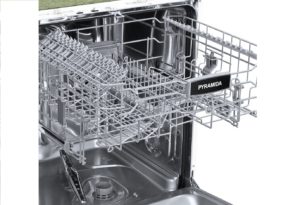 function. The fact is that alternating water supply to the baskets, sometimes from the upper and sometimes from the lower spray arms, allows for a 15-20% reduction in water consumption while maintaining the same wash quality.
 - Pre-rinse. This feature is popular with some people for two reasons: firstly, it helps save water, and secondly, it helps wash even the dirtiest dishes more effectively.
- Number and composition of indicators. The more indicators, the easier it is to monitor the program progress and the salt and rinse aid levels. Therefore, some advanced users specifically look for dishwashers with more indicators, such as a "floor beam."
- Dish basket placement. This factor affects how dishes are arranged in the bin and, ultimately, how well they are washed. Therefore, some users pay attention to how the basket is positioned in the bin and whether its position can be adjusted.
The list of secondary features could be very long, but we won't go into it further, as the general idea is already clear. Modern dishwashers can contain so many different "gadgets" that they would make a spaceship look like a "copper-age device." However, it's important to understand that most of these features won't be needed in everyday life, meaning it's not worth overpaying for them. Prudence, above all!
So, for convenience, we've decided to classify dishwasher technical specifications into the most important and the least important. This classification isn't without its flaws, but it clearly shows consumers what to look for when choosing a dishwasher. We hope this article is helpful. Good luck!
Interesting:



Readers' comments
Headings
Washing machine repair




For buyers




For users


Dishwasher




Add a comment