
Types of washing machine drives
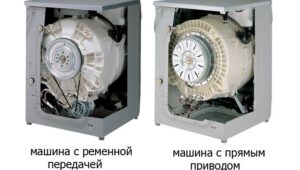 The "heart" of an automatic washing machine is the motor. The electric motor rotates the drum, powering the washing process. Energy from the motor is transferred to the centrifuge via the drive mechanism. Let's explore the different types of washing machine drives, which one is best, and why.
The main types of drive mechanisms
When choosing a new washing machine, people try to learn as much as possible about the machines to choose the most practical and reliable model. Many are interested in the different drives found in modern washing machines. There are two main types.
- Belt drive. A cheaper mechanism, known since ancient times. It was even installed in washing machines produced in Soviet factories. In this case, energy from the electric motor is transmitted to the drum via a belt.
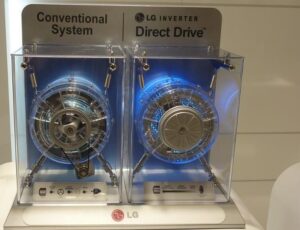
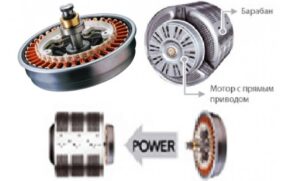
- Direct drive. A relatively recent technology, this development was first used by the South Korean brand LG. In this case, the electric motor and drum are effectively combined into a single unit. The design eliminates any additional moving parts, increasing reliability.
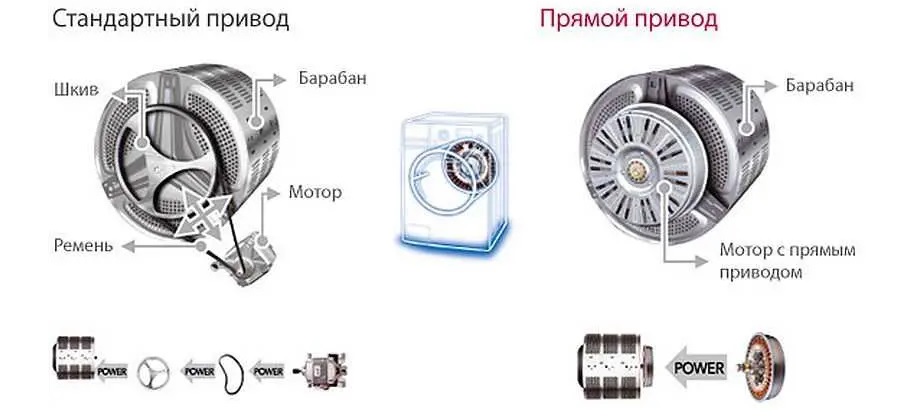
So, modern automatic washing machines can be either direct-drive or belt-driven. Engineers haven't yet invented any new technology. Perhaps in the future, the drum will be rotated by magnets, but today, direct-drive washing machines are at the pinnacle of "evolution."
Classic mechanism
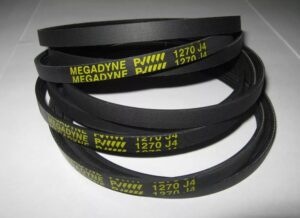
A belt drive is considered a classic. It's a relatively simple mechanism: the engine's speed is transmitted to the drum pulley via a rubber band. The belts used in modern machines are very thin and elastic, which helps ensure low noise levels during washing machine operation. The inner surface of the strap usually has a fabric base, which helps reduce vibration.
There are two types of drive belts:
- wedge-shaped - they have a characteristic pattern on their surface;
- Grooved - have longitudinal ribbing on the "reverse" surface, due to which good adhesion with the drum "wheel" and the motor pulley is achieved.
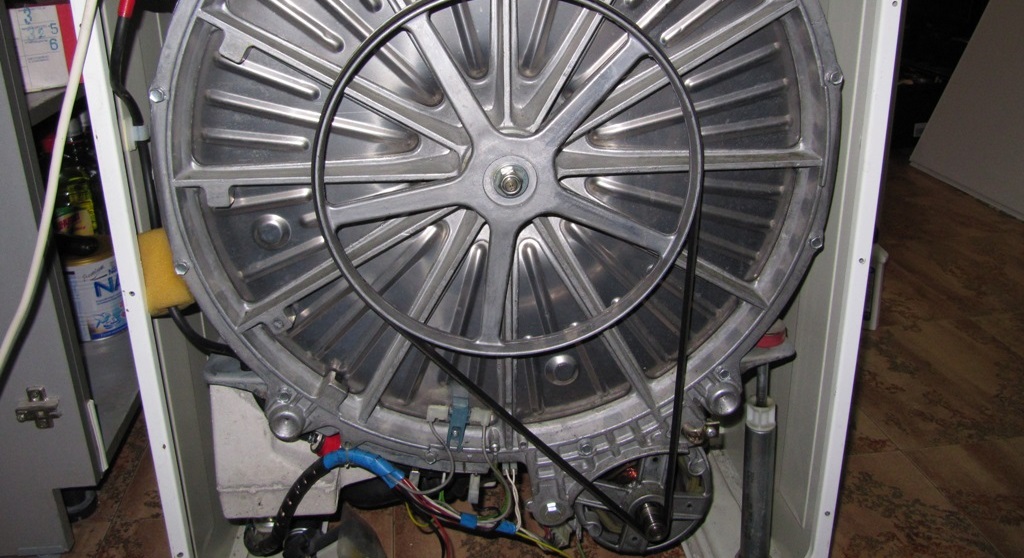
In fact, there are no significant differences between V-belts and V-ribbed drive belts. They have roughly the same characteristics and grip properties. Therefore, there's no need to focus on the type of rubber.
The belt is the weakest point of a classic drive mechanism.
Elastic bands tend to stretch and even break, especially when the washing machine is regularly overloaded with laundry. However, the undeniable advantages of a belt drive are its low cost and ease of repair. Even a housewife can replace a belt, and the components are quite inexpensive.
Many buyers always consider price when choosing a washing machine. Belt-driven washing machines have much lower production costs, which is reflected in the lower final price. But what are the advantages of more expensive direct-drive washing machines? Let's find out.
Beltless drive
Direct drive is a relatively recent development by Korean engineers. Direct-drive washing machines do not have a belt, and the inverter motor is directly connected to the drum. What are the main advantages of such mechanisms?
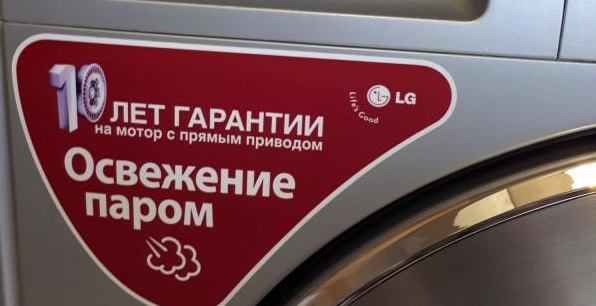
First, there's a ten-year warranty on the motor. Almost all manufacturers are confident that the inverter will last more than 10 years without requiring repairs. Of course, the warranty period for other components and parts is standard, but even for the electric motor, such a long period of free service is quite attractive.
Secondly, manufacturers claim that direct-drive machines operate quieter. The motor spins the drum almost silently; only the gurgling sound of water is audible during the wash cycle. Other sounds can be detected during the spin cycle, but this is unsurprising, as the motor has to spin the "centrifuge" at 1000-1200 rpm.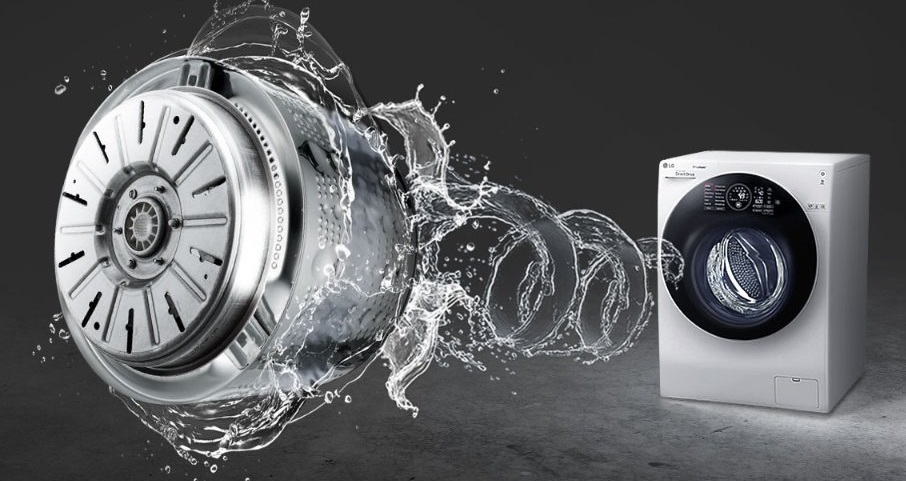
When comparing the noise levels of belt-drive and direct-drive automatic washing machines, the latter are definitely quieter. This is, of course, provided the washing machine is installed correctly, level, and on a hard floor.
Another advantage is the minimal number of additional parts. The motor doesn't require a belt, pulley, or other components to spin the drum. This reduces both noise and vibration. Therefore, inverter direct-drive machines operate quietly, without "jumping" around the room.
Which option is better?
When choosing an automatic washing machine, users consider which drive type to choose. To overcome these doubts, it's important to understand the advantages and disadvantages of each mechanism and compare them in specific areas. Let's briefly review the main parameters.
- Cost. If this is the primary factor when choosing a washing machine, then belt-driven washing machines are the favorite. They are usually much cheaper than direct-drive machines with similar functionality.
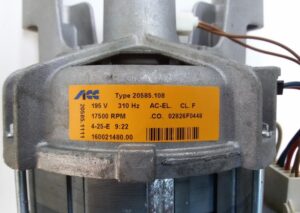
- Periodic maintenance is necessary. The drive belt is prone to wear. Owners of brushed machines will need to replace the rubber belt every 2-4 years, depending on the intensity of use. Brushes in brushed motors also wear out and need to be replaced every few years. Direct-drive machines don't have this problem—the motor won't require maintenance for at least 10 years.
- Operating noise. Direct drive is definitely better in this regard. If you're planning to install a washing machine in the kitchen, opt for an inverter—it won't disturb your family with noise and buzzing. If the machine is in the bathroom, even the noise from a belt-driven machine won't bother your family.
- Energy efficiency. Modern direct-drive machines consume less energy than belt-driven machines. Many inverters can also sense the weight of the laundry in the drum, thereby adjusting the water and detergent consumption. While such a machine will cost more, the difference will be offset by future utility bills.
- Capacity and dimensions. Since the drum is directly connected to the motor, direct-drive machines, while maintaining the same dimensions, can wash more laundry at a time than belt-drive machines. Because there are no additional components in the design, the manufacturer can equip inverter machines with a larger drum.
Many users prefer inverter machines with direct drive due to their greater reliability, efficiency, and capacity.
Both drive types have their advantages and disadvantages. Therefore, before purchasing, it's important to evaluate which washing machine is best for your specific situation. If you don't mind paying a premium, opt for direct-drive washing machines. However, belt-drive machines can also provide high-quality washing results.
Interesting:
Readers' comments
Headings
Washing machine repair




For buyers




For users


Dishwasher




Add a comment