
What is zeolite drying in a dishwasher?
 The home appliance industry is constantly evolving, with innovative units and features appearing all the time. For example, you're increasingly hearing the phrase "zeolite drying in dishwashers." This type of drying is said to be much better than the condensation drying we're used to. Furthermore, machines with zeolite drying are supposedly less prone to wear and tear. Let's take an analytical approach and examine the specifics of zeolite drying.
Features of zeolite drying
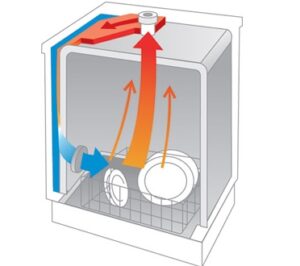
The word "zeolite" intuitively conjures up images of some kind of stone, and in this case, our intuition is spot on. Zeolite is a special mineral that has the ability to accumulate and release heat when exposed to moisture. The zeolite drying mechanism in a dishwasher works as follows:
- The dishwasher's tray contains a special container filled with zeolite;
- During the evaporation process, water from the dishwasher chamber flows into this tank;
- when in contact with moisture, zeolite heats up;
- The heat generated rises back into the dishwasher chamber, warming it and drying the dishes.
Please note: When opening the door of a dishwasher with a zeolite drying system, you may notice that no steam escapes from the chamber.
The question immediately arises: can zeolite lose its ability to accumulate and transfer heat over time? The answer is a resounding no. The mineral's structure is designed in such a way that it can retain its properties indefinitely.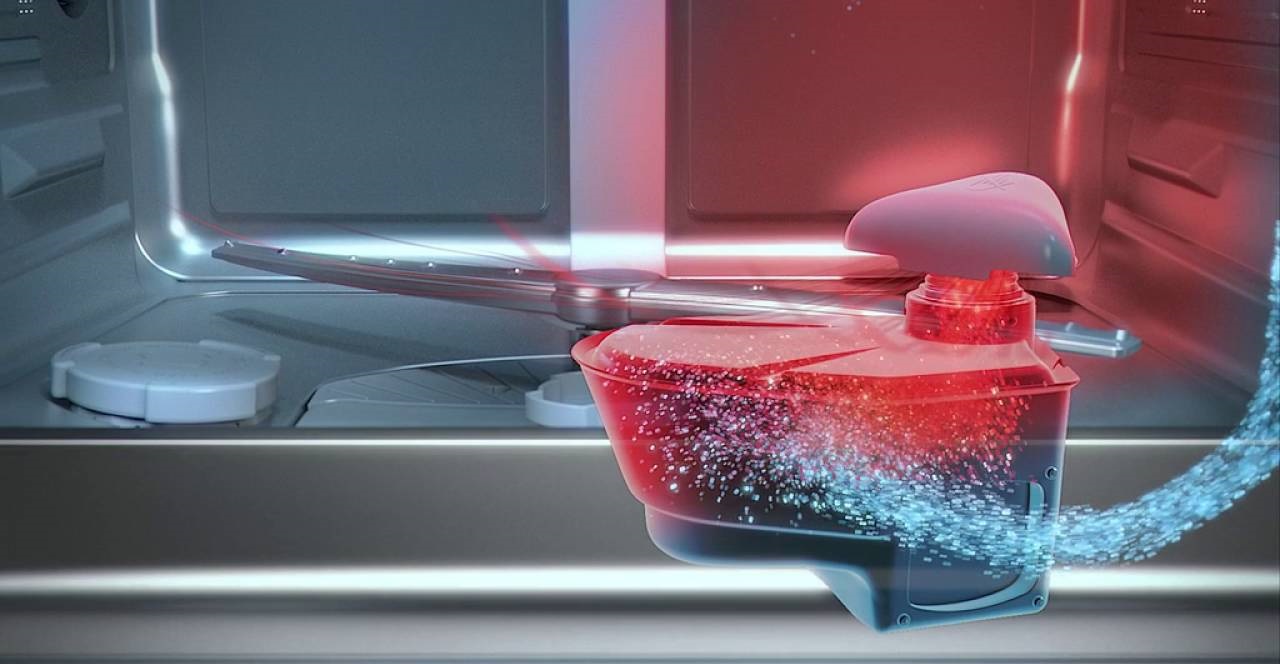
The major drawback of dishwashers with zeolite drying is that they are currently only available in the luxury segment and are quite expensive. At the moment, only a very small circle of users can afford them. However, over time this problem should be resolved.
What other types of dishwasher drying are there?
In addition to zeolite drying, the article also mentioned condensation drying. This method relies entirely on condensation, making it one of the simplest drying methods. Its only significant drawback is its time-consuming nature. This method works by allowing moisture from washed dishes to condense on the walls of the dishwasher chamber, where it drips down. This type of drying is perfectly suitable for those who are short on time.
In addition to zeolite and condensation types of drying, there are several others.
- Turbo drying. This type of drying uses a device similar to a regular fan. This method is much faster than condensation drying (hence, likely, its name), but it still takes some time. Don't expect completely dry dishes in a matter of seconds. Another name you might encounter for this type of drying is convection drying. The principle is very simple: the air inside the dishwasher is artificially heated, and then a built-in fan blows it onto the washed dishes, which promotes rapid drying. The main drawback of this type of drying is increased energy costs, as energy is consumed throughout the entire dishwasher cycle.
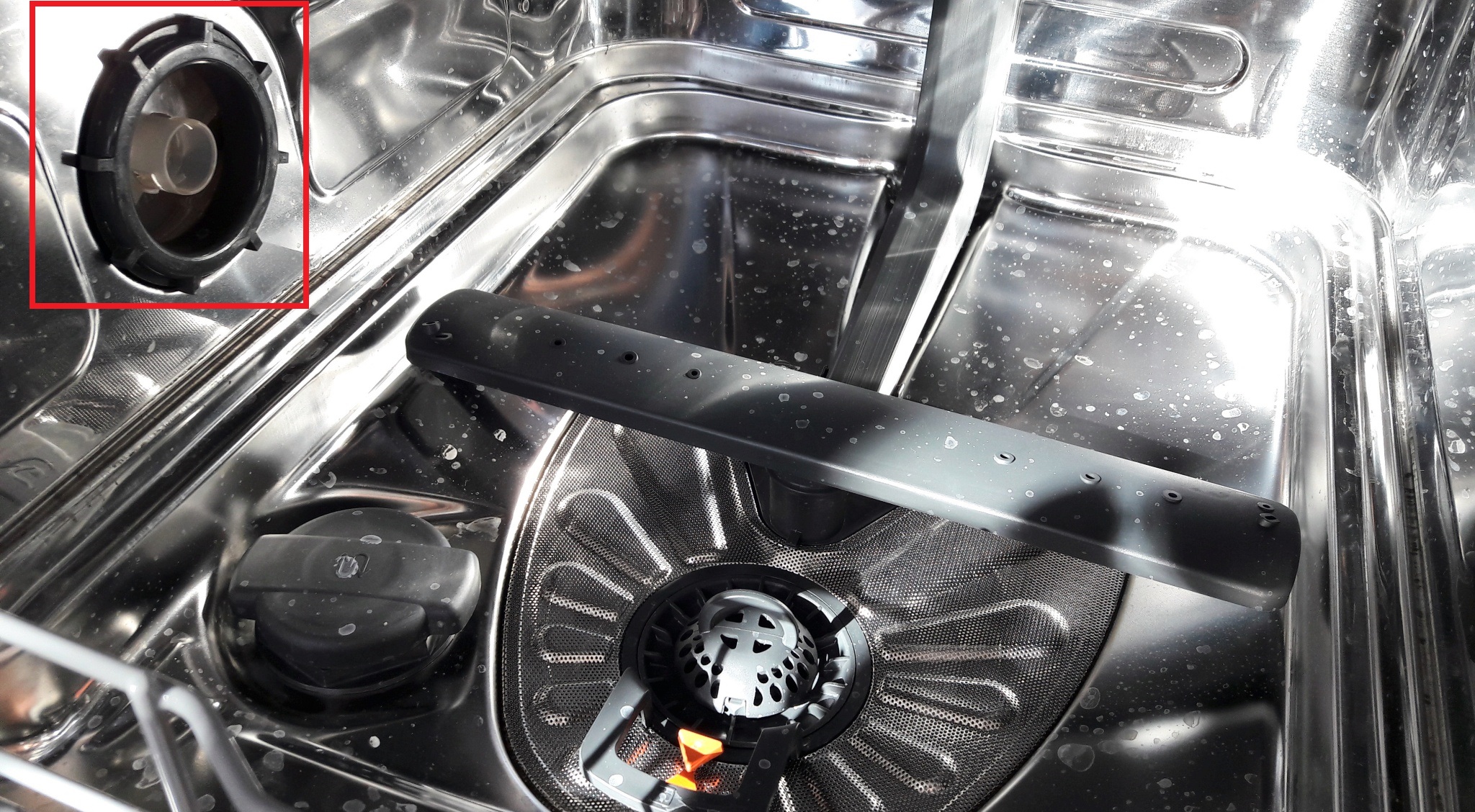
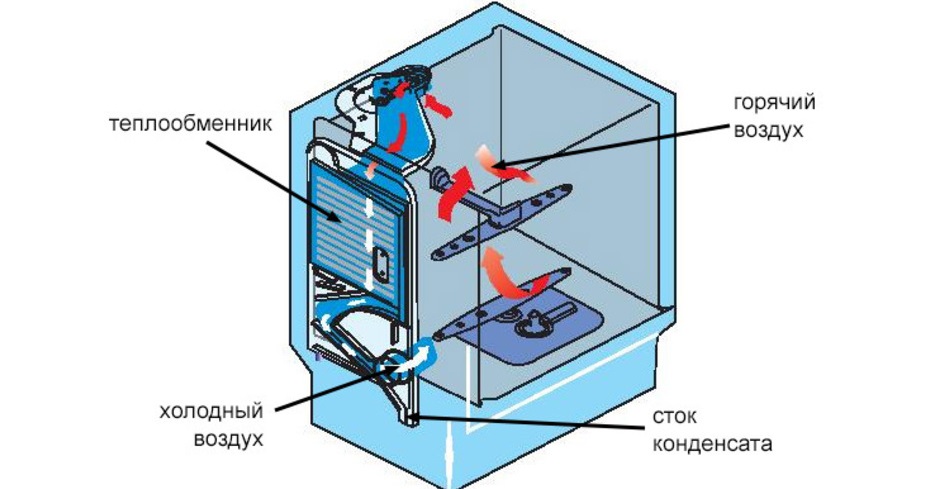
- Heat exchange drying is a cross between turbo drying and condensation drying. Its operating principle is based on pressure differences. A heat exchanger, located around the dishwasher's body, contains a complex cavity inside. Water, cold as melted ice, constantly circulates within. During operation, the machine itself and its body heat up and generate heat. It's well known that high-temperature substances weigh less than low-temperature ones, and this difference creates a pressure difference. A device installed next to the heat exchanger collects air and then distributes it in enhanced flows, which dry the dishes. This method is slightly faster than condensation drying and slightly slower than turbo drying.
- Static drying is so called because the dishwasher doesn't have a special technology specifically for drying dishes. They're washed in very hot water, which heats up the air in the chamber, and then the dishes are left to dry from the residual heat. The moisture condenses on the walls of the chamber and runs off. This results in the same drawback as the condensation type of drying: it is too time-consuming.
- There's even a smart drying system, which requires a special sensor built into the dishwasher. It measures the humidity and temperature in the room where the dishwasher is located, and the drying method is selected based on these measurements. For example, if the room has tropical humidity, a powerful stream of air will blast the dishes, while if the room is cold, the water will heat up during the rinse cycle, helping to dry the dishes more quickly.
Of course, smart dryers are very rare and expensive, and only a very small number of people can afford them yet. But then again, when innovations become firmly entrenched in our lives, they cease to be innovations and, accordingly, become widely available and cheaper. So we just have to wait a little while.
Interesting:



1 reader comment
Add a comment
Headings
Washing machine repair




For buyers




For users


Dishwasher




Thank you. Everything is explained very clearly in simple language.