
The drum in the washing machine is not spinning properly.
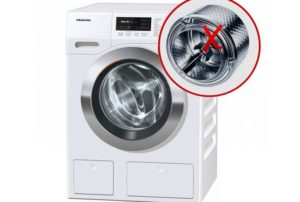 The drum is one of the most important components of a washing machine. If it malfunctions, washing clothes becomes impossible. Once you've diagnosed this type of malfunction, you should quickly determine why the drum is spinning slowly and what's causing it. Let's discuss the main causes and suggest solutions.
The most typical causes of the problem
First, it's worth understanding why a washing machine doesn't spin the laundry properly during washing. Only after conducting a complete diagnosis of the machine can we determine which path to take to eliminate the malfunction. The drum may stop spinning due to several factors.
- Washing machine overload. Each automatic washing machine has a specified maximum load capacity for dry laundry. Most modern machines are equipped with special sensors that detect the weight of items. Overloading can cause the washing machine to refuse to start a program the user has started.

- Damaged drive belt. In this situation, if you turn the drum by hand, it will spin freely, but the washing machine itself won't be able to turn it. Drive belts tend to wear out and lose their properties. It's also possible that they've simply slipped.
- Motor brush problems. In washing machines equipped with commutator motors, the brushes are one of the most vulnerable areas. If you've been using such a machine for a long time and the electric motor hasn't received the necessary maintenance, it's best to check the brushes for wear and replace them if necessary. In most cases, replacing the motor brushes will return the machine to normal operation.
- Control module failure. A failed electronic control unit is considered one of the most serious problems. To restore the machine to working order, you'll need to reflash the firmware or install a new module. It's best to leave this type of repair to a professional.
- Electric motor failure. If the drum rotates unevenly or stops completely, the motor may be faulty. This can occur due to a short circuit or damaged motor components. Motor repairs are considered complex and are not recommended for DIY projects.
It is precisely these types of malfunctions in the washing machine system that can lead to problems with the drum rotation.
Some causes can be identified and corrected independently, while more serious damage can be repaired by a qualified technician.
We carry out primary diagnostics
Any homemaker can perform a basic system diagnostic. First, determine the maximum load capacity of items that can be loaded into the drum. Information on the maximum load is usually provided on the machine body or in the instructions. If the load doesn't exceed the maximum load capacity, further troubleshooting is needed. Check to see if the door lock is working. The door may not have closed properly, causing the machine to not start a program or spin the drum.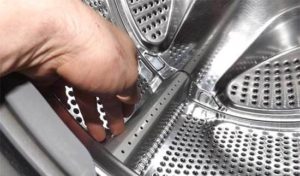
Try turning the drum by hand. If it rotates freely manually, but stands still when starting the washing program, most likely the washing machine's electric motor or its control module has broken down.
In some cases, the drum's movement may be blocked by foreign objects lodged in the space between the metal rim and the washing machine's tank. If no foreign objects are found during inspection, it's time to move on to diagnosing other components of the washing machine.
Inspect the heating element. If the heating element is faulty, the drum may also not spin. This will be because the intelligent system has completely blocked the washing process. Also, inspect the drive belt. The drive belt may have broken or come loose. Reinstall it correctly or replace it with a new one.
Worn bearings could also be the culprit. To rule this out, you'll need to disassemble the washing machine and inspect the components. If the machine has served you faithfully for several years and the bearings haven't been serviced, you'll need to replace the components.
Let's check the electric motor brushes
If you inspect the motor brushes and notice significant wear, it's best to replace them. To select the correct motor brushes, you need to know the motor type and model of your washing machine. This information can be obtained by examining the markings on the motor.
Replacing the brushes is quite simple: remove the old components from the motor and install the new ones, securing them with bolts. After installing the brushes, rotate the engine by hand to ensure they are tightly seated.
The device should make a light clicking sound when rotating.
We check and replace the heater
If the drum is jammed and the washing machine won't start the selected program, check the heating element. It's possible the heating element has stopped working. Removing the element from the housing is fairly easy: simply locate its location, disconnect the wiring, and pull out the heating element. When purchasing a replacement heating element, make sure that the equivalent exactly matches the model of your washing machine.
If the heating element is located in the rear part of the housing (on Samsung, Whirlpool, Zanussi, Ardo, LG, etc. washing machines), it is necessary:
- move the machine away from the wall;
- Unscrew the bolts holding the rear wall.
 The heating element is located at the bottom, directly under the washing machine's tank. In Bosch, Siemens, and AEG machines, this element can only be accessed from the front of the machine. To access the heating element from the front, follow these steps:
- remove the powder receptacle from the housing;
- unscrew the screws holding the main control panel, carefully place the panel on the top cover of the washing machine;
- Unfasten the latches holding the lower false panel. This will give you access to the drain filter;
- unscrew the waste filter, drain the water remaining in the system;
- loosen the clamp holding the hatch cuff and remove the metal ring from the car;
- insert the sealing rubber into the drum;
- Unscrew the bolt holding the front wall of the housing and carefully remove it.
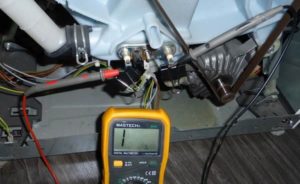
After completing the steps described above, you'll access the heating element located under the washing machine's tank. Before removing and replacing the heating element, it's important to check its functionality. A multimeter will be useful for this.
Disconnect all the heating element wiring, set the tester to resistance measurement mode, and attach the probes to the heater contacts. The multimeter screen should display a value of 20-30 ohms. If the resistance value is higher or lower than normal, the heating element must be replaced. To do this:
- loosen the nut on the central bolt;
- push the element into the tank;
- carefully remove the heater from the housing by prying it with a screwdriver;
- insert a working element into the socket;
- tighten the fastening nut;
- Connect the wires to the heating element contacts according to the previous diagram.
If the drum's stalling was caused by a faulty heater, these steps should restore the washing machine to full functionality. It's crucial to follow safety precautions when performing repairs and remember to disconnect the machine from the power supply and utilities.
Something jammed the drum.
If you feel like the drum is moving very heavily or is moving in jerky motions, periodically "freezing" in place, and in addition to this, you hear strange knocking and noises coming from the housing, it is likely that a foreign object is stuck between the walls of the drum and the washing machine tank.
To test this hypothesis, you need to access the washing machine's heating element and remove it from the housing. Then, using a flashlight, look into the resulting hole to see if any foreign object is lodged in the cavity.
Troubleshooting a similar problem in top-loading washing machines
If the drum in a vertical washer is spinning with difficulty, the root cause may be open valves in the tank. If the door latch accidentally opens at the bottom of the drum instead of the top, the drum may become jammed and stop spinning. There are two ways to solve this problem:
- Without disassembling the washing machine, rotate the drum using a hook, which you can make yourself out of wire. To do this, prepare a small-diameter steel wire and bend its end, creating a hook. Insert the wire into the drum opening and try closing the doors and rotating the drum.
- Access the doors by removing the front or bottom panel of the washing machine. To do this, de-energize the unit, unplug it from the house utilities, lay the machine on its side, and remove the tray. Then remove the lower counterweight. The resulting opening allows you to reach through and slam the doors shut.
Some users may find it easier to close the doors through the opening where the heating element is installed. This requires removing the side panel of the housing and the heating element, then closing the doors and rotating the drum. If the doors are warped, simply closing them will not work; professional repairs will be necessary.
Interesting:


Readers' comments
Headings
Washing machine repair




For buyers




For users


Dishwasher




Add a comment