
DIY Washing Machine Cabinet
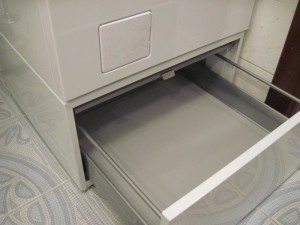 Large families typically have a large amount of clothes, and therefore a lot of laundry. If there's no time to wash laundry on time, it piles up and waits for its time to come. Fitting several baskets of dirty laundry into a bathroom can be quite difficult. What is the way out of this situation? Of course, a special cabinet for a washing machine, easily accommodating several baskets of dirty laundry, is a must. But such furniture is rare in stores, so it's best to make such a unique cabinet yourself.
How to make a stand yourself
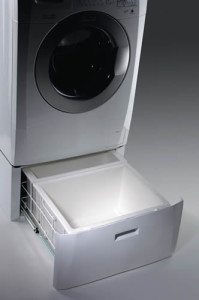
A cabinet for a washing machine is similar to a stand on which the machine will later be installed.
The dimensions of this stand should be identical to the bottom of the machine. Therefore, it's important to carefully measure all aspects of your appliances. This piece of furniture is most often needed in large private homes where more than one appliance is used. We design cabinets specifically for these appliances.
What materials and tools will be needed for the job?
- Chipboard panels
- Boards and beams
- Allen screws
 Tape measure and pencil
- Hammer and drill
- Saw and grinder
- Level
We construct the base of the cabinet for the washing machine
The bottom base of the washing machine cabinet should consist of two rails and as many crossbars as possible. Multiple crossbars will make the cabinet more rigid. This is crucial, as the machine resting on this cabinet is quite heavy and will vibrate when the spin cycle is engaged. In this project, designed for 2 automatic washing machines, you need 5 crossbars, and the size of the base should be 150 x 67 cm.
We connect the guide boards with furniture screws and crossbars, pre-drilling holes at the joints so that the screw head is not exposed. The screw heads will be positioned in recesses, and plastic caps matching the color of the washing machine cabinet will be attached to them.
We attach chipboard or plywood sheets to the resulting base. The plywood should be at least 8 mm thick. It's best to fill the screw heads with wood filler to ensure a smooth surface. Otherwise, when using the cabinet, laundry baskets will catch on the protruding screw heads. Then we make another base—the top one.
Let's move on to the final and most important stage!
The final stage of making the cabinet
Attach brackets to the prepared legs of the future nightstand. These will be attached to the upper and lower bases. For this, it's best to use wood screws and a bracket that will be attached to both surfaces. It's best to attach the brackets to the guide boards with bolts. This will make the connection stronger.
Now all that remains is to cover the top of the base with prepared chipboard slabs, secure them with screws and fill all the existing holes with modern wood filler. Finally, the only thing left to do is give the washing machine cabinet a presentable appearance. To do this, treat it with wood stain and coat it with a special varnish or paint it with a suitable paint.
Installing a cabinet
It's a good idea to embellish the legs of the nightstand with a special decorative element. That's it! The washing machine stand is complete. Let's install it in the bathroom and place the laundry containers on it.
Before installation, be sure to place anti-vibration pads under the machine's feet and securely fasten your home assistant to the stand you've made to reduce vibration while the centrifuge is running.
The product turned out great, functional, and very useful! It looks great and is convenient to use. It raises the washing machine, making loading laundry more comfortable—no bending over. However, if you have a vertical washing machine, you can't put a cabinet underneath it, so you'll need to come up with a different design for dirty laundry.
Interesting:
Readers' comments
Headings
Washing machine repair




For buyers




For users


Dishwasher




Add a comment