
The drum of my new washing machine is knocking.
 If the drum of a new washing machine rattles, it's usually a sign of a manufacturing defect. A newly purchased machine shouldn't squeak; properly functioning components and assemblies operate without issue. However, there are exceptions. Washing machine repair technicians often encounter "unusual" situations—a machine rattles and squeaks due to no fault of the manufacturer. We'll explain in detail what these problems are and how to eliminate the noise.
Installation errors
Before blaming a manufacturing defect, it is recommended to thoroughly check the washing machine for possible installation errors. It is likely that serious errors were made during installation and connection of the machine. Ultimately, the washing machine malfunctions, as evidenced by unusual noises and increased vibration. Knocking or rustling sounds can be caused by loose shipping bolts, an unadjusted housing, or an object stuck inside.
- Shipping bolts left unscrewed before starting a cycle are the cause of one in three service center calls regarding unusual knocking noises. According to the instructions, operating the machine with the drum stationary is prohibited—in this case, the motor attempts to spin the shaft, and the fixed cylinder hits the walls of the drum. As a result, the washing machine begins to knock and "jump."
Damage caused by starting the washing machine with the transport bolts still in place is not covered by the warranty; the user is responsible for the cost of repairs.
- The machine body is misaligned. Before starting the wash cycle, the machine must be leveled with a spirit level and the feet adjusted. Otherwise, the drum will wobble during the rinse and spin cycles, and the machine will rattle and creak.
- A stuck object inside the machine. A less obvious cause of squeaking in a new machine could be a lost object. For example, there have been cases where a piece of the foam frame has become lodged between the wall and the shock absorber during transport. This plastic "guest" periodically makes its presence known with a crunching or grinding noise, especially during the spin cycle at maximum capacity.
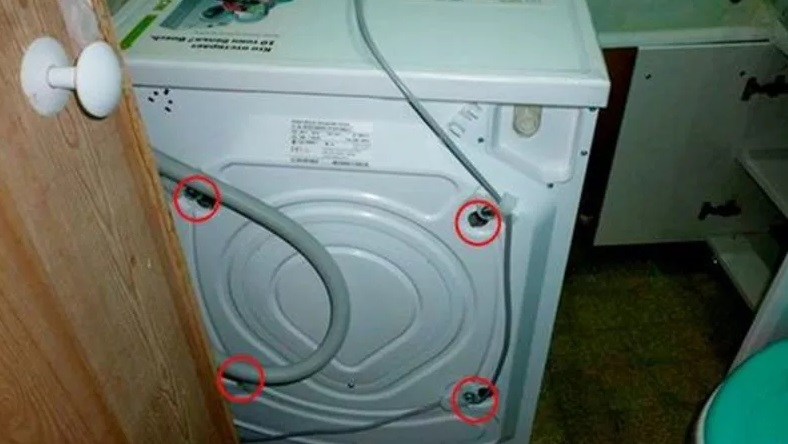
Ideally, a professional should install and connect a washing machine. A professional knows all the intricacies of installation and will remember to remove the shipping bolts, adjust the housing, and completely remove the packaging. Assembling the machine yourself can lead to unpleasant surprises, especially if you ignore the manufacturer's instructions.
Possible malfunctions
If the washing machine is installed according to the instructions, then the cause of the squeak is a manufacturing defect. It is likely that low-quality components were used during assembly of the machine, or the equipment was damaged during transportation. In any case, you shouldn't open the casing of a new washing machine yourself to troubleshoot the problem—the unit is still under warranty. The warranty card entitles you to free service, repair, or replacement.
A service center technician will determine the cause of the creaking. The unusual noise can be caused by several issues, from faulty shock absorbers to loose counterweights. All possible faults will need to be ruled out one by one.
- Defective shock absorbers. Thanks to the shock absorber system, the washing machine dampens vibrations emanating from the motor, ensuring a quiet operation. However, if the shock absorbers are made of low-quality material or selected incorrectly, the balance will be disrupted. The stands can't handle the load, the drum tilts to one side and bangs against the machine body. As a result, the machine not only rattles during washing but also "jumps" around the room. Identifying the problem is simple: simply press on the drum with your hand and observe its behavior. Did the tank return smoothly into place? Then the problem lies elsewhere. Has the drum wobbled or shifted left and right? This is a manufacturing defect.
- Defective bearing. The bearing assembly is responsible for the smooth and quiet rotation of the drum. If a defective bearing is installed during assembly, the machine will alert you to a manufacturing defect the first time you start a cycle: a distinctive knocking sound will be heard. The noise will intensify during the spin cycle, as the motor reaches maximum speed. The washer may also slow down, fail to reach the set speed, or perform poorly. If you suspect defective bearings, don't wait until the problem worsens. The slightest knocking sound is a warning sign requiring immediate diagnosis and repair. Otherwise, over time, the universal joint will wear down or the tank will leak, which is much more difficult and expensive to fix.
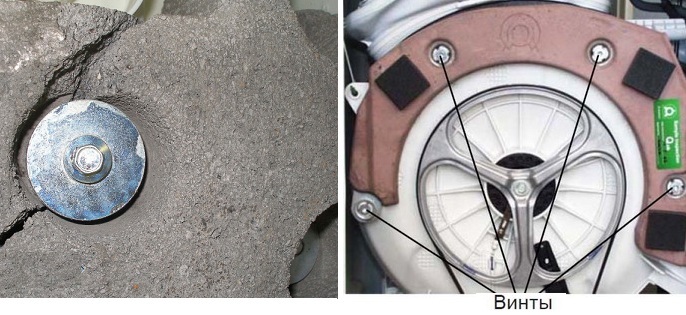
- Incomplete suspension. A missing spring on the suspension is also considered a manufacturing defect. The spring system is necessary to hold the tank in a specific position, preventing it from touching the body walls or adjacent components. If the spring is missing or has come loose, the tank will drift off course, begin to wobble, and make a knocking noise. As with shock absorbers, when checking, apply pressure to the tank from above. If the spring is defective, the tank will shift to one side.
- A loose or broken counterweight. A knocking noise can also be heard during machine operation if there's a problem with the counterweights—part of the washing machine's balancing system. These are concrete, cast iron, or plastic blocks that add weight to the machine to dampen outgoing vibration. If the weights are not properly secured or are damaged, the machine will not stay in place when starting a cycle, but will start to “dance” and knock. It is impossible to operate equipment with such a “diagnosis” – it is necessary to replace the stones or tighten the fasteners on it.
A washing machine often makes a knocking noise because of a foreign object lodged in the drum. While coins and buttons settle in both tanks and are eventually washed down the drain, sharp, lost objects like bra straps or bobby pins are more dangerous. They catch in the holes in the drum and, when the cycle starts, begin to scratch against adjacent elements. Worse still, over time, these objects can jam the mechanism, damage the heating element, or puncture the plastic container. It's best to play it safe, remove the change immediately, and ideally, call a professional.
Knocking noises on a new washing machine shouldn't be ignored. You should contact a service center immediately and insist on diagnostics. Otherwise, you could void the warranty or lose your washing machine.
Interesting:

Readers' comments
Headings
Washing machine repair




For buyers




For users


Dishwasher




Add a comment