Sometimes people suddenly feel the need to protect themselves and their washing machines from short circuits and electric shocks. Naturally, no one wants to redo the electrical wiring. They want to stick with the old outlet and the battered two-wire aluminum wiring without a ground, while still somehow protecting themselves. And so, the market has responded to this desire by launching an extension cord with an RCD for washing machines. Whether such an extension cord can really protect someone and how to choose one with an RCD is covered in this article.
How useful is such a device?
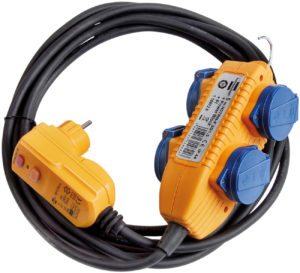
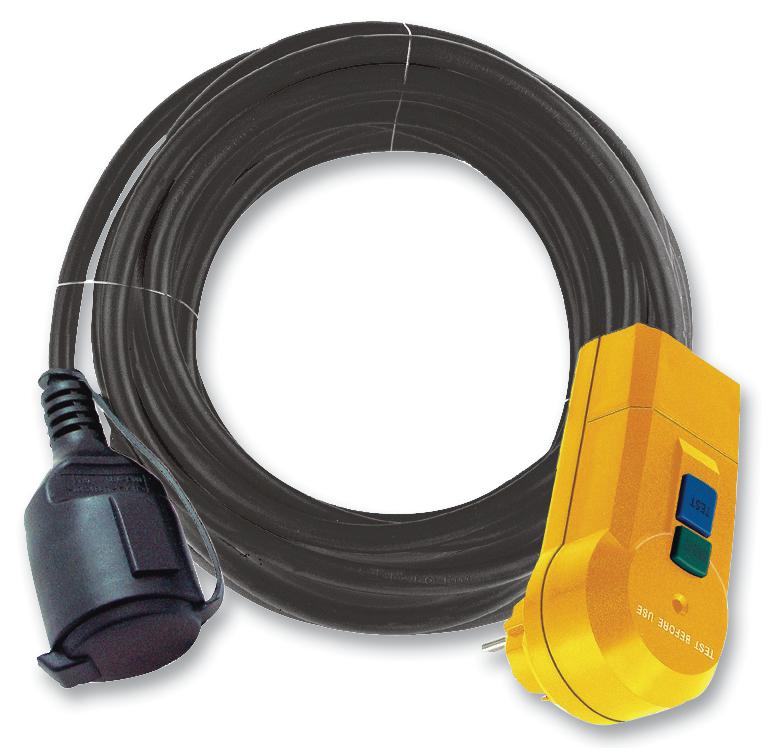
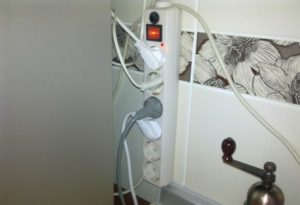
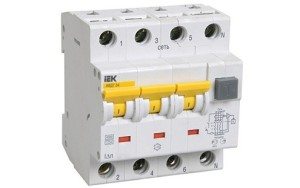
First, let's figure out how useful an extension cord with an RCD is for a person in general and for a washing machine cars in particular. An extension cord with an RCD is essentially a regular extension cord with a built-in residual current device (RCD). In the event of an overload in an electrical circuit caused by various reasons, the RCD urgently opens the circuit, de-energizing it.
In principle, it's fine to use such a device at a construction site or during renovations to connect a hammer drill, grinder, and other power tools. But we need to clarify whether such an extension cord can be used to connect a washing machine. The general rule is no. The fact is that a washing machine is a major power consumer that should be connected to a separate, moisture-resistant outlet protected by an RCD, and the outlet should be powered by a separate, RCD-protected outlet. cable cross-section had a suitable one.
The problem is that the washing machine doesn't deliver peak power immediately, but rather at the end of the program during the spin cycle. At this point, an improperly installed outlet and wiring can cause problems.
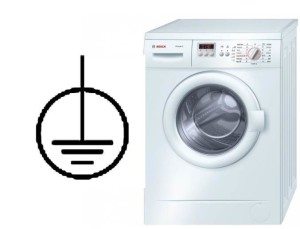
In our case, we have an ungrounded, "ancient" outlet with aluminum wiring, an extension cord with an RCD connected to it, and a washing machine connected to this extension cord. No matter how you look at it, the weak link in this chain is the outlet and the extension cord with the RCD, which are "like a poultice for a dead person." In this scenario, three negative outcomes are possible:
the circuit will break down and the person will be electrocuted the moment he unfortunately touches the body of the washing machine, and the RCD will be triggered with a delay;
an overload will occur in the circuit, which can ignite the wiring and the socket itself, while the chances that the RCD will trip and prevent a fire are 50/50;
A voltage surge will occur in the circuit, which in just a second can burn out the washing machine's power filter at a minimum, or the control board at a maximum. The automatic washing machine will stop working, and the RCD will not react to this at all.
So, what do you think, is the benefit of the extension cord with an RCD you're installing on your washing machine? We think it certainly does, but you'll also need to consider rewiring the outlet—there's no other way.
Features of selection
If you're convinced you need an extension cord for your automatic washing machine with protection, you can cast aside your doubts and immediately move on to discussing the specifics of choosing this item.
You can connect the washing machine via an extension cord, which can connect the socket to the washing machine's power cord. This means that the appliance itself must have a power cord of sufficient length.
Extension cords with RCDs are available for sale in the following lengths:
1.5 meters.
2.5 meters.
3 meters.
5 meters.
Although rare, it's still possible to find extension cords with RCD protection, with power cords of 8, 10, 15, and 18 meters. Such extension cords, of course, aren't used for household purposes. They're best found somewhere on a construction site, but situations vary, so we thought it worth mentioning them.
Be careful! Some unscrupulous Chinese businesses supply extension cords with RCDs and power cords containing thin aluminum wire. These devices are potentially dangerous and should be avoided.
Next, you need to think about the cross-section of the extension cord for the automatic washing machine, as well as the maximum load it can withstand. Most extension cords with RCDs have a copper cable of 1.5 to 2.5 mm, rated for 3500 watts. Considering that most washing machines have a power of 2000-2500 W, such extension cords are quite suitable for our purposes and there is nothing to choose from here.
Review of similar devices
We've already established that virtually any extension cord with an RCD can be purchased, and it will be suitable for our purposes. The exceptions are extension cords with excessively long power cords and low-quality appliances, but we won't discuss them further. So, which extension cord with protection is best for connecting a washing machine? Which appliance do we need? A review of extension cords with RCDs available on the market today will help clarify this question. Let's review that review.
The Brennenstuhl extension cord with RCD. This is a very high-quality German-made device. It features excellent copper wiring, a sensitive, adjustable RCD, a moisture-resistant plug, and a reliable switch with an indicator. Disadvantages: high price, minimum cable length of 5 m, bright black and yellow color.
The UB-17-u extension cord with RCD is a Russian-made extension cord from RVM Electromarket. It's rated for 16A, has a 1.5 mm2 cable cross-section, and a sensitive RCD that trips within a second. Power rating: 3500 W. Disadvantages: The cable and socket block are black, while the plug is red. The cord length is at least 10 meters.
The UB-19-u extension cord with RCD. It's from the same company, but with slightly different specifications. It has a 16A rating, 2.5 mm cable, waterproof plug, and 3500 W power. The disadvantages are the same.
That's about it. Our specialists couldn't find any other good extension cords with RCDs on the market. They're all just consumer-grade stuff that's downright dangerous to use. We hope more of this kind of electrical equipment becomes available soon, and its quality will be better.
To summarize, is it possible to connect a washing machine through an extension cord equipped with an RCD? It's possible, but the question is whether it's effective. If you want your washing machine to run safely and for a long time, don't rely solely on an extension cord with an RCD. Install a proper grounded outlet and run high-quality wiring directly from the electrical panel to it, and then you can be sure everything will be fine!

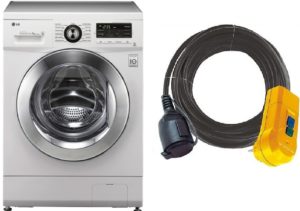 Sometimes people suddenly feel the need to protect themselves and their washing machines from short circuits and electric shocks. Naturally, no one wants to redo the electrical wiring. They want to stick with the old outlet and the battered two-wire aluminum wiring without a ground, while still somehow protecting themselves. And so, the market has responded to this desire by launching an extension cord with an RCD for washing machines. Whether such an extension cord can really protect someone and how to choose one with an RCD is covered in this article.
 cars in particular. An extension cord with an RCD is essentially a regular extension cord with a built-in residual current device (RCD). In the event of an overload in an electrical circuit caused by various reasons, the RCD urgently opens the circuit, de-energizing it.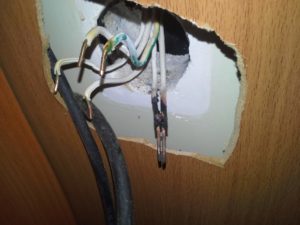
















Doesn't the washing machine produce its peak power when the water (heating element) is heating up?
Of course, during the warm-up phase. During the spin cycle, only the motor and pump work. Well, maybe a machine with a drying function.