
How to care for your tumble dryer
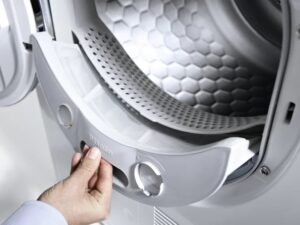 Not every family has a clothes dryer, but it's one appliance that makes a homemaker's life much easier. However, as with any other household appliance, this "home helper" requires careful maintenance. Proper care can significantly extend the life of your dryer, so don't neglect it. This process is especially simple if you follow our detailed instructions.
Shake out the lint trap
You should always start your maintenance by cleaning the machine's lint filter, which is installed specifically to trap lint while drying clothes. It is recommended to clean it after each work cycle, otherwise the equipment will start to work more slowly. However, if you systematically ignore this maintenance step, the dryer's display will eventually indicate that the lint trap is clogged and needs cleaning. Therefore, cleaning this element should not be skipped, as it directly impacts the dryer's performance.
The cleaning message can be used as a guide, but this information only appears on certain models of dryers, so make sure yours supports this feature first.
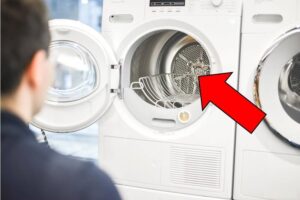
It's also worth considering that some machines, such as Miele, have two lint filters installed in the door loading area. Therefore, you need to clean both elements instead of one, first removing them and cleaning the lint not only from the mesh but also from the perforated tongue.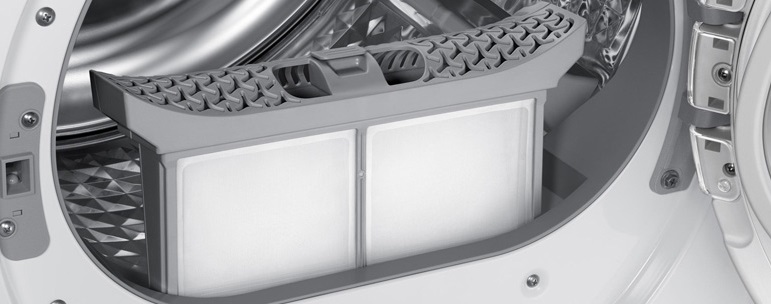
You can do this yourself using a damp cloth or rag. After cleaning, be sure to rinse the screens under a strong stream of hot tap water. Experts also recommend vacuuming the lint trap for maximum effectiveness.
Filter before the heat exchanger
After cleaning the lint element, you need to clean the base filter, which protects the heat exchanger. It's easy to find – it's located behind a small cover on the front panel of your "home assistant," directly under the loading door. Depending on the appliance model, it'll be on either the left or right side.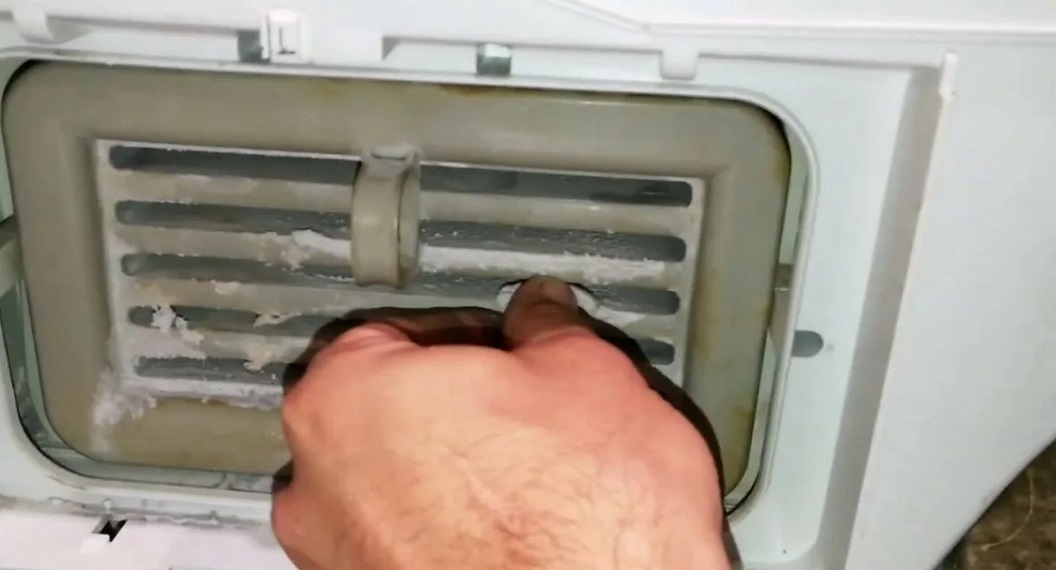
In the Miele machines mentioned above, as in a number of other appliances, the component can be removed using a special handle, which must be removed before washing. Next, run the unit under running water, wring it out, and dry it thoroughly before reinstalling it. Never install a wet or even slightly damp component, as this will damage your expensive dryer. The handle should be cleaned separately, as should the outer cover.
Cleaning the heat exchanger
Finally, we move on to servicing the dryer's heat exchanger, which should be cleaned at least once a month. To create an accurate cleaning schedule, it’s worth focusing on how actively your “home assistant” is used. It's best to clean this part a little more frequently than necessary, as it can accumulate dust and other debris, which can increase cycle time and reduce drying performance. To understand how to care for the heat exchanger, carefully read our instructions.
- To clean the unit, you must first disconnect the machine from the power supply and wait until it has completely cooled down after the working cycle.
- Then, you should place unnecessary towels or rags under the hatch to avoid accidentally spilling any waste liquid on the floors if it remains in the device.
- Locate the heat exchanger door – it is located at the bottom of the front wall of the dryer under the loading hatch on the left or right.
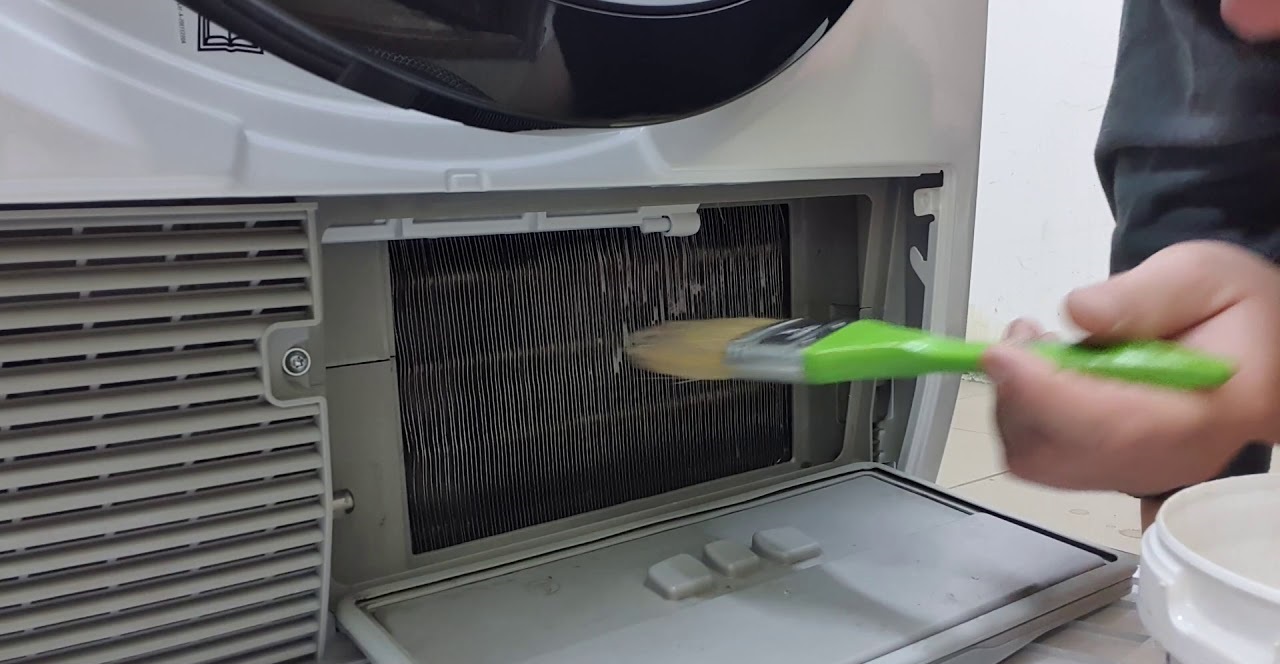
- Open the door and move the locking levers towards each other - this will allow you to remove the top cover of the heat exchanger.
- Carefully remove the knot.
- Place the element under hot water to remove dust and other dirt.
- Additionally, you can use soft sponges and rags, but do not use detergent or a brush with an abrasive surface.
- Both the heat exchanger and the seal should be cleaned.
After cleaning, you don't have to wait for the element to dry completely, like a plinth filter. Make sure the water has drained from the heat exchanger, then reinstall it according to our instructions in reverse order. This completes your dryer maintenance, so you can dry any clothes effectively again without worrying about the unit's performance.
Interesting:
Readers' comments
Headings
Washing machine repair




For buyers




For users


Dishwasher




Add a comment