
Installing a check valve for a washing machine
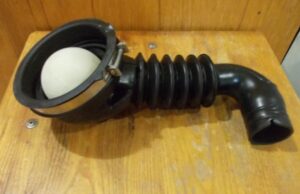
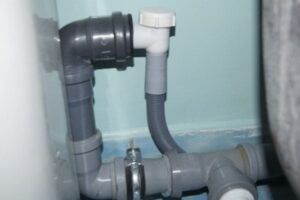 Is it necessary to install a check valve on a washing machine? Most modern models are equipped with special drain pipes with a plastic ball inserted into them. This allows water to flow out of the drum, but at the same time prevents waste from getting inside. If your washing machine doesn't have a check valve, you can install one. Installation isn't as difficult as it seems. Let's look at how to install it.
How to install this device?
You can install the flapper at any time, whether before connecting the machine or after several years of use, if any problems with the drainage system are detected. No special tools are required. To install a check valve, it is enough to disconnect the parts of the drain line - the element is installed into this gap.
In any automatic washing machine, the pump housing is the lowest point of the drainage system. A small amount of water remains in it after washing, which acts as an anti-siphon. Therefore, if the drain hose is connected correctly—bending it and diverting it to the sewer at a height of 50-60 cm from the floor—there will be no problems with waste and unpleasant odors entering the washing machine.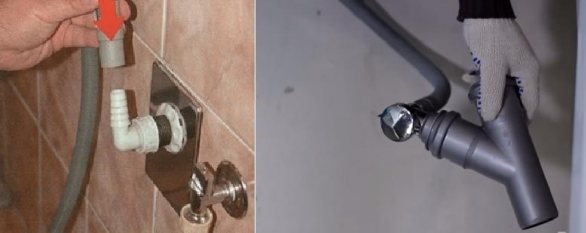
The installation process depends on the type of check valve selected. This is a highly individual process, and the appropriate valve is selected for each specific case. It's best to use a method that avoids connecting additional components to the drain line. This will help the automatic machine pump wastewater out of the tank without putting unnecessary strain on it.
When is a valve required?
Is it necessary to install a flap on the drain when connecting the machine to the house utilities? If it is possible to install the washing machine strictly following the manufacturer's recommendations, a check valve will not be required. The equipment itself will handle the task of preventing odors and waste from entering the sewer system.
A check valve is an additional element of the drainage system that increases the load on the pump.
Any additional component in the drain line will impede the pump's operation. The pump will have to work under greater strain to remove wastewater. Therefore, unless there are problems with wastewater entering the tank, it's best to avoid installing a separate check valve.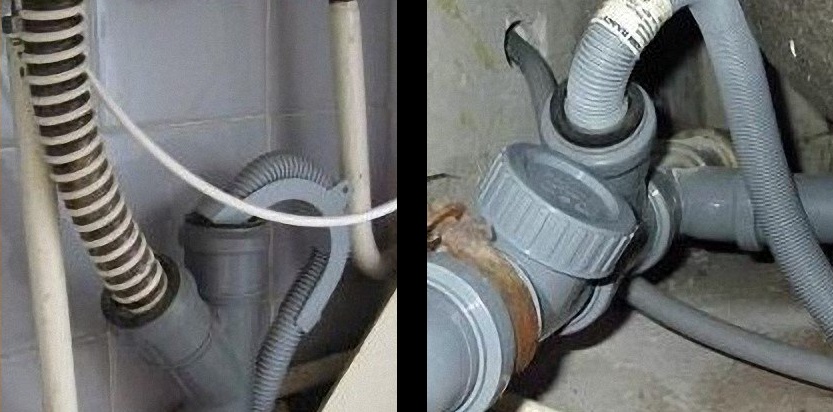
However, if proper drainage system operation is not possible without it, connection will be necessary. It's important to select the optimal type of check valve for a specific situation. The device must perform its functions while providing minimal resistance to water drainage from the tank. Most often, the need for a check valve arises when:
- The sewer connection point is located less than 40 cm above the floor. In this situation, water can flow down the drain by gravity, even when it's not needed;
- The drain hose is connected to a trap under the bathtub or shower stall. In this case, when water is removed from the plumbing fixture, liquid may also be "pulled" from the running automatic washing machine;
- The drainage hose is raised to a great height. This won't prevent water from draining on its own, but it will certainly hinder the pump's operation;
- The machine's drain hose is connected to the sink's trap with some imperfections. If done correctly, there won't be any problems. However, if done incorrectly, wastewater can leak into the washing machine, causing an unpleasant odor.
The valve only allows water to flow in one direction—into the sewer pipe. The reverse flow is blocked, preventing waste from entering the machine. If installing a flapper valve is necessary for any reason, don't neglect it.
Is it complex?
The valve design prevents water from flowing from the sewer into the machine. It ensures that wastewater drains into the pipe and remains there. It features a special spring-loaded ball or flap. The check valve can be made of plastic or steel. The flap itself has a durable rubber coating for a more secure seal.
You can choose a separate check valve or immediately purchase a siphon with a plug.
Check valves are:
- wall-mounted;
- mortise;
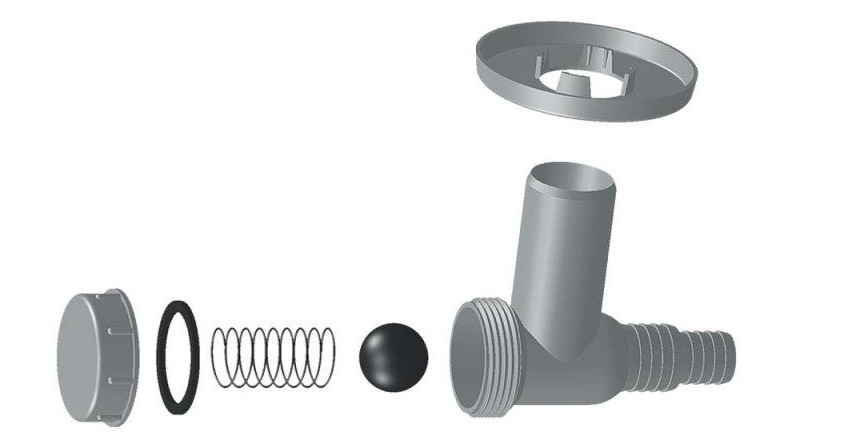
- walk-through;
- for installation under the sink.
If backflow from the sewer into the machine isn't an issue, you can install an anti-siphon. These devices, by creating a vacuum, prevent liquid from spilling out of the washing machine's drum when draining from a sink, bathtub, or shower. Anti-siphons don't put any additional strain on the pump. However, as mentioned above, they can only prevent the automatic drainage of liquid from the drum. They won't help with backflow from the sewer into the washing machine.
Interesting:
Readers' comments
Headings
Washing machine repair




For buyers




For users


Dishwasher




Add a comment