
How to install a Whirlpool dishwasher?
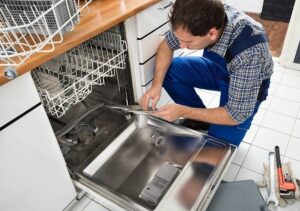 Naturally, installing a Whirlpool dishwasher isn't difficult, even for those who haven't used one before. However, it's a lengthy process, with a number of important considerations during installation. We'll cover the best placement, the correct distance from the drain and water supply, the necessary tools, and the initial setup process today.
Let's find a place for the dishwasher
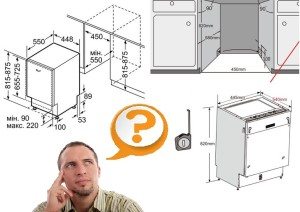
The first step before purchasing a dishwasher should be finding a suitable location. It's best not to place it next to other large appliances, and it's also important to keep in mind that it's quite large, so it won't fit comfortably in every kitchen or bathroom. Carefully calculate the dimensions of your future dishwasher to ensure it fits comfortably in the space, and consider a number of other factors.
- Utilities. The dishwasher must be near a 220V outlet, preferably protected from moisture, a water supply, and a drain. It's important to consider the length of the dishwasher's drain hose—it should be 1.5 meters or shorter, otherwise the pump will be overloaded, potentially causing damage.
- Heat sources. The dishwasher should not be placed near heat sources, as this will negatively impact its performance and longevity. For example, avoid placing it near refrigerators, gas boilers, and older electric stoves that get too hot. This does not apply to modern electric stoves, as their outer surface heats up minimally.
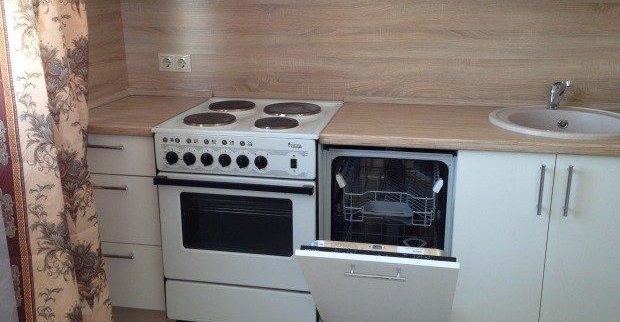
- A washing machine is also a very bad neighbor for a dishwasher, as the vibration from the washing machine can not only break dishes but also damage the dishwasher itself.
- Kitchen cabinetry. The edge of kitchen cabinetry is also a bad idea, as full-size sinks simply fit under the countertop, while their sides need to be covered, which entails additional costs.
Ultimately, the best reference point for installing the appliance is the kitchen sink – it’s easiest to install the machine to the left or right of it, where all the necessary utilities will be within easy reach.
What is needed to connect the dishwasher to utilities?
Most tools will only be needed for connecting utilities, and some of the tools listed may not even be necessary. If you need to connect a built-in dishwasher with a hinged front, the list of tools and consumables is as follows:
- adjustable wrench required to connect the tee to the water supply;
- a Phillips screwdriver, which is needed for hanging the facade;
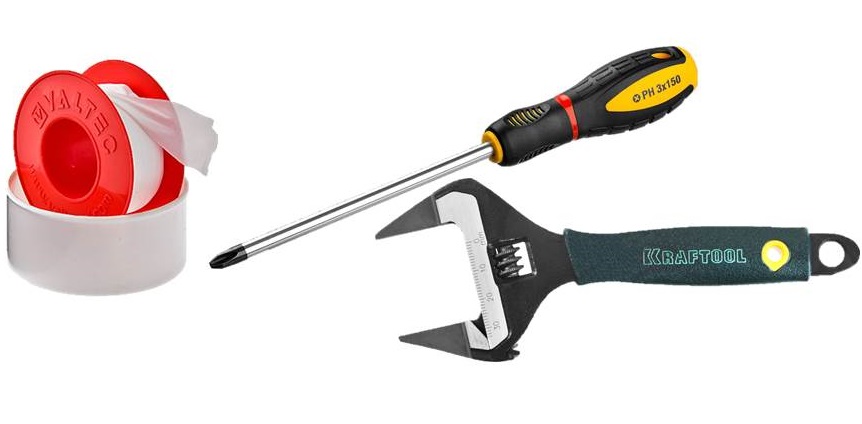
- FUM tape and plumbing mounting tape, we will use them to secure the drain hose;
- a flexible water supply hose to the machine, the length of which will be sufficient.
In specialized stores and as part of expensive dishwasher kits, you can find hoses with an Aquastop protective mechanism that can protect your apartment from water leaks, so it's best to choose only this type of flexible hose.
This concludes the list, but if your home doesn't have a place to connect the water inlet hose, you'll need to purchase a tee. It's most convenient to install it on the water inlet to the kitchen faucet.
We provide water supply to the machine
The dishwasher has been purchased, a level location for installation has been selected, all utilities are accessible, and the hoses and power cord reach the supply and outlet.
Most modern dishwashers can only be connected to a cold water supply, but some models can also use hot water. The easiest way to connect a dishwasher is through a tee with a faucet, which is suitable for connecting dishwashers and washing machines.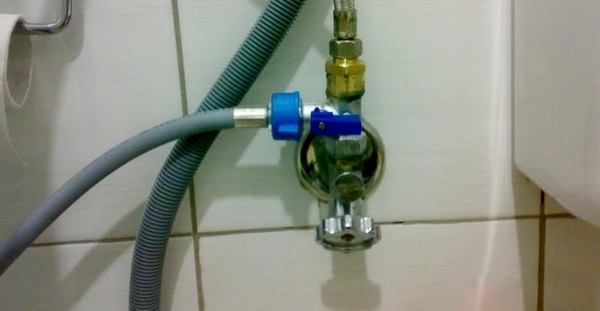
It can be installed on a water supply pipe with a ¾-inch thread, and then connected to the flexible faucet hose by the tee. This will allow you to shut off the water supply separately for the dishwasher. Be sure to turn off the cold water supply to the house before starting this procedure and ensure the threads are securely fastened with FUM tape.
As for the supply hose, it should be screwed onto the machine's water intake by hand, as it has rubber seals, so tape or scotch tape is not needed here.
We provide waste water discharge
Next, install the dishwasher's drain hose, which should have a bend about 60-70 centimeters above the floor. It's also important to ensure that the end of the hose isn't submerged in water, otherwise it will suck water back into the dishwasher. This is unavoidable, so there are two ways to prevent it: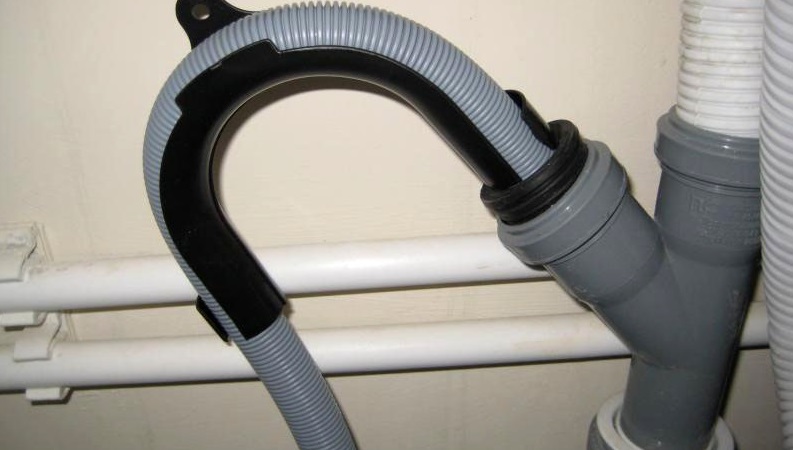
- Connect the hose to the siphon. This is the easiest way to do it, but the siphon must have a special connection for it;
- Connect the hose directly to the drain or use a tee. This method is most often used when the dishwasher is located far from the sink area. The hose should be less than 1.5 meters long, so extending it is dangerous, so it is connected to the sewer pipe.
The first method is much better because it's significantly easier and also helps protect your home from unpleasant odors. This protection is achieved by a water trap located in the sink's drain trap.
Power supply and door front
A single power outlet located close to the dishwasher is required for power supply. This is essential, as the power cord for dishwashers is rarely longer than 1.5 meters. In addition, it is important that the socket is grounded, protected by a circuit breaker, and protected from water ingress.
For increased electrical network protection, it is recommended to run the dishwasher through a voltage stabilizer, which can protect the appliance and save the house from fire.
The door panel is even simpler, as it's typically installed on full-size built-in machines. To make this easier, manufacturers include a mounting kit, including brackets, screws, etc.
But don't rush to hang the door—it's best to do this last, once the dishwasher is installed and fully configured. This only requires securing the retaining strips with screws and then attaching them to the front door. The official instructions should include detailed instructions for installing the door, so any dishwasher owner can handle it.
We are putting the PMM into operation
Now there is one last, not the most difficult, but the most important step - preliminary configuration before the first launch. After connecting the dishwasher to all utilities, it should not be started immediately under any circumstances, as it requires fine-tuning first. What is needed for this?
- Set the salt consumption level. The harder the water in your home, the higher the level should be. Water hardness can be determined using special tests, but it can also be determined visually. For example, if your water is hard, white stains will appear on your electric kettle and sink.
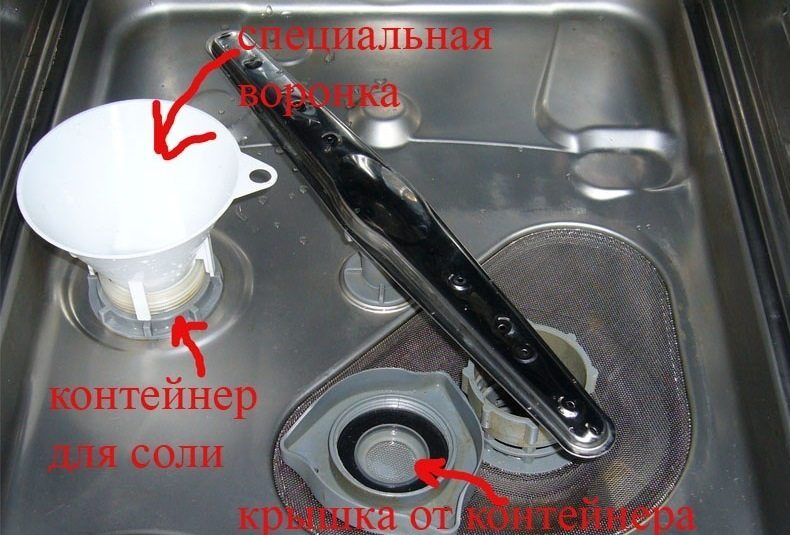
- Place the salt in the container. The container is located at the bottom of the dishwasher and has a separate lid. Before the first wash, fill this compartment to the brim with water, then add the salt. Be sure to screw the lid tightly to prevent detergent from leaking into the compartment.
- Now you need to add rinse aid and detergent. It's best to add a moderate amount of rinse aid at first to test how well the dishes are cleaning. If you're satisfied with the cleaning results, you can try reducing the amount or adding more if the dishes aren't sparkling or are drying very slowly.
After these three steps, you can turn on the machine. Sometimes the rinse aid and salt indicators will light up, indicating that these compartments need to be filled. If you've already added everything, you can load the first batch of dishes and start the wash. After the test cycle, be sure to check all the plumbing for any leaks.
This completes the installation and initial setup of the dishwasher. If all utilities are accessible, you have the necessary tools at home, and all consumables have been purchased, there shouldn't be any problems. Follow all the instructions in the manual, use the machine carefully, and perform regular maintenance. Monitor the amount of rinse aid and salt, and clean the filters of food residue, and your appliance will serve you well for many years to come.
Interesting:

Readers' comments
Headings
Washing machine repair




For buyers




For users


Dishwasher




Add a comment