
How to install a Kuppersberg dishwasher
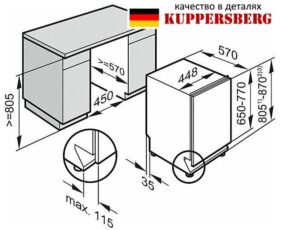 In almost all cases, installing a Kuppersberg dishwasher is a simple process that anyone can handle, even without qualifications or specialized experience. It's also a good way to save money, as service center technicians often charge unreasonably high prices for dishwasher installation. The most important thing when installing a dishwasher yourself is to consider all the nuances and rules to ensure you're properly positioning the appliance and preparing it for use. We'll explain all the details for installing a dishwasher yourself.
The car needs space
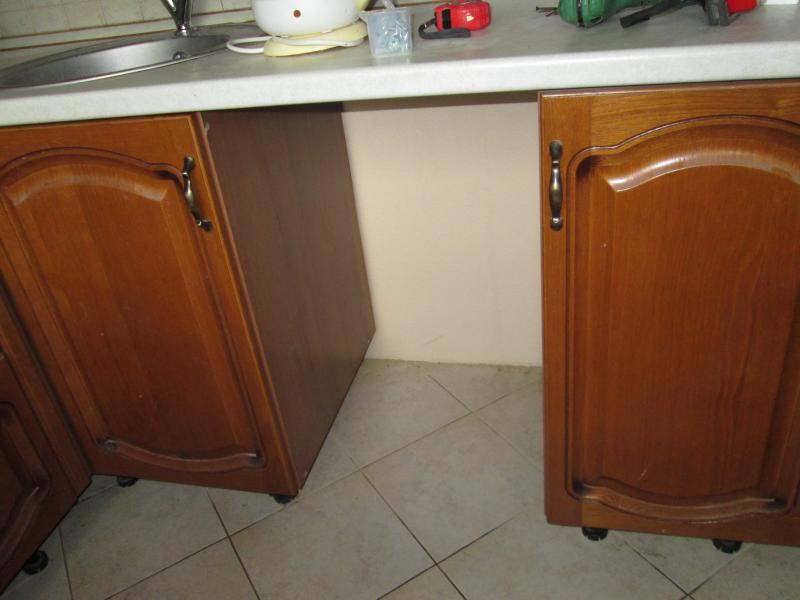
Organizing a dishwasher is something you should consider even when planning the purchase of an expensive appliance. This is because not every corner will accommodate a large appliance. The dishwasher should be placed on a surface that is as level as possible, with all necessary utilities nearby. If it's a built-in model, it should also fit precisely within the cabinet space. Here are the key points to consider when planning.
- Ready-made utilities. This includes a 220-volt outlet, and proximity to water supply and sewer lines for water collection and drainage, respectively.
It is important that the drain hose of household appliances does not exceed one and a half meters in length, otherwise the load on the pump will be excessive, which may even cause it to fail.
- Avoid heat sources. The dishwasher should not be placed next to a refrigerator or an old electric stove, which can become very hot during operation. Allowing such proximity will negatively impact the dishwasher and significantly reduce its lifespan.
- No excessive vibration. This applies to situations where the dishwasher is located next to the washing machine. Any washing machine vibrates excessively during the wash and spin cycle, which can damage not only the dishes inside the dishwasher but also the appliance itself.
- Central placement of the kitchen cabinet. This is because Kuppersberg built-in machines must be covered by the door panel to maintain the overall kitchen design. If installed at the edge, the side panel will also need to be covered, which will incur additional costs.
So, you only need to take care of four points when preparing the ideal place for PMM. To summarize briefly, the best place for the unit is the area to the left or right of the sink, since there is already a connection to the water supply and sewerage system, which means half the work is already done.
What needs to be prepared for PMM installation?
When installing appliances at home, tools are generally only needed to prepare the wiring, so in some situations, you don't need to prepare anything at all. However, if you need to connect a built-in dishwasher with a hinged front, you'll need:
- an adjustable wrench, which you will need to use to install a tee on the water supply, if you don’t already have one in your kitchen;
- Phillips screwdriver for hanging the facade.
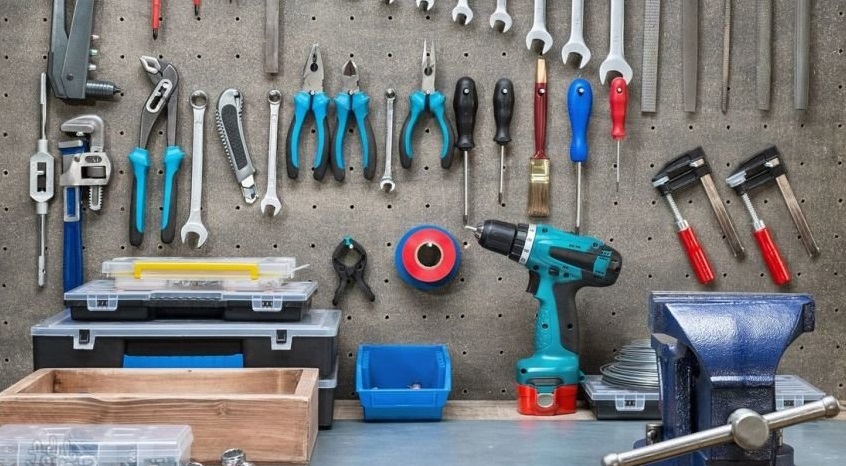
That's all for the tools. Consumables are also very simple, as you'll only need FUM tape and plumbing tape, which will help secure the drain hose. It's also a good idea to check the inlet hose—it's important that it's long enough to reach the appliance. Otherwise, you'll have to either extend it or buy a new one.
If possible, buy hoses for your home with the Aquastop system, which helps prevent leaks in the event of a rupture.
Finally, pay attention to the location of the inlet hose. If it's not provided, you'll need to purchase an additional tee to connect it to the water supply of the kitchen faucet.
Installing a dishwasher with your own hands
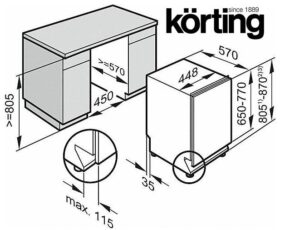
The preparation phase is complete, now let's move on to installing your long-awaited "home assistant." Before you begin, please review the Kuppersberg user manual, as it may contain additional precautions and instructions on how to maintain the warranty. Furthermore, the manual is important because it provides the manufacturer with the exact dimensions of the appliance, which is especially helpful for properly fitting the appliance into a kitchen cabinet niche.
Finally, double-check the installation and accessibility of all necessary utilities, as well as the length of the power cord and hoses. If everything is in order, turn off the cold water supply to the house and proceed to connecting to the water supply and sewerage systems.
Most modern household appliances are connected exclusively to cold water, but some units can also be connected to hot water. The easiest way to connect a dishwasher is to use a tee with a faucet, which can be used to "integrate" a washing machine in addition to the dishwasher. It should be installed directly on the water supply pipe with a ¾-inch thread, and be sure to secure it securely with FUM tape after installation. Using a tee is also very convenient because you can shut off the water supply separately for the dishwasher at any time.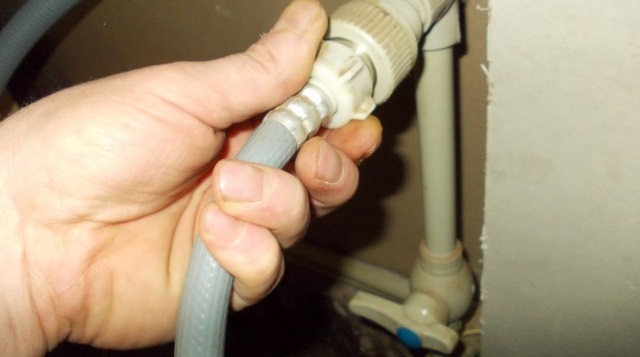
As for the inlet hose, you can connect it yourself, as it has rubber seals, so it does not need any additional fixation.The drain hose is a bit more complicated, as it needs to be positioned in a specific way—approximately 40-100 centimeters above the floor—and care must be taken to ensure its end is not submerged in water. If these requirements are not met, the wastewater after the wash cycle may flow back into the wash chamber rather than into the drain. To ensure that the wastewater always flows into the sewer, you can choose one of two options:
- Connect the drain hose directly to the siphon. This is very simple and convenient, but for this option, you must have the appropriate connection to the siphon already prepared;
- Connect the hose to the sewer directly or with a tee. This method is most often chosen when the dishwasher is located far from the water supply. Since the hose must not be longer than one and a half meters, it must be connected directly to the sewer.
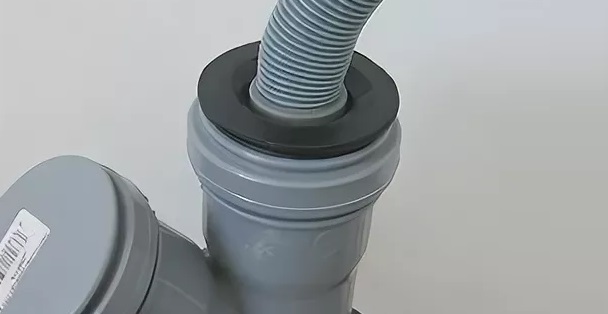
Of course, it's always better to choose the first connection method, as it's simpler and, in addition, helps prevent unpleasant odors in the house, as the sink's siphon has a knee with a water plug. After the water supply, all that's left to do is work on the power supply, for which a separate grounded and moisture-protected outlet should be provided in the house in case of a power outage. Of course, the socket must be located in close proximity to the dishwasher, since the device’s cord rarely exceeds one and a half meters in length.
Never use an extension cord to connect a Kuppersberg dishwasher – the appliance can melt due to excessive voltage and even cause a fire in the house.
The final installation step is hanging the decorative panel on a full-size dishwasher. If this is your case, your appliance should come with a special mounting kit for the panel, which includes screws, brackets, and other necessary parts. It's recommended to install the panel only after the dishwasher is connected to all utilities and leveled. To secure it, simply attach the retaining strips to the screws and install them on the dishwasher door.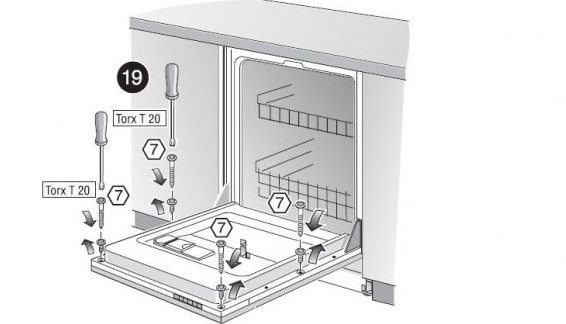
This completes the machine's preparation for long-term use. Review the official instructions again, run a test cycle to clean the unit and check for proper installation, and then you're ready to wash your dishes.
Interesting:

Readers' comments
Headings
Washing machine repair




For buyers




For users


Dishwasher




Add a comment