
How to install a Neff dishwasher
 Buying a dishwasher is not cheap. Therefore, many users try to save money on at least the connection and installation costs. While the store manager may offer to hire a professional, you can easily do the work yourself.
Let's take a look at how to install a Neff dishwasher. We'll explain the tools and supplies you'll need. It's important to follow the instructions carefully to avoid damaging your dishwasher.
Let's decide on a place for the dishwasher
After a new dishwasher arrives from the store, users are eager to try out their new "home helper." However, if the temperature outside is below freezing, take your time. Unpack the machine and let it warm up for a couple of hours in a warm apartment.
It's important to think ahead about where the dishwasher will be installed. Buyers often assume that space preparation is only necessary for built-in machines, but this is incorrect. Firstly, the dishwasher should be positioned so as not to obstruct other people's work. Secondly, its door should open freely to a 90-degree angle for easy loading and unloading of dishes.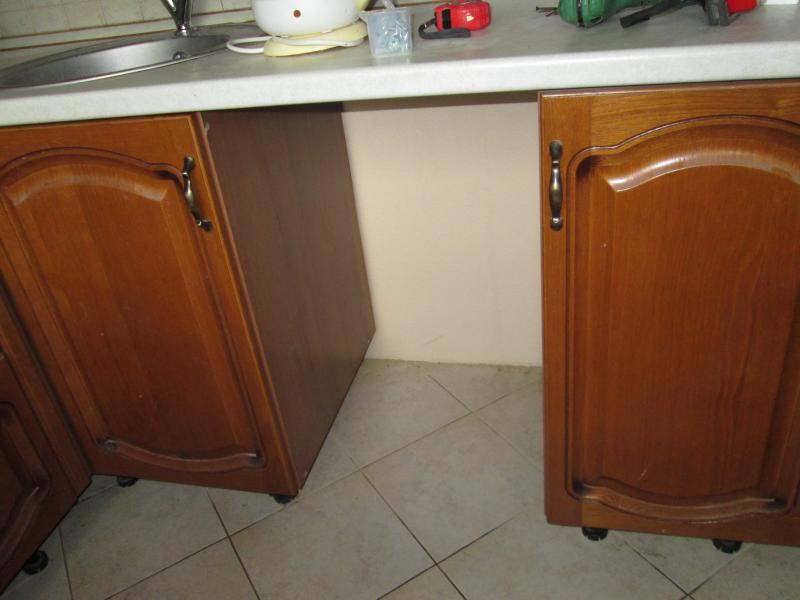
Thirdly, distance from communications is important. The distance from the dishwasher to the water supply and sewerage system should be no more than three meters. Moreover, this is the maximum value; ideally, the machine should be placed no further than 1-1.5 meters from the connection points to the house networks.
Also required:
- Place the dishwasher on a level and solid surface;
- Provide a separate, high-quality outlet for powering the dishwasher.
It is recommended to connect the dishwasher to a moisture-protected outlet.
The floor where the dishwasher is installed must be level. If your apartment has wooden flooring, make sure it hasn't sagged or rotted in the chosen location. Minor unevenness in a concrete floor isn't a problem for the dishwasher—it's perfectly acceptable to install it on such a surface.
Next, consider whether connecting to the water supply and sewer lines will be difficult. Make sure the tee fitting fits easily between the faucet outlet and the water supply pipe. Also, make sure the dishwasher's inlet hose can reach the connection point.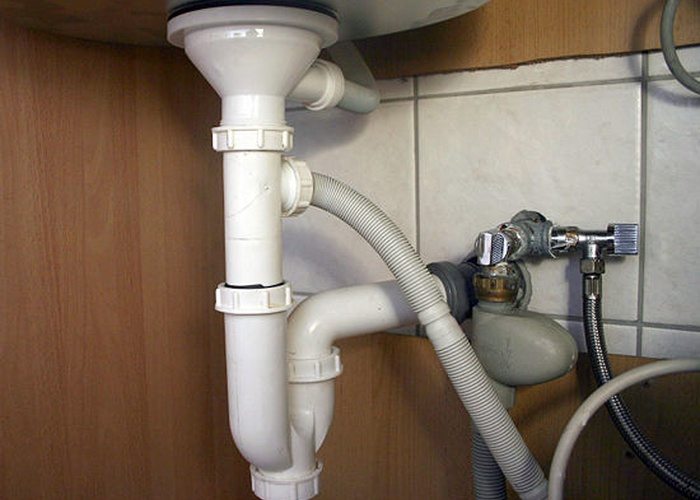
Next, check that the dishwasher's drain hose will reach the drain outlet. Experts don't recommend extending the drain hose; it should be continuous, so estimate its length in advance. Measure the distance from the installation site to the sewer connection point and compare it with the size of the corrugated pipe included with the dishwasher.
If your kitchen has a drain trap without a drain outlet, you'll need to replace it to connect the dishwasher. Otherwise, the dishwasher's drain hose will have to be constantly lowered into a sink or basin. This is unsightly and unsafe—the corrugated pipe could slip off, causing water to spill directly onto the floor.
An equally important consideration is the electrical system. The outlet must be high-quality and powerful enough to withstand the load generated by the dishwasher, and also have a high level of moisture protection. It is recommended to connect the dishwasher via a voltage stabilizer. The device will protect the dishwasher from power surges.
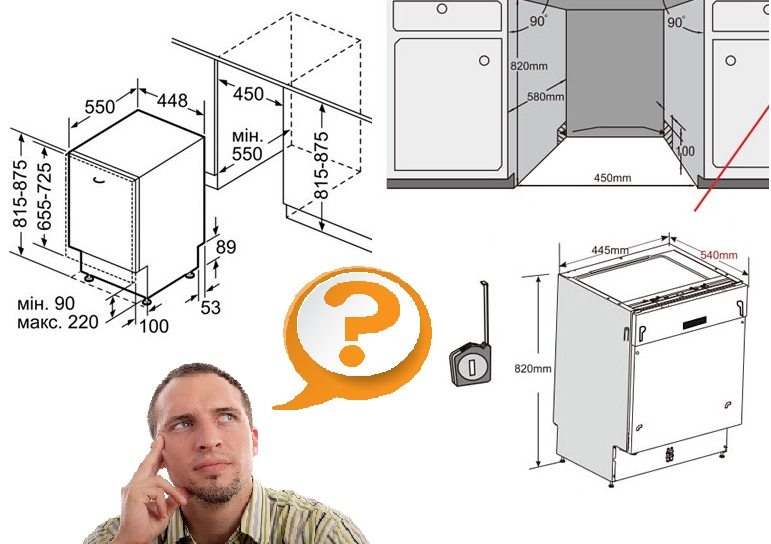
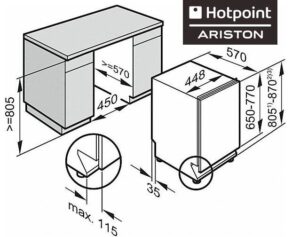
If the dishwasher is built-in, carefully measure its dimensions, taking into account all protruding parts. These measurements are then compared with the dimensions of the niche or cabinet where it will be installed. It's important to leave 5-6 cm of clearance at the back for connecting the drain and inlet hoses.
We will purchase materials
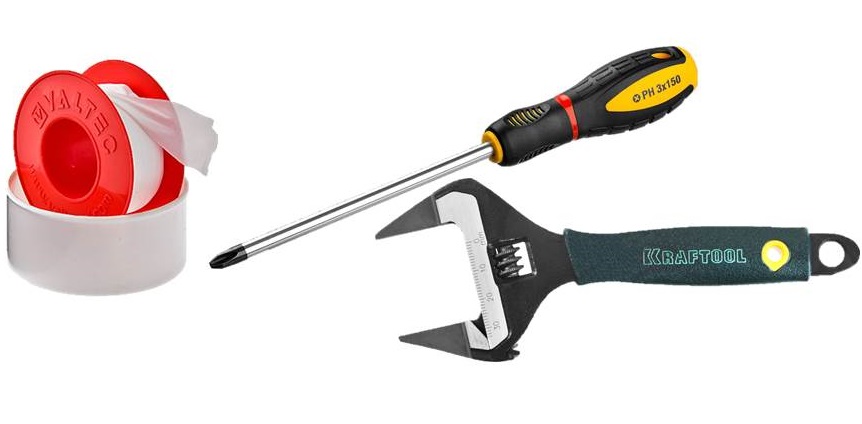
To connect a Neff dishwasher, you'll need a standard set of tools and supplies. You'll need a couple of screwdrivers, a Phillips-head and a flat-head screwdriver, pliers, a level, and an adjustable wrench. Everyone has these tools in their home.
You'll have to buy the supplies, although you might have some at home. You'll need:
- FUM tape;
- moisture-resistant sealant;
- PVC insulating tape;
- siphon with a branch (if an element without a nipple is installed under the sink);
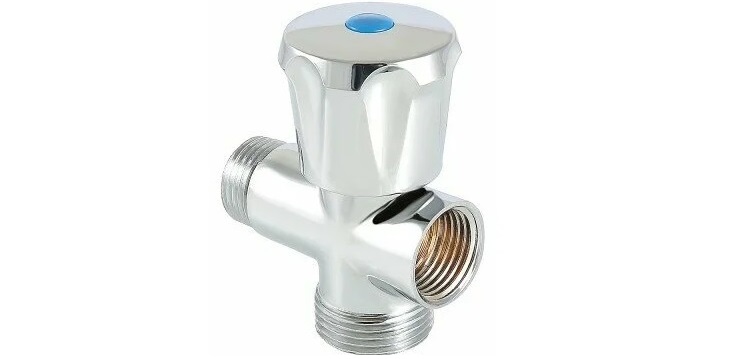
- brass or bronze tee tap with a diameter of 3/4;
- flow-through mesh filter;
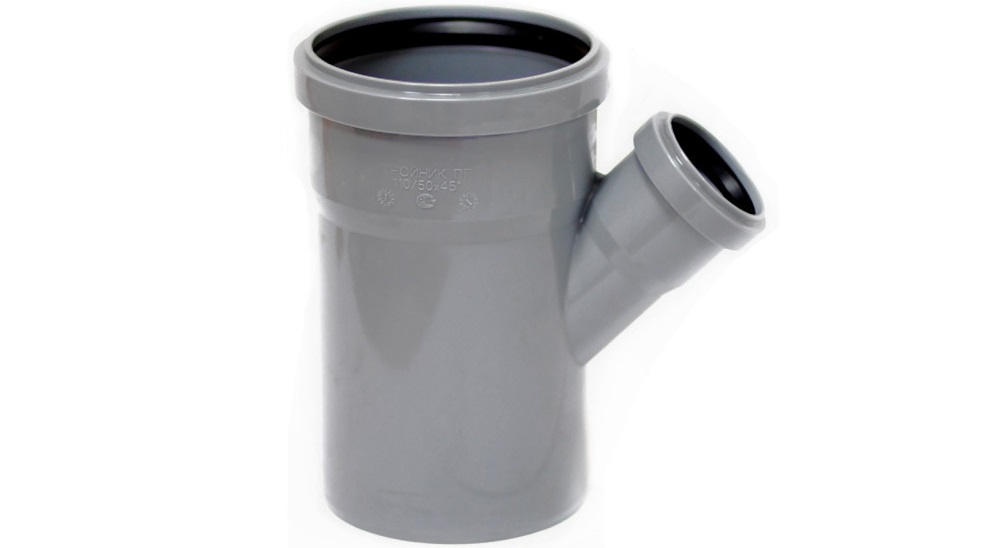
- tee on the sewer pipe (if the outlet was not made in advance).
If you need to install a socket for the machine, the list of consumables will expand. You'll need to purchase:
- three-core copper wire with a cross-section of 2.5 mm;
- a moisture-proof socket;
- residual current circuit breaker for line protection;
- voltage stabilizer.
You cannot connect a powerful electrical appliance such as a dishwasher to an old outlet or through an extension cord.
To install a separate power line for the dishwasher, you'll also need a hammer drill for cutting grooves in the walls, an indicator screwdriver, wire cutters, and conduit. If you don't have electrical experience, don't attempt to run the wire from the panel and install the outlet yourself. It's unsafe—it's best to leave this task to a professional.
Installing a dishwasher
Connecting a dishwasher to the water supply and sewer system is similar to connecting a washing machine. It also has inlet and drain hoses, which are connected in a similar manner. Therefore, if you have experience installing washing machines, the upcoming work will be straightforward.
The procedure for installing a dishwasher will be as follows:
- turn off the cold water supply to the apartment;
- If there is a siphon without a nozzle under the sink, replace it with a device with a drain for the dishwasher;
- connect the drain hose to the machine;
- connect the inlet hose to the dishwasher;
- move the machine to the place where it will stand;
- remove the plug from the drain hose and connect its other end to the siphon fitting (it is recommended to treat the connection area with a moisture-resistant sealant);
- unhook the tap branch from the water pipe;
- connect the purchased tee faucet and the flow-through filter (the mesh will protect the dishwasher from large debris contained in tap water);
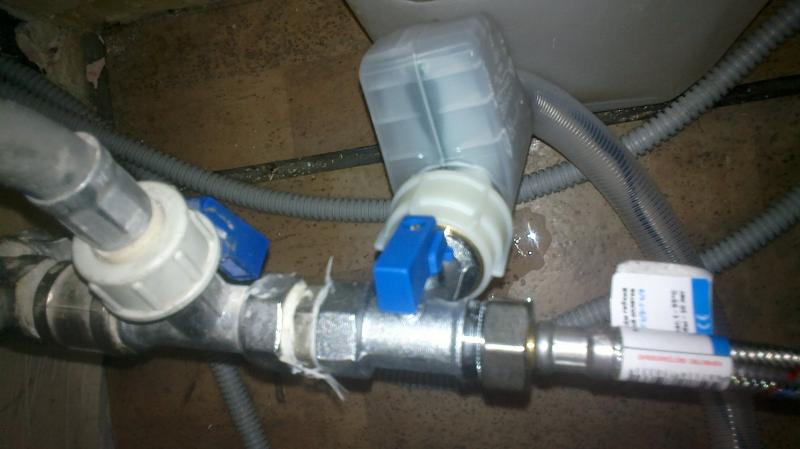
- screw on the tee tap, insulate all joints with FUM tape;
- connect the corrugated pipe to the mixer tap to one outlet of the tee, and the inlet hose of the dishwasher to the other;
- Adjust the position of the dishwasher's feet so that it is level.
The power supply, if required, is installed before connecting the Neff dishwasher to the water supply and sewer lines. The copper wire can be run overhead and hidden in a cable channel, or it can be installed in the wall, which will require pre-cutting. It's important to remember safety precautions; work on the panel board is only permitted after the power has been disconnected from the apartment.
If the dishwasher is built-in, the instructions will include one more step: hanging the door panel. Installing the decorative panel is very simple – it attaches with special fasteners. No additional tools are required.
After installing the dishwasher, run a test wash without any dishes in the chamber. Observe the dishwasher's operation – it should fill and drain smoothly. Make sure there are no leaks at the connections. If everything is OK, you can begin using the dishwasher fully.
Interesting:
Readers' comments
Headings
Washing machine repair




For buyers




For users


Dishwasher




Add a comment