
How to install a dishwasher yourself
 Major retail chains specializing in household appliances offer free installation and connection of dishwashers and washing machines. The cost of this service is included in the purchase agreement, which is very convenient for the consumer. But what if you can only install the dishwasher yourself? Given the current prices for such services, it's often easier to install the dishwasher quickly and yourself. This article will discuss how to install a dishwasher yourself, and we'll also offer a video on the topic.
Does the car need to be prepared for installation?
For specialists, the question of whether a car needs to be prepared for installation is absurd in itself. How could such a task be accomplished without preparation? It's like driving a car constantly without regular maintenance and repairs. It's not hard to guess how this would end. Preparation for installation can be roughly divided into two stages: choosing and preparing a location for the dishwasher and selecting the necessary tools and materials yourself.
We'll talk about preparing tools and materials in more detail a little later, but for now let's say a few words about choosing and preparing a location. The specifics of preparing a space for a dishwasher will depend on its type, the configuration of your kitchen, personal preferences and wishes. It's best to first draw a precise kitchen plan yourself, calculate the position of each appliance down to the centimeter, taking into account the thickness of the material. Next, choose the right dishwasher. There are videos online on how to do this correctly. If you're installing a dishwasher in cabinetry, you must accurately measure the niche you're preparing; even a half-centimeter error will result in the dishwasher not fitting.
Important! Before installing the dishwasher, check the height adjustment of its feet, as this can also affect the final installation result. You can watch the video tutorial on how to adjust the dishwasher feet.
Remember that the dishwasher should be located as close as possible to the socket and the outlet of the sewer and water pipes. It's possible that neither the pipes nor the electrical connections are properly prepared. In this case, you'll need to install electrical wiring and install an outlet. You'll also need to install plumbing and sewer lines. Videos explaining how to install electrical connections yourself are also available. If installing a dishwasher in a complex way (under a sink, in a cabinet, etc.), you'll need to modify the associated cabinet or replace the trap located under the sink.
What do you need to install a dishwasher?
Essentially, installing and connecting a dishwasher doesn't require much. A minimum of tools and materials are required. However, individual situations that require unique technical solutions cannot be ignored. Tools you'll need include pliers and a screwdriver. An adjustable wrench is also a good idea, though you might need one. The kit itself will depend on the dishwasher's location; the further away it is from utilities, the more expensive the kit.
FYI! The stock hoses are usually quite short—1.5 or even 1.3 meters. If you place the car right next to the sink, they'll be long enough.
Let's imagine that our dishwasher will be installed 2 meters from the pipes, which means we'll have to buy longer hoses, which will expand the list of components. You'll also need tap for connecting the dishwasher to the water supply. The most commonly used type of tap is a tee., but there may be other options, for example, if you plan to connect a washing machine as well. In this case, you can use a faucet with four outlets.
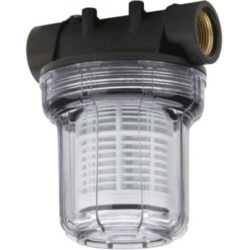
You'll also need a coarse water filter. It's essential to install one, as otherwise, debris will enter the dishwasher with the tap water and damage its internal components. In rare cases, you may need a set of rubber gaskets, which can be purchased at a plumbing supply store.
If you haven't installed a waterproof outlet in your kitchen before, you should definitely do so and add it to your list of required components. It's also a good idea to purchase and install a stabilizer in the kitchen to protect your dishwasher, as well as your washing machine and refrigerator, from power surges. So, here is a rough list of tools and materials, of course, you might need some other things, some small ones, but basically that’s all.
Please note: If you're remodeling your kitchen to install a dishwasher, you'll need a much wider range of tools and materials.
DIY machine installation instructions
The easiest way to install a freestanding dishwasher is by far. There are plenty of good videos online that provide user guidance on this topic. Here are our instructions.
- We roll the dishwasher as close to the installation site as possible, but so that there is unimpeded access to the hoses, power cord and communications.
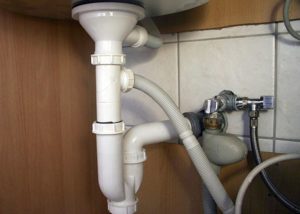
- We connect the drain hose to the siphon located under the sink with our own hands (the connection is made to the side outlet of the siphon).
- We shut off the cold water supply. We crawl under the sink and find where the cold water pipe connects to the faucet outlet hose. We unscrew the hose and screw a tee onto the pipe.
- After the tap, you need to screw on a coarse flow filter so that you can turn off the water at any time and clean this filter.
- We screw the inlet hose onto the filter ourselves, which needs to be connected to the dishwasher.
Please note! It is very important to properly seal all connections, otherwise leaks and future problems with neighbors may occur. You can watch a video on proper sealing of connections.
- If you need to connect the dishwasher to the hot water supply yourself, you should follow the same procedure. However, be careful not to burn yourself.
- Next, you need to connect the power cord to the outlet and you can push the dishwasher back into place. You need to move the car very carefully so as not to accidentally snag, tear off or crush the hoses and wires.
- Once the machine is in place, you can perform a test run, as indicated in the dishwasher instructions.
Your dishwasher installation is complete. We've described the most general approach to installation and connection; your specific setup will likely have some nuances that are difficult to anticipate. But we're confident you can handle it yourself, and the video below will help you along the way!
Installation features for some types of dishwashers
We've covered the basics of installing a dishwasher yourself. While our instructions are based on the simplest freestanding dishwasher, there are also narrow dishwashers, small dishwashers, integrated dishwashers, and even combination dishwashers. We'll discuss the installation specifics of these machines in this section.
Please note: Built-in dishwashers can be either small, narrow, or full-size.
Installing built-in dishwashers. Built-in dishwashers are installed in the same way as freestanding ones, provided the space has been properly prepared. Connecting built-in dishwashers is usually quite inconvenient; you'll have to carefully move the machine so the hoses reach the desired location and still be able to access them. However, once the connection is complete, all that's left to do is slide the dishwasher into the prepared niche and hang the cabinet door.
Installing small dishwashers. Small dishwashers are connected like any other, but they're easier to install, not least because they're smaller and lighter. Some people mount small dishwashers directly on the wall themselves. No diagrams or instructions are needed. Simply purchase a special wall mount, screw it to the wall, hang the small dishwasher yourself, and then connect it according to the instructions described above.
Narrow dishwashers are connected the same way as other dishwashers, but combination dishwashers are more complicated. A combination dishwasher includes a gas cooktop, an electric oven, and a dishwasher. This means, in addition to water and electricity, you need a gas supply. We do not recommend working with gas lines on your own using instructional videos – please consult with specialists.
In conclusion, connecting a dishwasher to the utility lines, like installing it, is generally not the most difficult job. You can do it yourself from start to finish; just follow the instructions, and you'll be fine. To be on the safe side, you can watch the dishwasher installation video below.
Interesting:




1 reader comment
Add a comment
Headings
Washing machine repair




For buyers




For users


Dishwasher




Is it possible to connect a dishwasher through a polyphosphate filter?