
How to connect a Bosch dishwasher yourself
 The proper operation of a Bosch dishwasher depends largely on its proper installation. The slightest mistake can lead to leaks, at a minimum, or, at worst, a fire in the electrical system, leading to warranty repairs being denied due to improper installation of this technically complex appliance. A video instruction manual will help you properly connect a Bosch dishwasher, and in this article, we'll explain some of its points and explain the nuances of such a connection.
Where to place the dishwasher and how to prepare the installation?
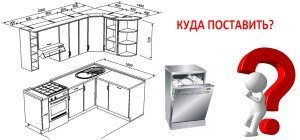
Before you install your Bosch dishwasher yourself, you need to clearly determine its installation location. It's important to remember that a dishwasher isn't just a household item, like upholstered furniture or cabinetry, which can be moved at any time. Its location is related to the location of electrical and water communications, so you should expect that the choice of location will be final.
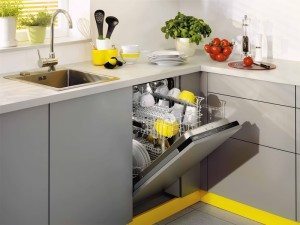
Experts believe the ideal location for a dishwasher is in the kitchen, to the right or left of the sink. Why?
- You won't need any special long hoses (inlet and outlet), you can use regular stock ones.
- It is more convenient to connect to the drain, which means that waste will drain away without obstruction.
- You can quickly transfer dirty dishes from the sink to the dishwasher, because the baskets for plates and cups will be within arm's reach.
Please note: The shorter the dishwasher inlet hose, the better, as a short hose is slightly better protected against water hammer than a long one.
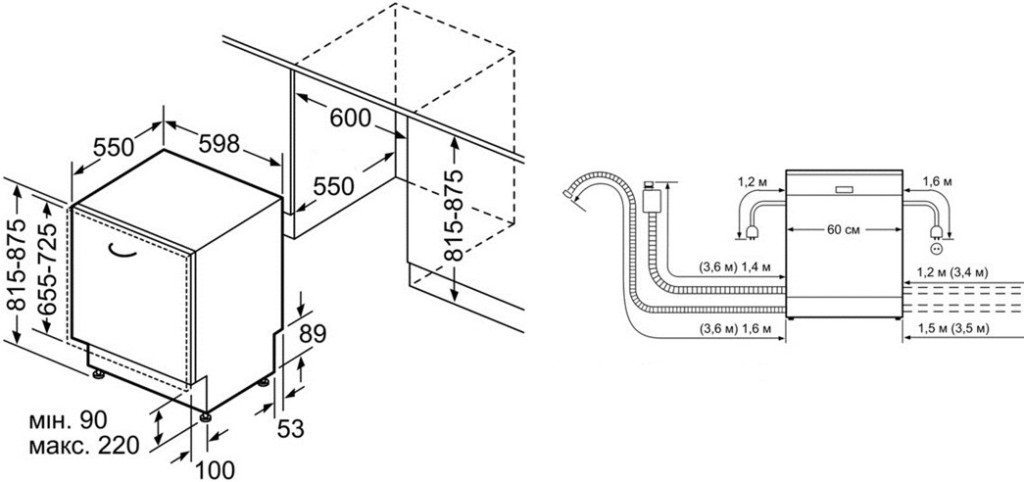
In this sense, it's easier to buy built-in appliances from Bosch; you don't have to worry about where to install them, as the kitchen cabinets already have a niche designed to fit the dishwasher. Besides deciding where to install the dishwasher, you also need to decide how you'll connect it, and this should be done in advance.
Pay special attention to the electrical connections. Many people, for some reason, think that simply installing a reliable European-style outlet with a moisture-proof housing is enough to safely connect a dishwasher or washing machine. In reality, it's not that simple, as such a connection is like playing a lottery, with the chances of your new appliance burning out quite high.
Professional electricians insist that household appliances such as dishwashers and washing machines be powered by a separate grounded network with a residual-current circuit breaker and stabilizer. This is by no means a whim. The quality of power supply in Russia and the CIS leaves much to be desired. Constant fluctuations and surges in power supply regularly cause breakdowns in various household appliances. Considering that all Bosch appliances are quite demanding when it comes to power quality, every possible precaution is necessary.
Important! You can connect both a washing machine and a dishwasher to the same electrical network; just be sure to correctly calculate the wire cross-section and stabilizer power.
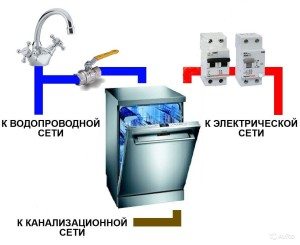 Installing a separate electrical system yourself is strongly discouraged. There are many videos online where experts demonstrate how easy it is to install the wiring yourself, but for some reason they don't bother with the possible consequences of electric shock. While the videos make everything look easy, the reality is often quite different. Don't take risks; leave this job to the professionals. Here's a rough list of tasks they'll need to complete:
- cut out a wall to lay electrical wires (this can be done independently);
- select a wire of the required cross-section and material and lay it;
- select and install a residual current circuit breaker;
- organize grounding;
- install a moisture-resistant socket;
- connect the stabilizer (you can do it yourself).
We've decided on the electrical communications, now we'll move on to the water ones. It is necessary to immediately arrange the outlets for connecting the dishwasher Bosch to a cold or hot water pipe, And also install a two-way siphon on the sink: one for the washing machine (if one is installed in the kitchen) and one for the dishwasher. Basically, that's all there is to it for plumbing. Let's begin preparing for the dishwasher installation.
What tools and materials will be needed?
Before starting installation, you'll need to stock up on a few tools and materials. You won't need anything special; everything you need can be found either in your pantry or at your local plumbing supply store. Here's a list.
- Flat and Phillips screwdriver.
- Fumka (tape for waterproofing).
- Pliers and a small adjustable wrench.
- Siphon (if there is already a suitable one with a fitting, then it is not necessary).
- Plastic or bronze tee (thread should be 3/4).
- Flow filter (has a fine mesh that prevents debris from entering the Bosch dishwasher).
- A tap that is installed on the inlet hose (needed in case of a leak, so as not to shut off the entire riser, but only the supply to the dishwasher)
- Drain and inlet hoses (if the hoses included with the dishwasher are long enough, then this is not necessary).
Please note! A flow-through filter is required for your dishwasher, even if a similar filter is installed on the standpipe. It purifies the water rather harshly, but it will save your dishwasher.
Procedure for production of works
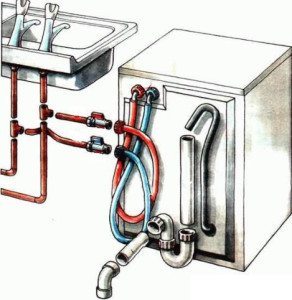 To install a Bosch dishwasher yourself, you'll need instructions. It's not a particularly difficult job; at first glance, it all seems intuitive and takes 5 minutes. However, there are significant nuances, and if you ignore them, a defect may appear 2-3 days after installation. There are also many videos on dishwasher installation, but they all present different approaches. We'll try to describe the correct sequence of steps.
- Connect the free end of the drain hose to the outlet (nipple) of the siphon. This requires creating two bends: one at the base of the dishwasher and one at the siphon itself. Video technicians pay special attention to this, as the bend is the best way to avoid the "siphon effect" and prevent foul sewer odors from entering the dishwasher.
Important! Many video technicians suggest simply pulling the hose over the drain trap outlet without securing it. This is incorrect, as the force of the water flowing down the drain can easily tear the hose off and cause a flood. It's better to secure the connection with a clamp; this will be more secure.
- Turn off the water. If you have separate faucets on both the hot and cold water risers, there won't be any problems. If you can't turn off the water in your apartment, you'll have to use the shutoff valve located in the basement.
- We disconnect the cold water pipe from the faucet located in the kitchen, shorten this pipe if necessary and install a prepared tee on it, carefully winding all connections.
- Next, we connect the faucet to the tee, and through it, the dishwasher's inlet hose. That's all there is to it.
Be sure to wrap the threaded liner around the threads; it shouldn't come loose or significantly interfere with the fasteners. Now you can connect the dishwasher to the power supply and perform a test run, but first, remember to open the shut-off mains. When checking the connection, remember to monitor the integrity of the threaded connections; if any water is dripping, they need to be redone.
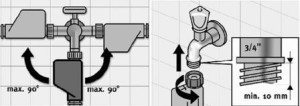 The installation, including the time spent moving the dishwasher and turning off the water, should take you about 20 minutes, maybe a little longer if there is a problem with the tee fitting. This is not much, considering that a service center technician will charge you $10 for installing a dishwasher.
The dishwasher installation instructions don't cover some of the nuances involved. However, connecting a Bosch dishwasher does have its own unique features. The key is the inlet hose valve. It can be installed either way, and water won't leak right away, but if it's installed the wrong way, a leak will definitely occur within a couple of days. To avoid problems, follow the instructions exactly; there are no small details involved.
To summarize, anyone can connect a dishwasher, even those with no technical experience. Installation won't take much time, and you'll save some money as a result. If anything in this article remains unclear, you can watch the video below. In it, the technician explains and demonstrates everything step by step, so you're sure to get it right.
Interesting:


1 reader comment
Add a comment
Headings
Washing machine repair




For buyers




For users


Dishwasher




Diff is a must where there is no grounding.