
How to install a Bosch tumble dryer?
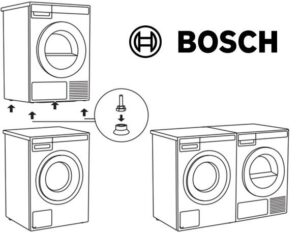 In most cases, after purchasing a Bosch dryer, the new owner immediately has to call a specialist to connect it. However, you can do this yourself if you follow the tips provided in this article. This will save you unnecessary costs, which is important for many. So, where do you begin installing a Bosch dryer? First, you need to choose a location for it.
Where to place the Bosch dryer?
It's no wonder so much attention is paid to choosing the location for your dryer. After all, the installation details will depend on this. There are several placement options:
- on top of the washing machine;
- in close proximity to the washing machine;
- in a special cabinet or niche;
- under the countertop or sink.
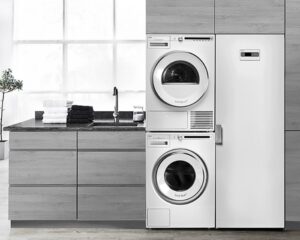
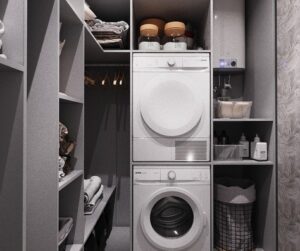
The most common option is the so-called "stack" installation, where the dryer is placed on top of the washing machine. This reduces the space required, which is crucial for those living in small apartments. However, stacking one dryer directly on top of the other is not possible; the manufacturer's instructions must be strictly followed.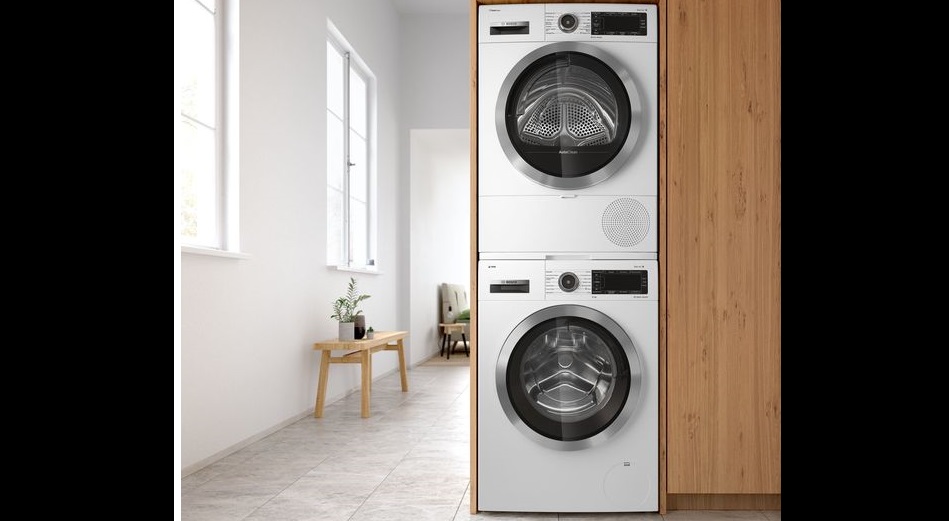
- First, make sure the washing machine is equal to or deeper than the dryer. Otherwise, the lower tier won't be able to handle the load.
- Next, special anti-tip caps and locks are installed on the washing machine body. These are usually included with the dryer (if this installation method is supported). They can also be purchased separately.
- After this, the legs of the dryer are unscrewed and the caps are installed.
- The position of the device is adjusted using a building level.
Important! Do not install the dryer in a column unless it is securely fastened.
The dryer can also be mounted using wall-mounted structures made from special rails. This option is more reliable, but is used much less frequently, as the anti-tip caps are much more aesthetically pleasing. You should not install appliances without the fixing devices, as their function is not only to protect the washing machine from vibration, but also to ensure the stability of the "upper tier" and prevent the appliance from tipping over.
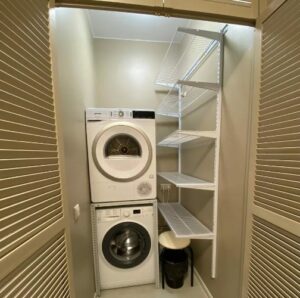
If for any reason the owner does not want to use locking devices, it is better to place the washer and dryer side by side. This option is safer and easier to install, but requires additional space. It is ideal if the room is large or if there is a separate room (closet, dressing room, etc.) where the appliance can be stored. In this case, simply bring the washer in, remove the transport bolts, and level it.
It is recommended to purchase a washing machine and dryer in pairs; this will ensure matching dimensions and allow you to create a unified style in the room.
If you plan to install a dryer in a drywall niche, consider installing a special cabinet or corner for this purpose during the renovation process. If possible, you can build a two-story structure yourself to conveniently accommodate both dryers.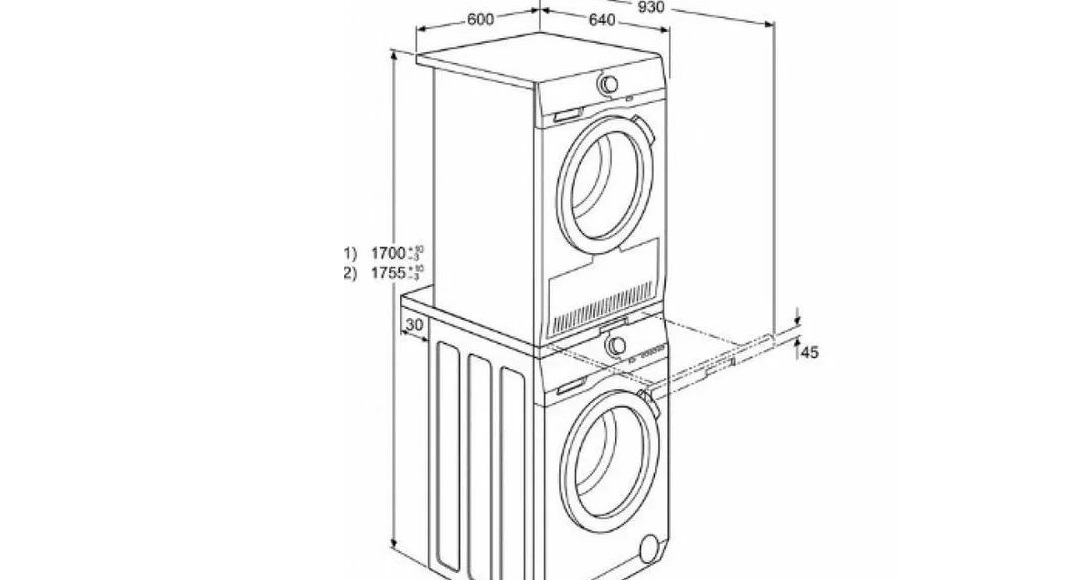
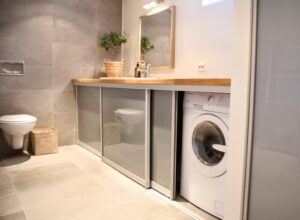
An even simpler option is to install a dryer under a kitchen counter or sink. The key is to choose the right model. It's important that its dimensions match the cabinet's dimensions and that the lid is removable. The kitchen is the ideal location for a condenser dryer, as easy access to the drain makes connecting the unit easy.
In general, installing a Bosch dryer is similar to installing a washing machine. Therefore, you shouldn't encounter any particular difficulties. The main thing is not to forget about safety and to act strictly in accordance with the rules contained in the manufacturer's instructions.
Preparing the condensation dryer for operation
Bosch condenser dryers and heat pump appliances are installed in a similar manner. It's worth noting that the installation process for these appliances is very similar to that of washing machines. The only caveat is that the electrical and plumbing connections require more careful consideration.
It's up to you to decide whether to connect your dryer to the sewer system or not. However, if you don't, you'll have to manually drain the tray after each cycle. Connecting the dryer to the drain pipe makes life much easier. Installation is straightforward. All models come with a dedicated drain hole for the hose. The accumulated liquid can be discharged into the toilet, sink, or main drain.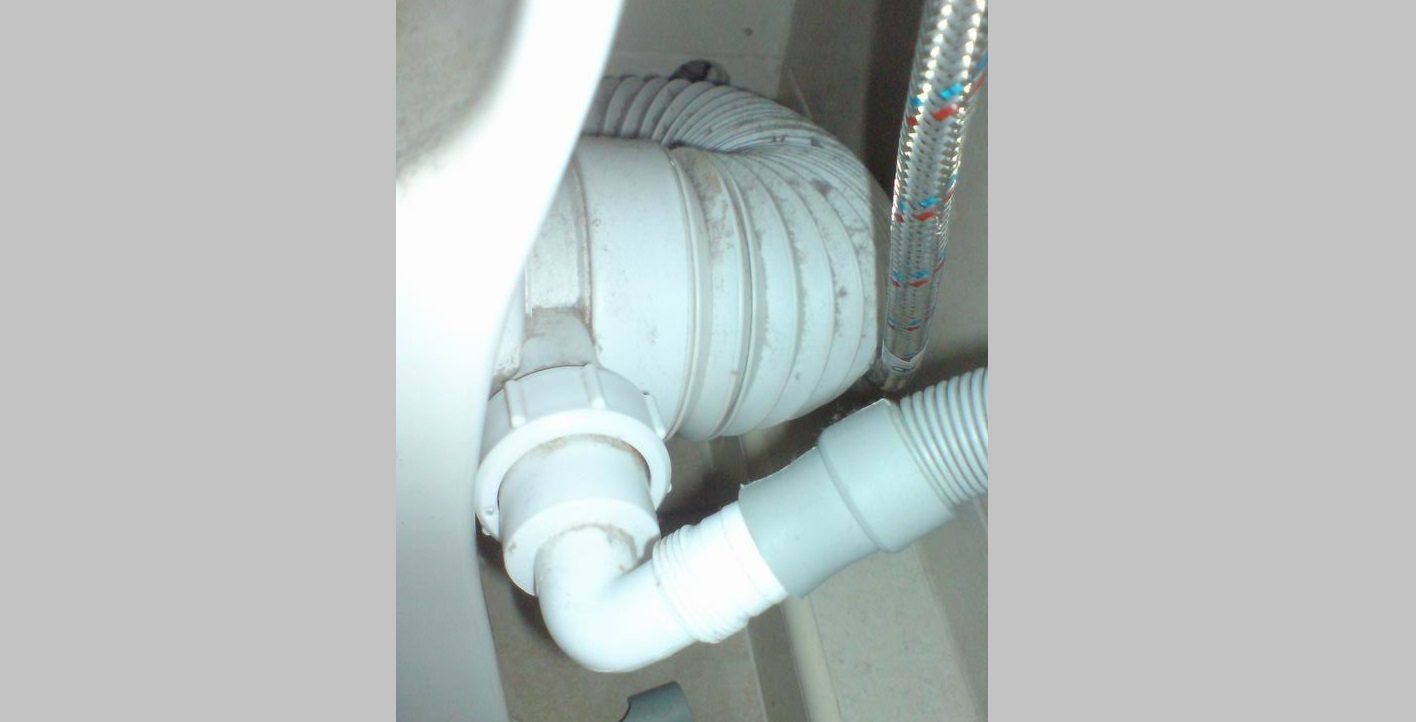
The next important point is connecting to the power grid. The dryer can be plugged into a standard outlet or connected to a separate power line from the mains panel. Using a pre-wired outlet is simpler and more convenient, as long as it's close to the chosen location. In terms of safety, both methods are virtually identical. Therefore, if the dryer's power output is no more than 2.5 kW, there's no need to worry about the integrity of the wiring. Grounding, a residual-current device (RCD) (16 amps is sufficient), and a separate circuit breaker (14-16 amps) are mandatory.
Do not plug a washing machine and dryer into the same dual outlet at the same time. The heavy load may cause the outlet to overheat, causing it to overheat and potentially short-circuit.
Interesting:
Readers' comments
Headings
Washing machine repair




For buyers




For users


Dishwasher




Add a comment