
Bosch washing machine design
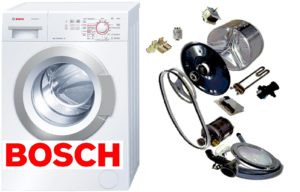 Why do we need to know the internal workings of a Bosch washing machine? The answer is obvious: to be able to repair it. After all, by studying the internal workings of a particular washing machine model, we learn how to disassemble it, discover its strengths and weaknesses, and, ultimately, with experience, we'll be able not only to repair any faulty component but also advise the user on the operating features of a Bosch home appliance. Let's explore the internal workings of these washing machines together.
Parts of the control panel
To make it easier to explain the design of a Bosch washing machine, we've decided to divide the modules of this "home assistant" into four main groups:
- control panel parts;
- body parts;
- electrics, tank and drum;
- hydraulics.
Please note! This article will cover not only the internal modules of Bosch washing machines, but also the external modules.
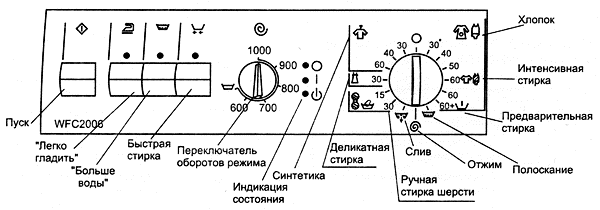
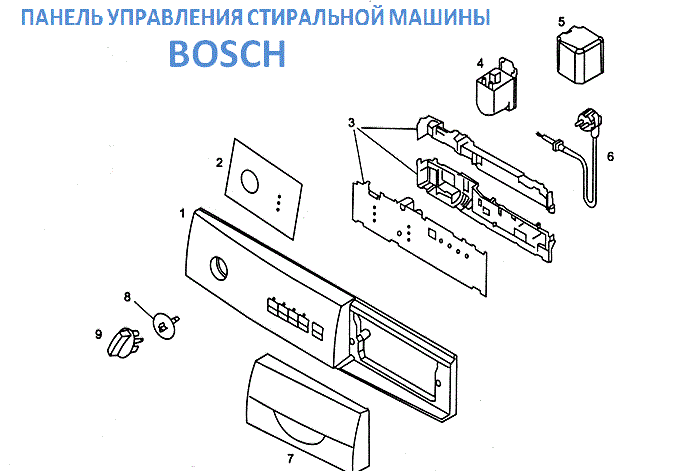
Each of these groups includes a fairly large number of different parts, which we will talk about. Our priority is to determine the functions of each part, as well as their exact location in the washing machine body. Bosch. Let's begin by examining the control panel. The control panel of this brand's washing machine consists of a number of components.
- The outer part of the control panel housing with a recess for the powder receptacle and mounting slots for selectors and buttons.
- External panel overlays with markings and inscriptions in Russian.
- Microcircuits and their fastening elements.
- Network capacitor.
- Protective cover of the network capacitor.
- Power cord.
- External panel of the powder receptacle.
- Selector mechanism.
- Washing mode selector.
In the figure below you can see a schematic representation of these parts and their locations.. Depending on the washing machine model Bosch the number and location of its panel parts may vary.
Frame
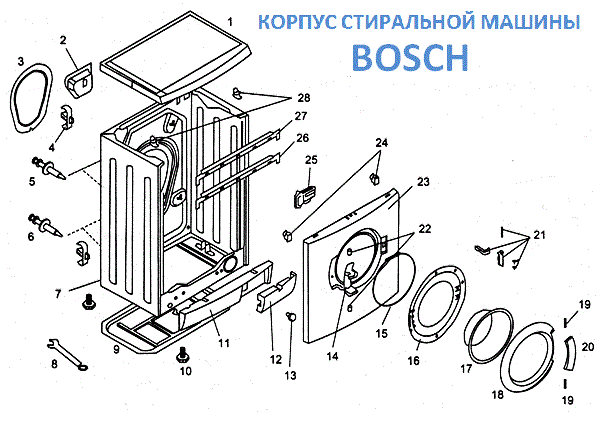
Now let's move on to examining the body of a Bosch washing machine. The body of every Bosch washing machine consists of 28 internal and external components, and let's list them.
- The top wall of the Bosch washing machine (lid).
- Inlet valve cover.
- Service hatch cover.
- Fastening the inlet hose.
- Right transport bolt.
- Left transport bolt.
- Right, left and back wall.
Important! The right, left, and rear panels of a Bosch washing machine form a single unit, so they are always shown together in the diagram with a single number.
- Key for adjusting legs.
- A special tray with a special shape.
- Threaded legs allow height adjustment.
- Lower front elongated panel.
- Lower front short panel.
- Front panel fastening element.
- Loading hatch hinge.
- Fastening element of the cuff (clamp).
- Base of the hatch cover.
- Hatch window.
- Decorative panel of the hatch cover.
- Mounting studs.
- Hatch handle.
- The locking mechanism on the hatch cover.
- Bushings.
- Front wall of the Bosch washing machine.
- Fasteners that hold the front panel in place.
- UBL.
- Upper spacer bar.
- Bottom spacer bar.
- Fixing latches of the top wall (cover).
The design of the washing machine body Bosch is the simplest, and it is also quite easy to disassemble. If you compare disassembling the housing of Indesit washing machines Or Antant disassembling a Bosch car body, you'll notice that the latter is significantly easier to disassemble. No special wrenches or skill are required; everything, as they say, is designed for people.
Electrics, tank and drum
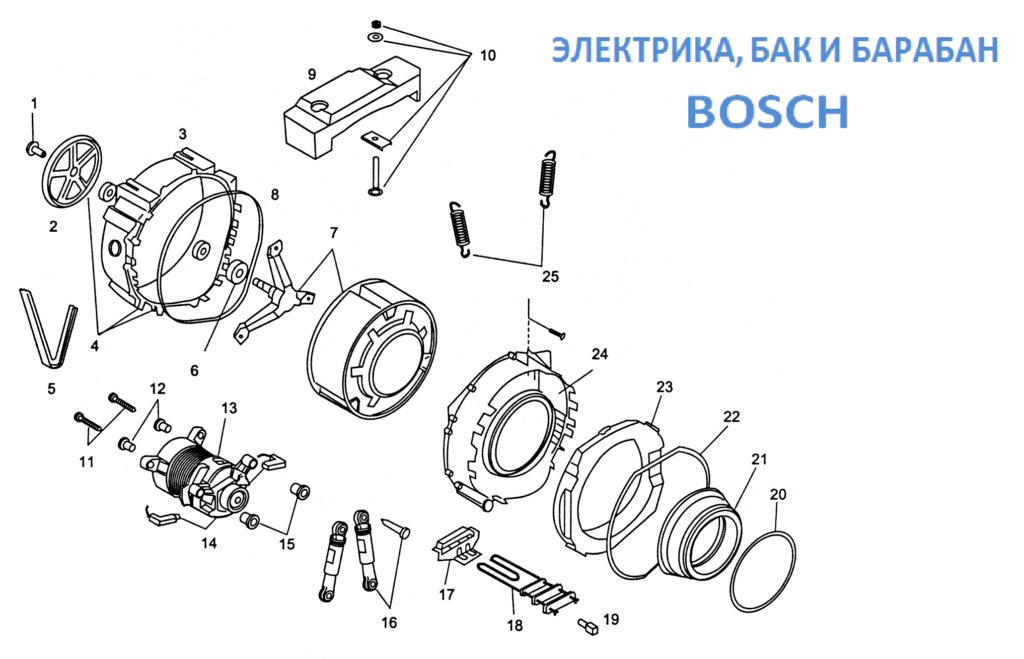
The most important parts of a Bosch washing machine are the electrical system, the tub, and the drum with its drive mechanism and motor. The most complex and problematic malfunctions typically occur here, and it's these components that technicians often need to quickly access. What parts are we talking about?
- Drum pulley bolt.
- Large drum pulley.
- The rear wall of the tank.
- Bearings.
- Drive belt.
- Drum mechanism stopper.
- Metal drum and crosspiece with sleeve.
- Large rubber seal for the tank.
- Upper counterweight-stabilizer.
- Two large screws, washers and nuts to secure the counterweight.
- Bolts for mounting the electric motor.
- Front engine mounts.
- Electric motor.
- Brushes.
- Rear engine mounts.
- Racks.
- The fixing part of the heating element.
- Heating element.
- Thermistor.
- Cuff fixing clamp.
- Rubber cuff of the hatch.
- Thin rubber gasket.
- Front stabilizer counterweight.
- Front half of the tank.
- Springs for hanging the tank.
The design of this group of modules is not limited to the elements listed above. The list may also include numerous connectors, wires, and terminals that connect the electrical modules into a single circuit.
Hydraulics
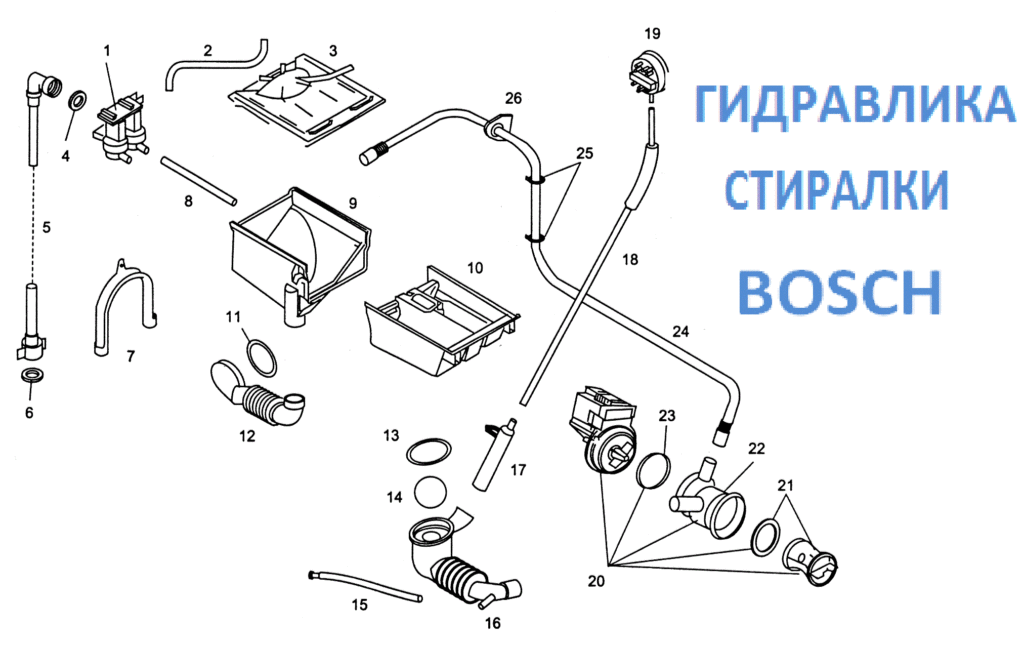
The hydraulic system of a Bosch washing machine is a group of modules and auxiliary components that help ensure water flow, detergent and water mixture preparation, washing, rinsing, and waste disposal. While there are quite a few components in this group, it's important to list them all.
- Twin inlet valve.
- Curved tube for powder distributor.
- Powder receptacle cover.
- Flow filter mesh.
- Water inlet hose.
- Flow filter mesh.
- A fastener that holds the drain hose to the body.
- Straight pipe (from filling valve to powder distributor).
- Powder tray niche.
- Powder tray.
- Clamp for large mixer tap pipe.
- Large mixer tap.
- Drain pipe clamp.
- Float ball.
- Water drain hose.
- Large drain pipe.
- Air adapter.
- Long pressure switch tube.
- Pressure switch.
- A pump, which in turn consists of elements.
- Trash filter.
- Plastic case.
- Rubber gasket.
- Long drain pipe (thin).
- Fastening the branch pipe.
- Fastening the outlet of the branch pipe.
Similarities and differences
The design of a Bosch washing machine can be described as unified. These washing machines feature the best features of an automatic "home assistant," time-tested features that have proven their worth. The layout of the components is generally quite convenient, allowing easy access to everything you need, but there are some quirks.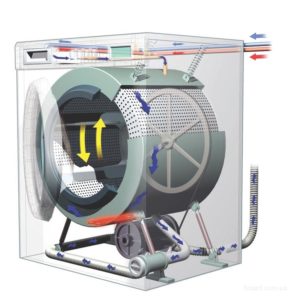
The main distinguishing feature of modern Bosch washing machines is their thoughtful design. This is evident in the smallest details.
The front panel is very easy to remove and is held in place with standard screws (five). No tricky parts like plastic clips, sliders, or screws with unusual heads. A pair of wrenches and a Phillips-head screwdriver are the most basic tools needed for disassembly.
A key design feature is the chrome hatch, which is further protected by double glazing. Accidentally breaking it is virtually impossible, unless you're swinging a sledgehammer near your Bosch washing machine.
Another design feature is the location of the shock absorbers. The shock absorbers themselves on Bosch vehicles are unusual – they're friction shock absorbers. Two shock absorbers are located on the left side of the tank, and one is located on the right, which provides almost perfect damping of centrifugal force and vibration. Shock absorbers rarely fail, but if this happens, you can replace them yourself without any problems.
Bosch washing machine manufacturer is committed to the safety of its appliances. Almost all modern models feature full leak protection, foam control, and child safety locks.
It's not that modern Bosch washing machines are unlike those of their competitors. Bosch washing machines have much in common with Siemens, AEG, and other German washing machines. However, it's worth noting that, unlike the more expensive Siemens and AEG washing machines, Bosch washing machines are traditionally much more affordable.
So, having studied the design of several Bosch washing machine models, you can take on their disassembly and repair with a fair amount of confidence. Moreover, the manufacturer has ensured that its machines are easy to repair: screws are easy to unscrew, pulleys are easy to remove, the tub is collapsible, the front panel is easy to remove—what more could a novice technician need? Good luck!
Interesting:
15 reader comments
Add a comment
Headings
Washing machine repair




For buyers




For users


Dishwasher




BOCH MAXX 4. Water won't drain. I've blown everything out and cleaned it. I need help.
After turning it on, the circuit breaker on the meter panel trips after 10-15 minutes. I turn it on again. The same thing happens again.
Replace the heating element.
I'm not a washing machine repairman, but I've encountered a similar problem. The symptoms were similar: after a while of washing, the circuit breaker in the electrical panel tripped. The problem was that in addition to the washing machine, I also have a refrigerator, a computer, and other things connected to the same electrical circuit (my apartment has two, as well as two circuit breakers in the electrical panel). Therefore, the load is high, and at certain times, the circuit breaker trips. To avoid this problem, I connect the washing machine via an extension cord to an outlet on a different (second) electrical circuit. It receives almost no load from other devices. If your apartment also has two circuits (two circuit breakers in the electrical panel), try finding an outlet on the second circuit and connect the appliance to that.
Hello. Can someone tell me the contact sequence for the motor terminal on the Bosch Maxx 5? It's a 6-pin terminal. Thanks in advance.
The drum is loose. It jams slightly when cranked manually. Bosch Maxx 6.
The bearings need to be changed.
There's a clicking noise on the left side when washing, but not always. Is this dangerous? What could it be?
My Bosch Series 6 3D washing machine doesn't spin due to strong vibration. It's leveled and I bought it two years ago. I've never had any problems before. It started two days ago. Could you tell me what could be wrong? By the way, I checked the bearings and they're fine.
Replace the shock absorbers.
My Bosch Maxx 5 makes a terrible noise when spinning, like an airplane turbine! What could it be?
Replace the bearings
Bosch Maxx 4. It stopped during the wash cycle. The drum doesn't spin. The next time I wash it, it doesn't spin at all. It only works on the drain setting.
A ring fell through the powder compartment into the nozzle. How do I get it out, please?
My Series 4 machine started leaking. I disconnected the water supply. When I lift the right side (where the drain filter is), water leaks. What could be the cause?