
How does a washing machine drain pump work?
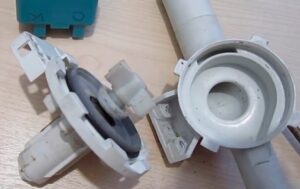 The washing machine's drainage system is responsible for ensuring the drum empties in a timely manner. At a certain point, the pump starts and pumps the waste liquid into the sewer. If there's a problem with the pump or the drainage system, the washing machine will stop working—the drum will be full and blocked. Avoiding or correcting this blockage is easier if you understand the structure of your washing machine's drain pump. Let's look at the pump's design, main components, operating principle, types, and operating nuances.
Drain pump parts
Knowing how a pump works can significantly extend its lifespan and simplify repairs. Repairs usually involve replacing the pump, which inevitably requires selecting a suitable replacement. To ensure you choose the right pump, consider several important factors: power, mounting type, and terminal diagram.
Modern automatic and semi-automatic machines are equipped with drain pumps with the following operating parameters:
- rated power – from 25 to 40 W;
- type of fixation on the snail - screw or latches;
- contact diagram – paired terminals or separate;
- pump type – simple or circulation.
Pumps also vary in their filtration systems. Spiral filters are often used, which trap water in the pump when clogged. As a result, dirty water stagnates and begins to smell. You'll need to check the nozzle, unscrew it, and clean out any accumulated debris and scale.
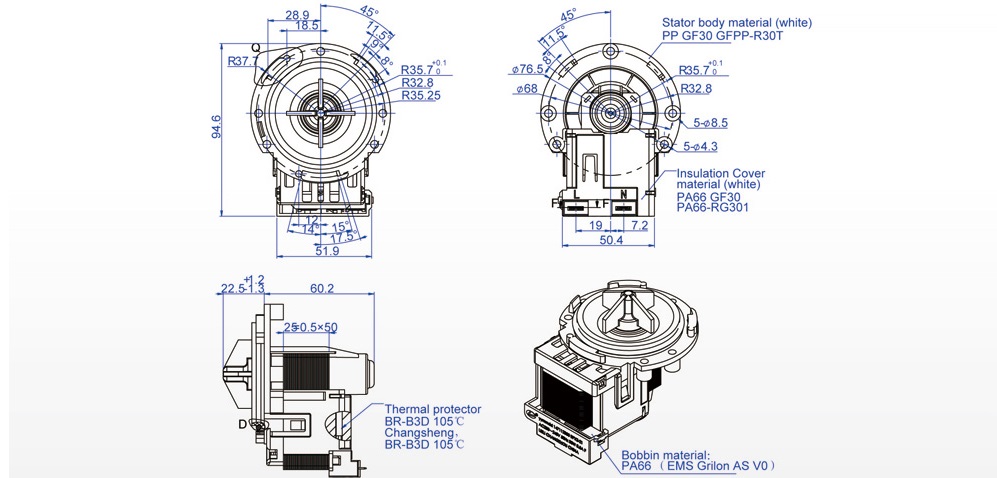
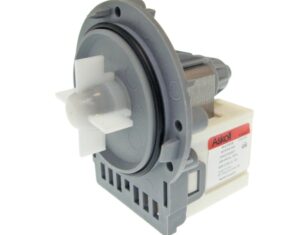
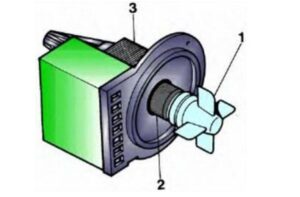
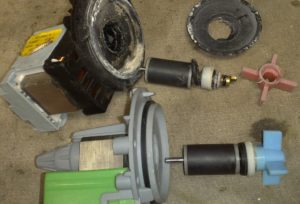
The drain pump consists of a housing, rotor, impeller, magnetic core and insulating windings.
As for the pump design, it consists of the following elements:
- plastic casing;
- rotor;
- impeller;
- magnetic core;
- winding.
The mechanism works like an asynchronous motor, representing the interaction of moving and stationary elements. The system starts after a corresponding command from the control board: the module sends a signal, and the rotor – a permanent cylindrical magnet – begins to rotate. The impeller, located on the shaft at a 180-degree angle, then spins. The blades move slowly, directing the water in the desired direction. The magnetic core and two interconnected insulating windings remain static, maintaining the system's operation.
This is how a simple pump in a washing machine starts. Due to its simple design, it rarely breaks down and for easily fixable reasons. More often, the impeller breaks off, causing the pump to run idle. Sometimes a blockage is to blame, and very rarely, a weakened magnet core.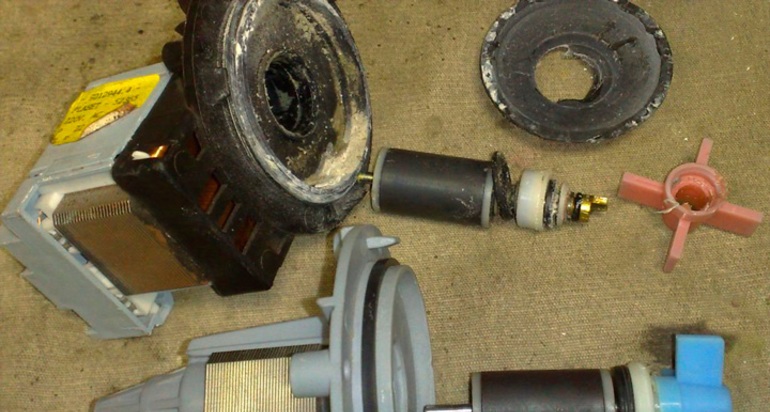
A circulation pump is unique in that it only allows fluid to flow in one direction—out. The device's watertight seal is achieved through an improved design. For example, in Samsung washing machines, the pump is equipped with a sealing cuff that covers the fitting and prevents water from entering the bearing assembly.
Modern pumps are equipped with a rotor shaft that passes through a central rubber bushing with a compression spring ring. The assembly is generously lubricated with a moisture-resistant grease before installation. A thick layer of sealant seals all gaps, ensuring smooth rotation of the mechanism and extending the pump's lifespan.
How to find the pump and how does it work?
The pump is activated during every wash; otherwise, the machine would remain standing with a full tank of water. However, the pump doesn't "turn on" immediately, but rather during the final stages of the cycle. To understand how a drainage device works, you will have to follow the entire laundry process.
The washing machine begins operating by turning on the power, selecting the appropriate mode, adjusting the remaining settings, and pressing the "Start" button. The control board receives the signal and activates the system:
- the electromagnetic valve opens;
- water from the water supply system enters the machine under pressure;
- The pressure switch measures a set amount of water, controlling the pouring;
- water “passes” through the pipes and enters the powder receiver, where it is mixed with the detergent;
- the soapy water is already poured into the tank through the main pipe;
- the laundry loaded into the drum is immersed in a soap solution;
- The machine starts washing.
The pump is activated during the final stages of the wash cycle—rinsing, spinning, and draining. It removes wastewater from the drum, either completely or in portions. The pump is inactive only during the soaking phase. The drainage system is activated by the control board—the module commands the drum to drain. Liquid is pumped into the sewer system as follows:
- the pump is turned on, the impeller spins;
- water leaves the reservoir through the hose connecting the tank to the pump;
- the liquid “goes” through the hose through the debris filter, where large debris, some lint and hair are trapped;
- water enters the pump and passes through it;
- The liquid is discharged through the drain hose into the central sewer system;
- The pressure switch monitors the emptying of the tank;
- As soon as the tank becomes empty, the board signals the pump to turn off.
To ensure unobstructed drainage, the water is located at the bottom of the machine. It's important that the drain hose is installed as directed—above the level of the wash tub—otherwise the machine will drain by gravity or pick up waste from the sewer system.
According to the instructions, the drain hose must be raised 60-80 cm from the floor, otherwise the water will drain out of the tank by gravity.
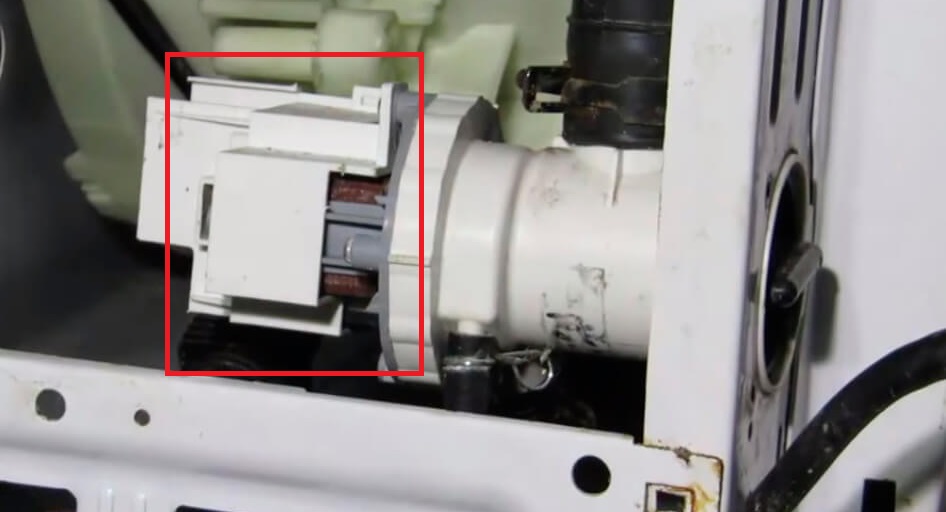
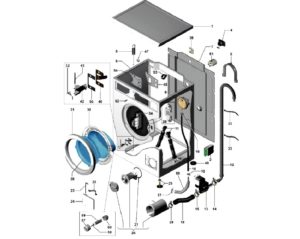
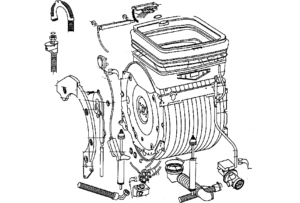
The electric pump, like the entire drainage system, is located below the wash tub. It's secured to a plastic housing with 2-4 screws. Accessing the pump is easy: simply tilt the washing machine onto its side, remove the drain pan, and look underneath.
What are the specified details?
Drain pumps differ primarily in power and type. There are two types of the latter: circulation pumps and simple pumps. Let's take a closer look at each type.
- Standard pumps are installed on most budget-priced machines. Their job is simply to pump dirty water out of the drum.
- Premium washing machines are equipped with circulation pumps. These devices, paired with standard pumps, deliver water directly to the washing area and then circulate it throughout the system. This improves cleaning performance and extends the life of the appliance.
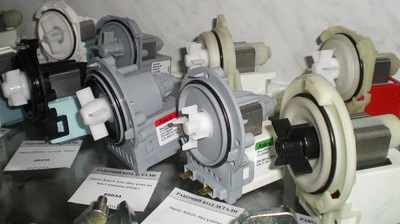
Disassemblable pumps are rare; more often, their housings are one-piece, which eliminates their repair. If the pump breaks down, it is not repaired but replaced with a new one. Incidentally, the cost of the device is relatively low, especially for a "simple" type. Before replacing the pump, it's important to ensure it's not faulty. Often, there's no actual malfunction, but a simple, easily remedied blockage is to blame. In this case, it's recommended to first diagnose the drainage system: disconnect the power to the machine, clean the debris filter, access the pump, inspect the impeller, and then test the contacts with a multimeter. If any abnormalities are detected, remove the old unit and install a new one.
Pump maintenance
Without a pump, a washing machine won't wash. It's considered a key component and rarely requires repair—manufacturers often promise a trouble-free lifespan of 8-10 years. However, this "maximum" performance isn't always achieved, as the machine's performance is affected not only by the quality of its components but also by its operating conditions. If the machine is used carelessly and not properly maintained, drainage problems can occur as early as 2-3 years.
The main reason for failures is blockages. Limescale and soap scum, hair and threads, foreign objects and debris get into the drainage system, clogging the pipes, the filter and the pump itself. To avoid this problem, you need to follow a few simple rules:
- organize a filtration system for tap water;
- shake the laundry loaded into the drum and check for forgotten items;
- heavily soiled items should be pre-washed by hand;
- assess the water hardness and, if the values are high, use softeners;
- choose high-quality detergents;
- periodically unscrew the debris filter and clean it from accumulated dirt;
- clean the washing machine every six months;
- Always monitor the emptying of the drum (listen, check for the presence of water in the tank).
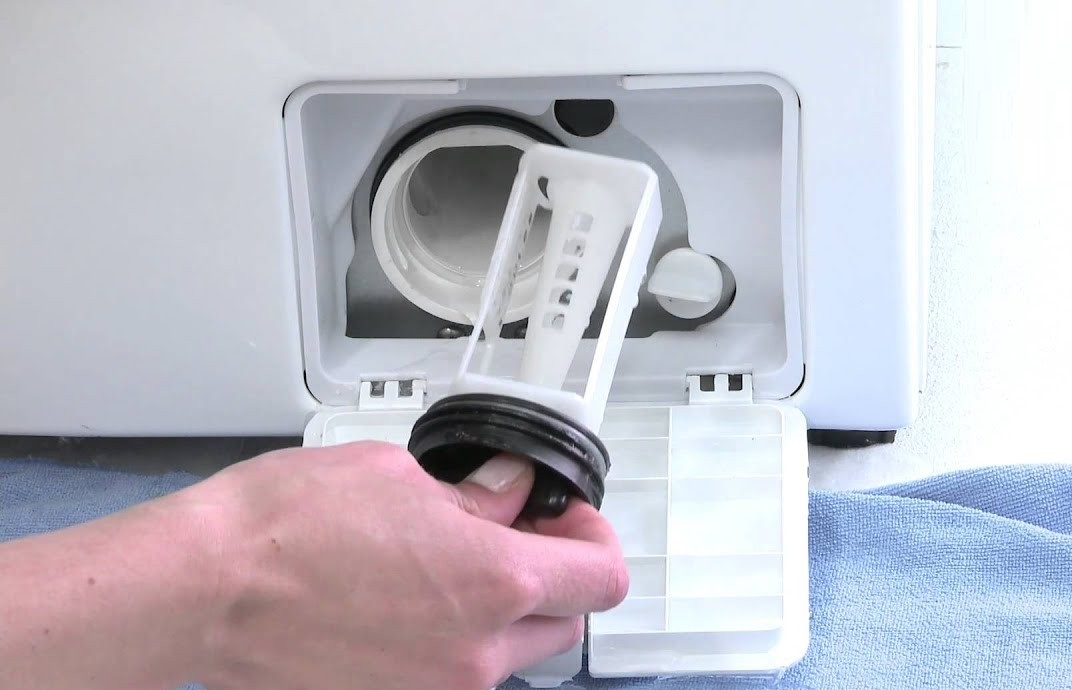
The drainage system, and the pump in particular, must be constantly monitored. Otherwise, you risk missing warning signs and allowing the problem to become fatal. While a cheap replacement may initially fix the problem, the end result will require a new washing machine.
The pump cannot be repaired, it can only be replaced.
You can suspect drainage problems by obvious symptoms: slow drainage, wet laundry in the drum, a corresponding error on the display, or an unusual humming sound from the pump when switching to the spin cycle. In this case, it's best not to put off checking the system; instead, have it diagnosed immediately. Ideally, contact a service center for professional assistance.
Interesting:
Readers' comments
Headings
Washing machine repair




For buyers




For users


Dishwasher




Add a comment