
How does an Electrolux dishwasher work?
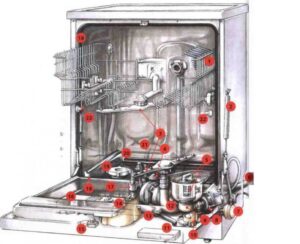 Dishwashers, like washing machines, are complex household appliances. Their design isn't as simple as it might seem at first glance. Knowing the internals of an Electrolux dishwasher will help you choose the best dishwasher from a technical perspective. It will also help you troubleshoot minor problems and issues yourself. We'll explain the components of this "home helper" and how it works.
Main details of the PMM
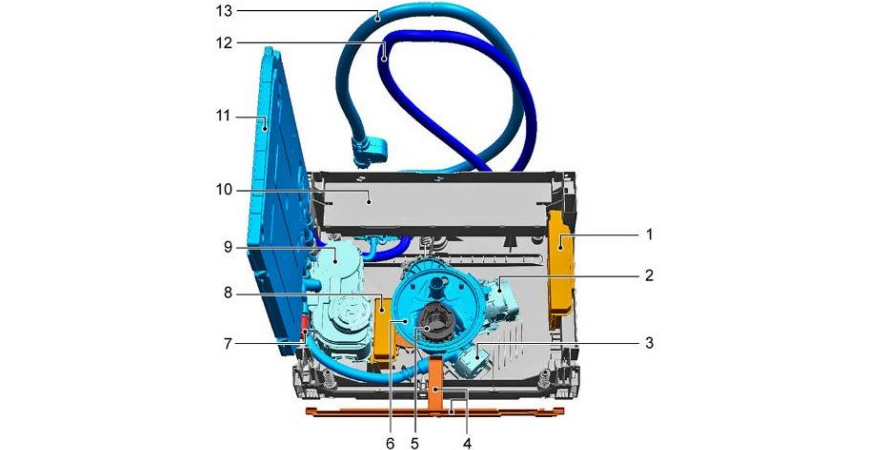
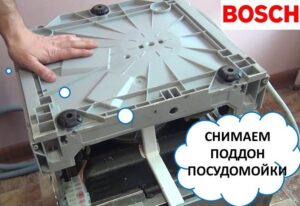
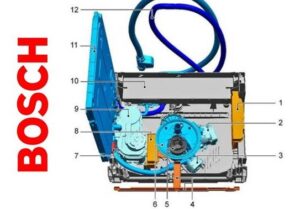
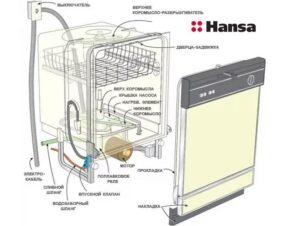
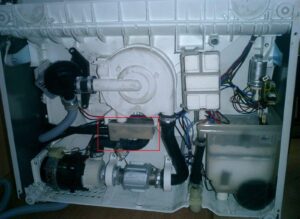
By disassembling the Electrolux dishwasher, or more precisely, by removing the pan and housing, you can examine all the internal components and understand its structure. The main components include:
- engine;
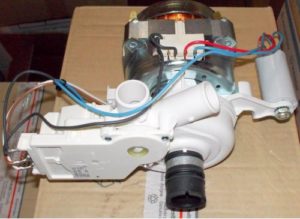
- A circulation pump, installed in the center of the tray, circulates water throughout the dishwasher chamber, delivering it from the water inlet to the wash arms;
- pump – a pump for draining dirty (used) water;
- a flow-through water heater located in the same housing as a circulation pump;
- waste water drain hose and pipes;
- inlet hose;
- leak protection device;
- An inlet valve with a mesh screen installed where the inlet hose connects to the machine. The screen prevents dirt and rust from entering the water;
- water level sensor, also called a pressure switch;
- water intake;
- salt container or ion exchanger;
Important! Salt is added to the dishwasher to soften the water and dissolve any impurities it contains.
- electronic board – the “brain” of the dishwasher, which ensures the operation of all the devices of the machine with each other and the control of the machine by the user;
- electrical wires and connecting clamps;
- soundproofing material.
Inside the dishwasher washing chamber are located:
- sprinklers or rockers;
- upper and lower basket for dishes;
- basket for a spoon, forks and other utensils;
- a glass-shaped waste filter located at the bottom of the dishwasher;
- a filter mesh or fine filter that traps food debris;
- detergent dispenser on the door;
- rubber seal.
Parts found on individual Electrolux dishwashers
The components and assemblies listed above constitute the minimum dishwasher assembly. Some Electrolux models with additional features may include other components.
- The heat exchanger is a flat tank for cold water located in the washing chamber. This device helps to gradually cool the water used in the dishwashing process. And also ensures effective drying.
- A heater and fan in dishwashers with turbo drying. This type of drying ensures fast and effective drying of dishes, but it consumes energy.
- Turbidity sensor. Thanks to this sensor, the dishwasher automatically selects the best washing mode by calculating the temperature, water volume, and amount of detergent.
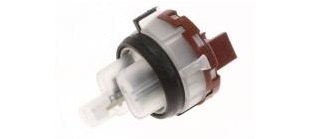
- Rinse aid and salt level sensors.
- Special compartment for pills.
- Zeolite reservoir. Zeolite is a mineral that absorbs moisture and releases heat. This property of the mineral makes it possible to dry the dishwasher.
- A water hardness sensor that automatically selects the washing program. It's only available in premium dishwashers.
- A light projecting the remaining time onto the floor. Similar functions include a "red beam" and similar functions.
- Long-stemmed glass holders. These are often purchased separately.
- Water spray for washing large pans and baking trays.
Since dishwashers vary in size, the number of built-in additional components will vary. Baskets also vary, for example, fixed baskets, baskets with folding sides, and height-adjustable baskets. Depending on the appliance's technical features, programs will also vary.
How does a dishwasher work?
Now that we understand how a dishwasher works, let's look at how all these components are interconnected and how they work. After placing the dirty dishes in the racks and selecting a mode, the user closes the dishwasher door, and the actual wash cycle begins. Cold water enters the machine through the inlet hose and valve, first entering the ion exchanger. In this tank, the water is softened by the resin and sodium ions before being collected in the water collector.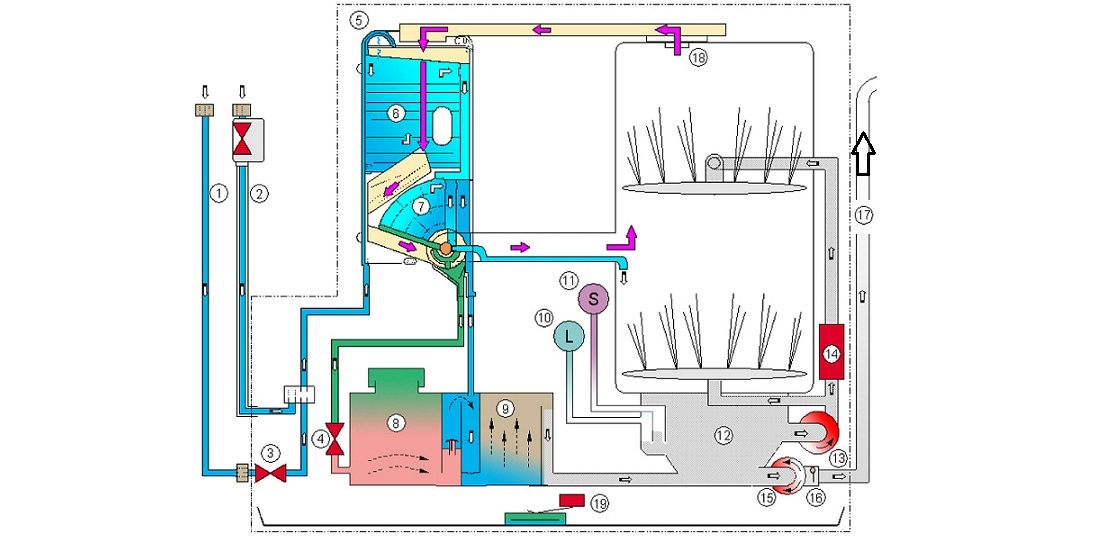
At a certain point, the water level in the machine reaches a sufficient level, and the pressure switch triggers the pressure sensor. This causes the water valve to close and the flow-through heater to turn on. After the water has heated to the selected temperature, the circulation pump turns on. It directs water to the sprinklers, which in turn begin to rotate.
Please note! The more holes the spray arms have, the better the water distribution throughout the dishwasher chamber. Their shape, which ensures their angle, is also important. If the spray arms are positioned at different angles, water will reach all corners of the dishwasher chamber.
Water collected in the dishwasher's chamber drains to the bottom and then through a filter into a water collector for reuse. Meanwhile, detergent (a dissolving tablet or powder) is added to the water from the dispenser. The circulation pump returns the water to the wash arms. At the end of the first wash cycle, the pump activates to remove the dirty water. The resulting clean, cold water is used for the first rinse.
The second rinse is done with warm water and a special detergent, which adds shine and dries quickly. Finally, all the dirty water is drained, and the moisture evaporates from the heated dishes, marking the drying phase. Most often this is a regular natural drying, less often - turbo drying under the influence of hot air. Once the program's time has elapsed, a beep sounds. Depending on the mode, the entire process lasts from 25 minutes to 2 hours and 35 minutes.
Interesting:
Readers' comments
Headings
Washing machine repair




For buyers




For users


Dishwasher




Add a comment