
How a Bosch dishwasher works
 Modern dishwashers aren't always easy to understand right out of the box. While they may vaguely resemble washing machines, they're still far more different. To understand how to use them properly, it's helpful to have a good understanding of the internal workings of a Bosch dishwasher. This will not only allow you to use your "home helper" more thoughtfully, but also, in the event of a breakdown, help you identify the cause and fix it yourself. In this article, we'll take a detailed look at what a dishwasher consists of, what features are found in standard and more advanced models, and how the machine actually cleans dishes.
What's inside a Bosch dishwasher?
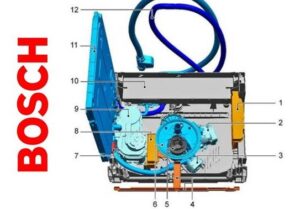
To understand what components are hidden under the dishwasher's body, it's enough to partially disassemble the machine, remove the body and tray. This reveals the key components.
- A circulation pump that supplies water to the sprinklers inside the wash chamber.
- A tankless water heater installed next to the circulation pump to heat cold tap water.
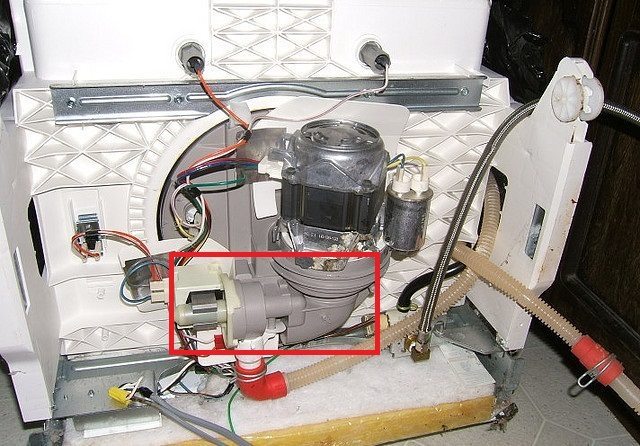
- A drainage pump that allows waste liquid to be drained into the sewer.
- Drain hose and also branches.
- Filling sleeve with leak-proof mechanism.
- A coarse filter installed at the inlet of the filling hose to block rust and other contaminants from poor-quality tap water from entering the "home helper".
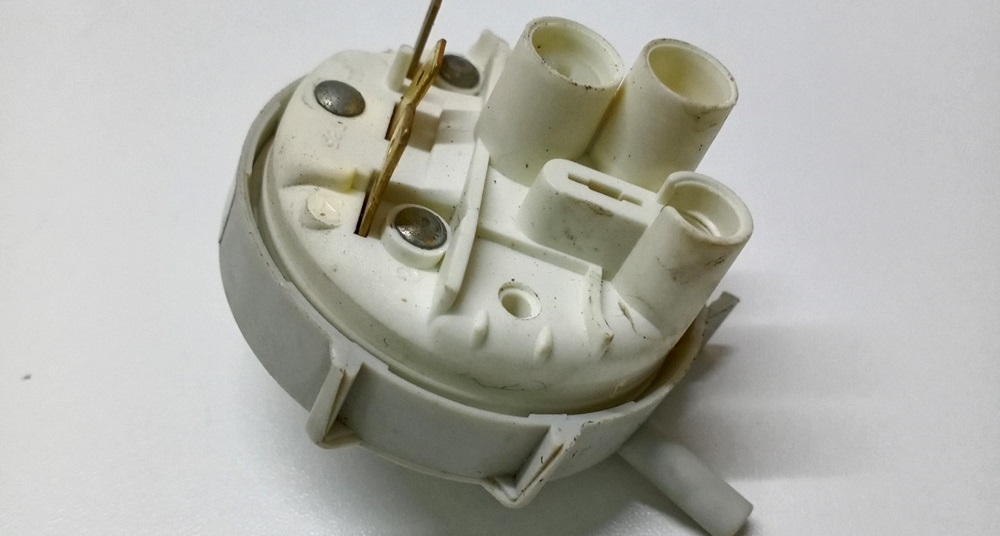
- A level sensor that allows you to accurately determine the amount of water in the dishwasher.
- Water intake.
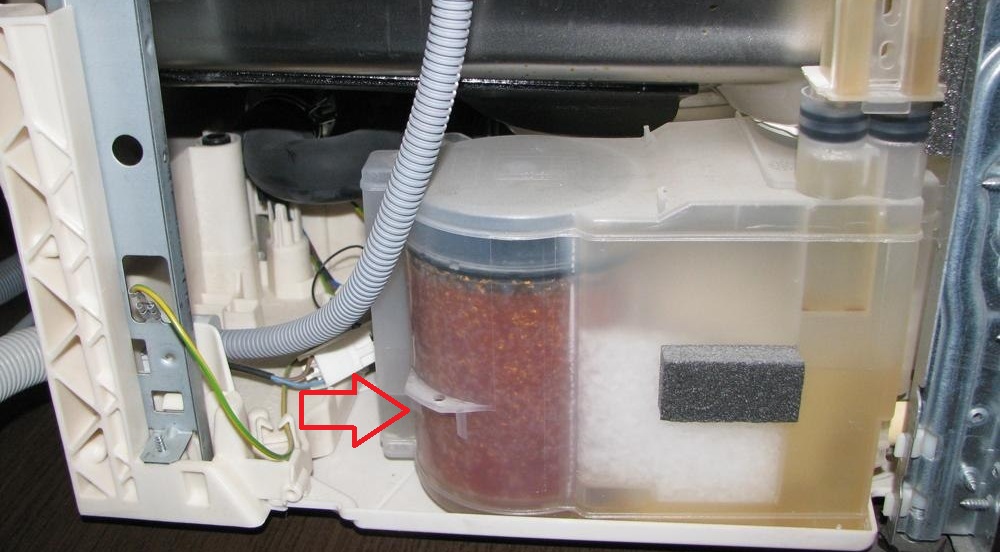
- An ion exchanger is a device containing resin that helps soften hard tap water.
- The dishwasher control module is the “brain” of the entire system, transmitting signals to all other dishwasher components.
- Hoses, clamps and wiring.
- Soundproofing.
Next, you can move on to the appliance wash chamber. Within its depths, you'll find the following elements:
- a washing chamber made of stainless steel;
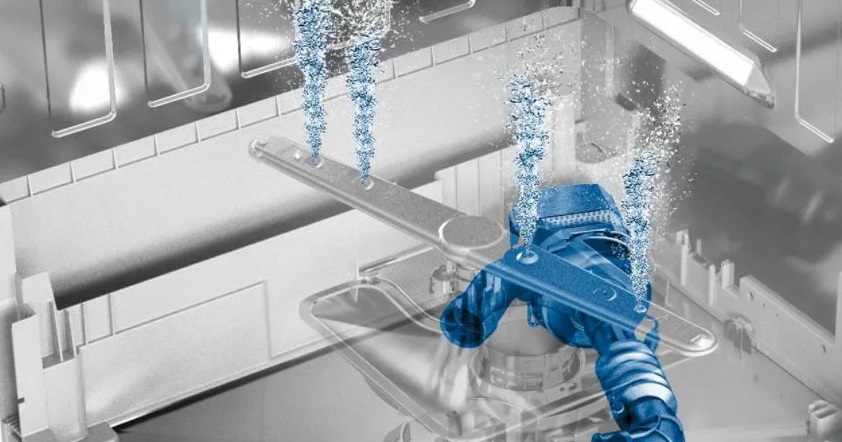
- upper and lower sprinklers;
- baskets for dishes, plus a small tray for cutlery;
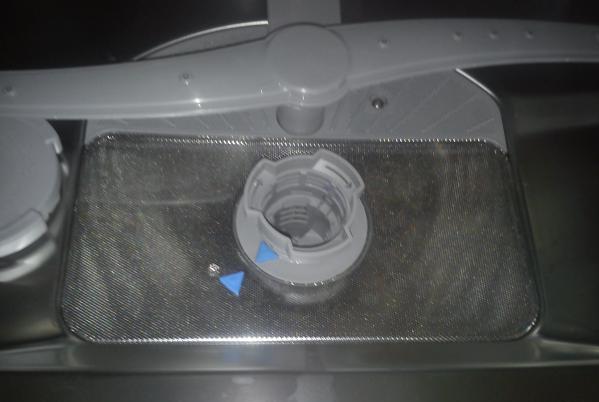
- a filter element that looks like a glass with a small mesh, placed at the bottom of the washing chamber and covered with another small mesh;
- bunker for special salt;
- a dispenser for household chemicals installed on the door;
- rubber cuff around the entire contour of the tank;
- Machine control panel.
These are the essential components without which no dishwasher can function. In the next section, we'll look at the auxiliary components often installed in premium dishwashers.
Additional structural elements
Let's explore the additional features that may be included in more expensive "home assistant" models. If you've purchased one of these, you'll find many interesting details inside.
- The heat exchanger is a wide plastic tank filled with cold water, located near the metal tank of the dishwasher. It allows you to dry dishes more efficiently without wasting energy.
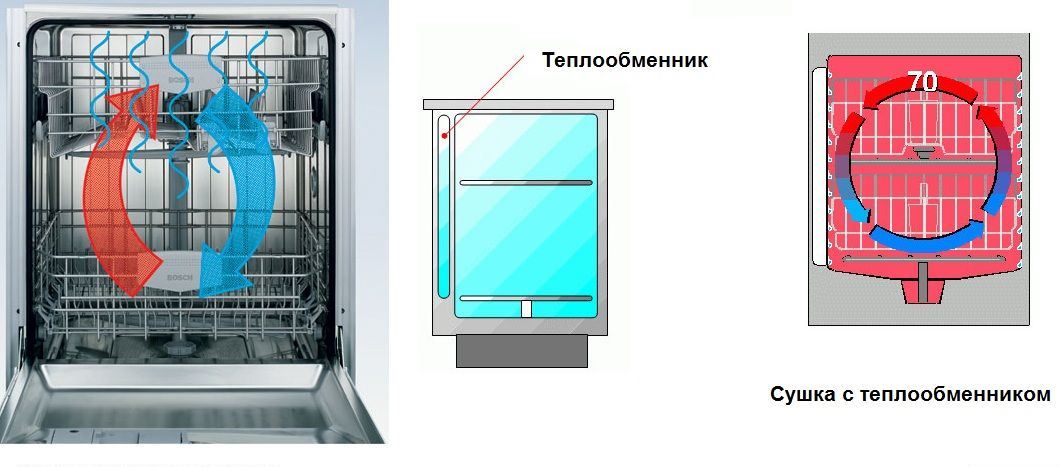
- A fan and another heating element, which are installed in household appliances to organize accelerated drying.
Previously, it was very difficult to find Bosch dishwashers with turbo drying in Russia, but with the advent of parallel imports, this has become much easier.
- A water purity sensor helps the machine automatically select the appropriate cycle, temperature, amount of liquid, and amount of detergent for washing.
- A 3-in-1 sensor for detecting the amount of salt, rinse aid, and capsules will remind the housewife when it's time to add household chemicals.
- The drying sensor is a smart technology that detects the ambient temperature in the room and then determines how to dry dishes.
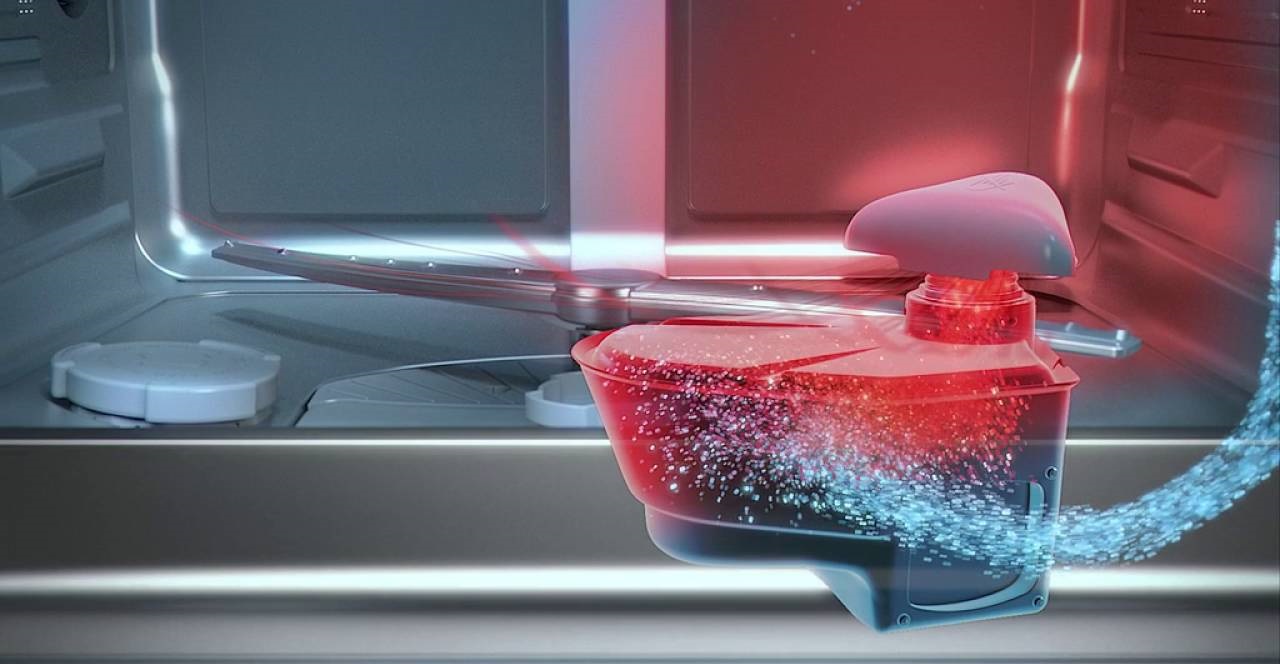
- A special reservoir containing the mineral necessary for effective drying. Zeolite absorbs moisture and generates the dry heat needed for drying.
- A water hardness sensor that detects tap water hardness allows the dishwasher to select the correct cycle based on the water quality.
- A time-remaining indicator with a projector, which notifies the user when the program is complete and the wash progress, and also displays the remaining time directly on the floor using a projection, is found in the most expensive Bosch dishwasher models.
- A separate glass holder, as well as a spray nozzle for cleaning baking sheets, are convenient features that sometimes come with the machine, sometimes can be purchased separately, and sometimes are simply not intended for a specific dishwasher model.
It's also worth noting that "home assistants" differ from each other not only in the availability of auxiliary functions. Key differences also include the size of the machines (which can be small, narrow, or large), the design of the baskets, and the number of spray arms (two or three), which can be made of different metals. Baskets can also be installed at different heights and have folding elements. The appliances themselves also often differ in their software and additional smart home system features.
Interaction of the internal elements of the dishwasher
Now that we've figured out the basics of Bosch dishwashers, we just need to explore the classic operating cycle, which involves all the appliance's internal components. The first step is loading dirty dishes into the baskets, then closing the wash chamber door, selecting a mode, and starting the dishwasher. The appliance then begins drawing cold water through the inlet hose and valve. The water then enters the ion exchanger, where sodium ions and resin soften the hard water, which then flows into the water collector located at the bottom of the dishwasher.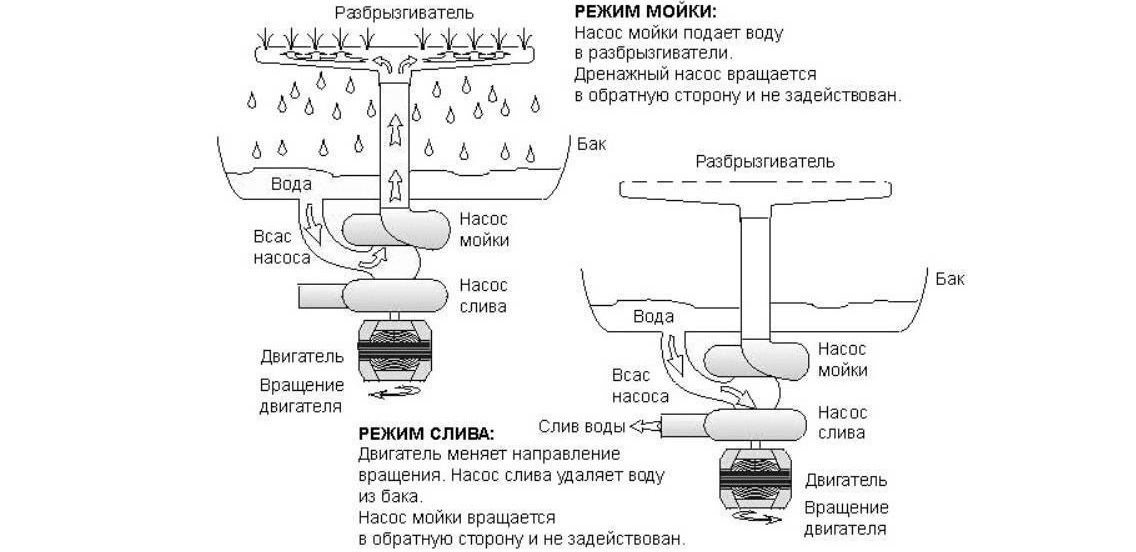
Once the previous step is completed, the water level sensor will detect the current liquid level, and then the pressure switch will be activated. The water inlet valve will close, and the heating element will begin heating the collected liquid. When the liquid reaches the user's selected temperature, the main pump is activated, directing water to the spray arms, which begin to rotate, spraying water throughout the wash chamber.
Try to buy dishwashers with spray arms that have multiple holes and spray arms that are positioned at different angles to cover the entire wash chamber.
Water enters the washing chamber, flows down the walls to the bottom, and then through the filter back into the water collector for reuse. Meanwhile, the liquid absorbs household chemicals from the dispenser and is again sprayed through the spray arms. After washing, the drain pump is activated, sucking out the used liquid and discharging it into the sewer. The circulation pump then draws clean water for a cold rinse.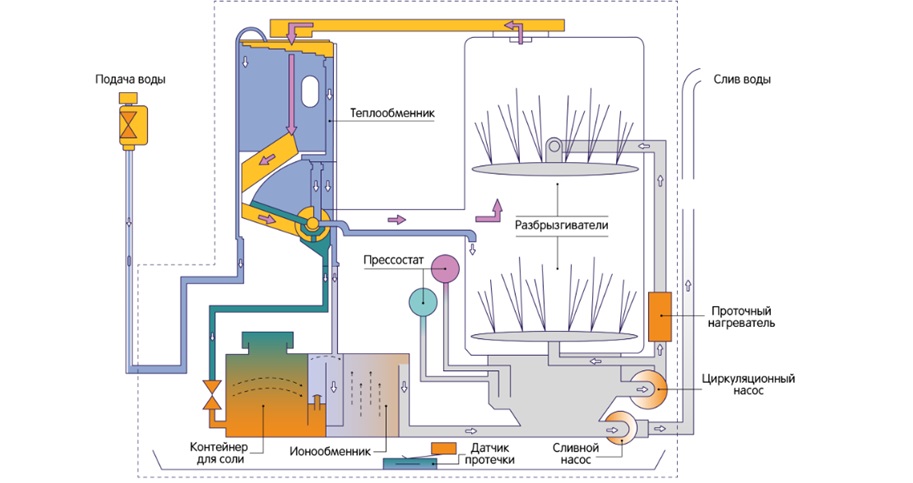
The pump then draws water again for the final rinse, this time with warm water containing rinse aid. Once this cycle is complete, the dishwasher will drain all the water and begin drying, either naturally through condensation or with hot air. When the cycle is complete, the machine will sound a loud signal to alert the user. On average, a wash cycle can take between 30 and 180 minutes, depending on the settings selected.
Interesting:


Readers' comments
Headings
Washing machine repair




For buyers




For users


Dishwasher




Add a comment