
How does a washing machine pressure switch work?
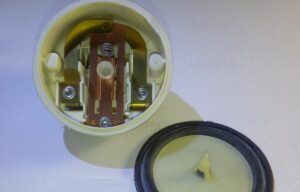 A water level sensor helps the control module monitor the washing machine's tank's fullness. Without this small component, the machine simply won't wash; the cycle will freeze before it even begins. We'll examine the washing machine's pressure switch and explain how to diagnose it at home. We'll also describe how it works.
What is this detail?
Modern automatic sewing machines contain numerous components and assemblies. Each part performs a specific function. The pressure switch monitors the water level in the tank. The sensor measures how much liquid is in the "centrifuge" based on the pressure in the tube.
The complexity of the water level sensor directly depends on the number of washing modes stored in the machine's "memory."
The relay is disk-shaped. Inside the pressure switch is an air chamber with a diaphragm, a magnetic core, and a tube. Sensors can be simple or complex, varying in membrane sensitivity and piston stroke.
A pressure switch from one washing machine isn't always compatible with another. Therefore, if the factory sensor is broken and requires replacement, be sure to search for and purchase an equivalent, based on the model and serial number of your machine. The pressure switch housing is made of high-quality plastic. The relay resembles a washer. The sensor is assembled from the following components: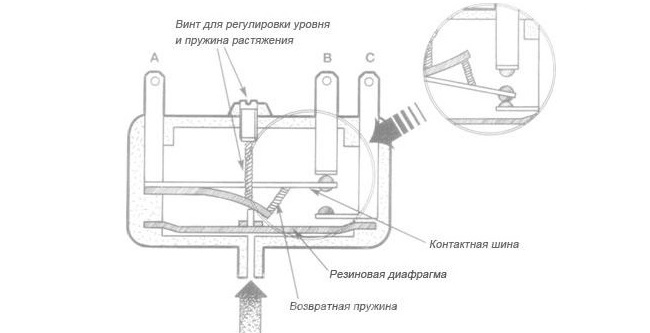
- plastic "shell" (body);
- coil;
- membrane. It is capable of changing shape under pressure and pressing a switch;
- magnetic core (acts as a switch);
- wires.
Depending on the model of the automatic machine, the pressure switch can be found in different locations. The water level sensor is located:
- under the top panel of the case (on most front-facing cameras);
- from below, under the tank (in “vertical” tanks);
- At the rear of the housing, just below the tank. This location is typical for washing machines with plastic drums.
Now we understand how the pressure switch works and where to find it in the washing machine. We'll also examine the operating principle of the water level sensor and explain its role in an automatic washing machine.
How does the sensor work?
Every automatic washing machine has a pressure switch. It's essential for monitoring the water level. The sensor sends a signal to the washing machine's "brain," alerting the controller to the tank's fullness. This information is used by the module to control the wash cycle.
As the washing machine tank fills, the pressure in the tube and the air chamber of the pressure switch increases.
The sensor membrane is very sensitive. Under pressure, the plunger rises and presses on a spring-loaded plate. When the water in the tank reaches the required level, the circuit is closed. The pressure switch notifies the module that there is enough water, and the controller initiates the next wash cycle. During the drain phase, the pressure in the pressure switch tube drops, and the plunger and the spring-loaded plate begin to descend. The electrical circuit is broken.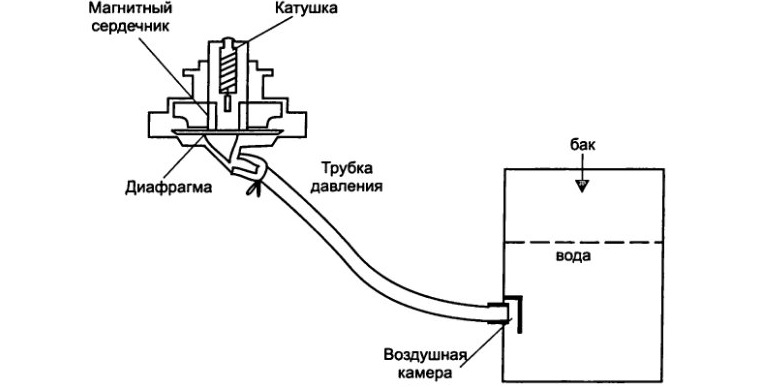
Typical problems
There are a number of signs that indicate the water level sensor is malfunctioning. First, there's the error code displayed on the machine's display. If the self-diagnostic system doesn't detect a problem, suspect a faulty pressure switch if:
- Cycle repetition. When the sensor doesn't control the water level, the wash cycle won't run correctly. In this case, replacing the pressure switch will help;
- No water intake. It's possible that the cycle starts, but the machine doesn't fill. This is usually caused by the pressure switch contact being stuck in the "full" position;
- A continuous water intake. Sometimes a faulty pressure switch constantly signals that the tank is empty, even though the liquid reaches the upper limit. In this case, the drain automatically starts, and the machine continues to fill. The process continues in a loop;
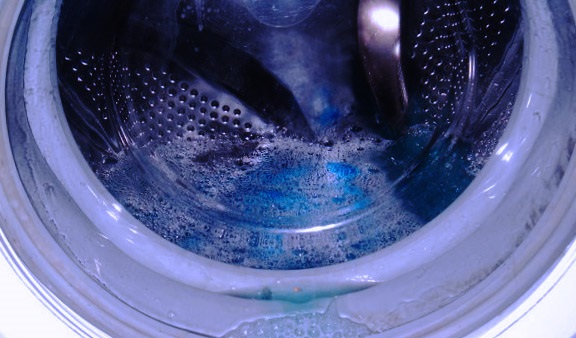
- Incomplete drainage of water from the tank. While this isn't a clear sign of a faulty pressure switch, it's quite possible that a broken level sensor is causing some liquid to remain in the drum;
- Deterioration in wash quality. Clothes may not wash properly if the drum is not filling with enough water. This happens when the pressure switch is incorrectly adjusted. To correct this, simply adjust the pressure switch by turning the adjusting screw.
- A burning smell emanating from the machine. In this situation, the wash cycle still starts when there's no water in the tank, but the relay indicates it's full. The heating element heats up, and since there's no liquid inside, the washing machine begins to smell burnt. It's important to de-energize the machine as quickly as possible to stop it.
Having noticed one or more “symptoms”, it is better not to “torture” the machine any further, but to check the pressure switch. It is not always necessary to replace the water level sensor; sometimes cleaning and adjusting it is enough. Let's figure out how to diagnose an element.
Checking and adjusting the sensor
Before disassembling the washing machine yourself, check if it's still under warranty. If the free service period hasn't expired, it's best to call a specialist for diagnostics. Unauthorized repairs will mean you can forget about warranty coverage.
If your device's warranty has long expired, you can begin self-diagnosing. Here's how:
- Unplug the machine's power cord;
- close the shut-off valve responsible for the water supply;
- unscrew a couple of screws holding the top panel of the machine;
- remove the “cover” of the washing machine body;
- find the pressure switch;
- unscrew the screw securing the relay in the housing, remove the connector;
- loosen the clamp and remove the pressure switch from the machine.
Before replacing or adjusting the device, you should check its functionality. To do this, you'll need a short rubber tube, similar to the one on the pressure switch. After removing the water level sensor, connect the tube to it. Then, blow into it. If the pressure switch is working, you should hear two or three distinctive clicks. Silence indicates that the contacts are not responding, meaning the relay is faulty.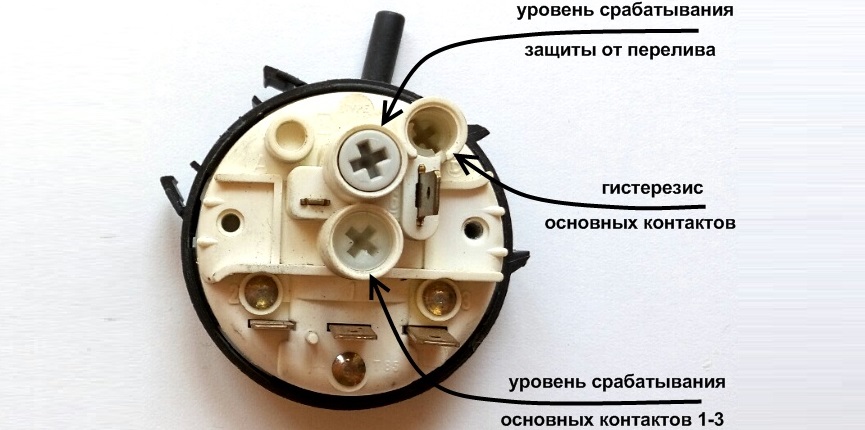
Next, inspect the pressure switch to ensure it is not damaged. Also, check the hose for blockages. If it is clogged, blow it out or rinse it under running warm water.
You can check the water level sensor using a multimeter.
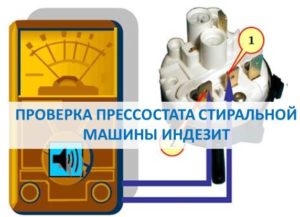
Hardware testing of the pressure switch is considered more accurate. To perform diagnostics, set the multimeter to ohmmeter mode and apply the probes to the relay contacts. Be sure to create pressure in the tube to activate the contacts. If the numbers on the tester screen don't change when the contacts are activated, the pressure switch will need to be replaced. If everything is working properly, you don't need to buy a new sensor; simply adjust the existing one.
The pressure switch is adjusted manually. This adjustment can help if the machine is drawing too little water during a wash cycle. The amount of liquid can be increased or decreased by adjusting the relay's response strength. Before starting the procedure, it is necessary to de-energize the equipment.
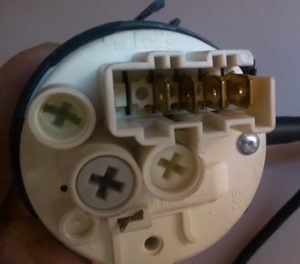
Remove the top cover of the machine, locate the pressure switch, and disconnect the connector. The level sensor has three adjustment screws, one of which will need to be adjusted during the process. The screw used for adjustment is usually located in the center.
It is necessary to adjust the pressure switch when the washing machine tank is empty.
You can tighten the screw using a Phillips-head or star-head screwdriver. The procedure is performed in stages—it's important to evaluate the interim results of the sensor adjustment. For example, you need to turn the screw half a turn, then reassemble the machine and run a test cycle with an empty drum. If the results aren't satisfactory, you need to turn the screw again.
Adjusting a pressure switch requires at least a basic understanding of theory. If you have absolutely no idea how a level sensor works, it's best to entrust the job to a professional. A specialist will correctly adjust the relay.
Interesting:

Readers' comments
Headings
Washing machine repair




For buyers




For users


Dishwasher




Add a comment