
How does the Atlant washing machine work?
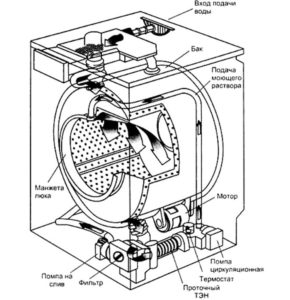 Front-loading washing machines are designed using the same principle. While there may be differences in the reloading door, the second drum, the presence or absence of a display, and a service hatch, the basic design remains the same. Let's examine the Atlant washing machine as an example to understand the main components and assemblies used in front-loading machines.
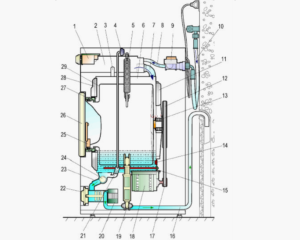
Main elements
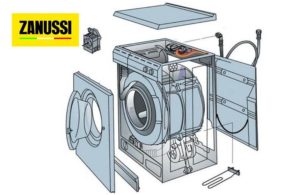
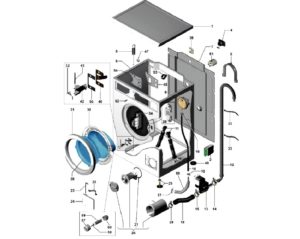
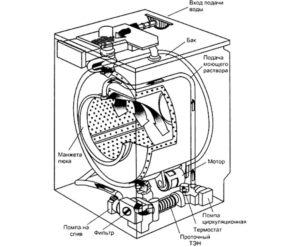
It's not difficult to understand how a washing machine works. All components are listed in the factory instructions, which also include a wiring diagram for the elements. It is possible to distinguish the main components of the machine and additional parts.
The basic elements include:
- electric motor;
- tank (can be made of plastic or metal);
- drum;
- drain pump;
- control module;
- shock absorbers, dampers, springs (necessary to suppress vibrations during machine operation);
- bearing unit;
- heating element;
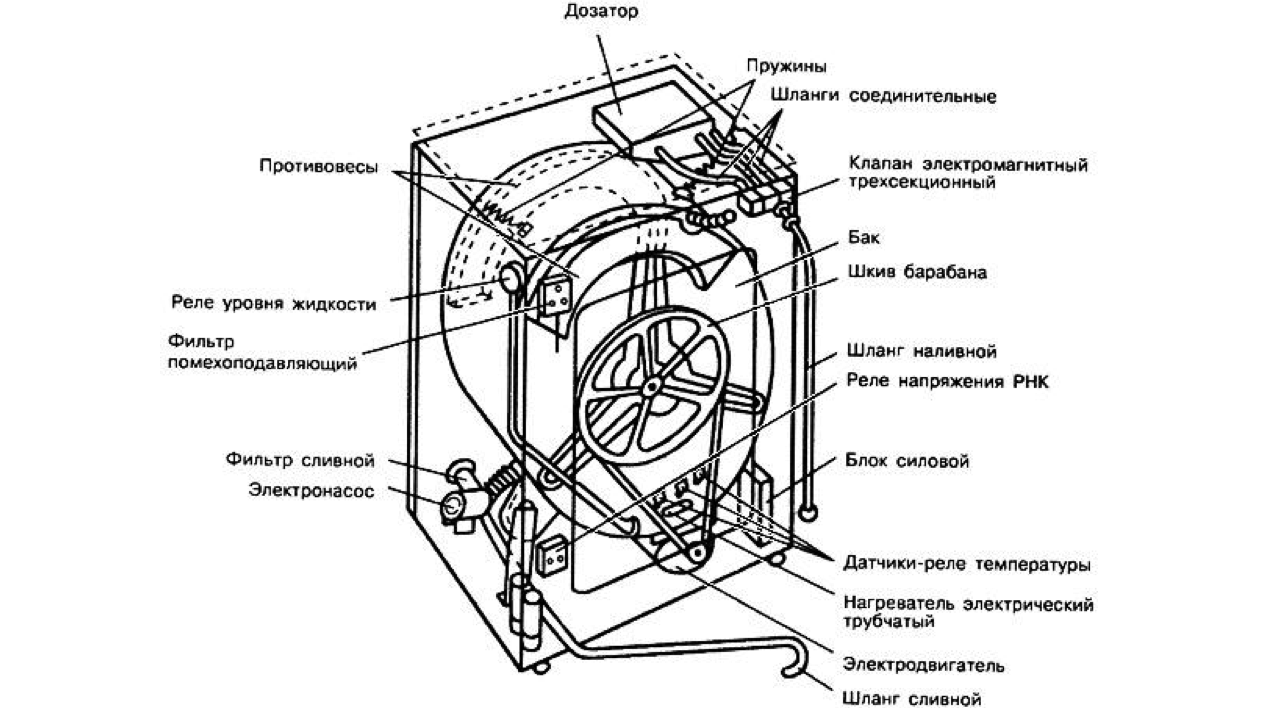
- filling solenoid valve;
- frame;
- pressure switch.
By understanding the Atlant washing machine's structure, you can diagnose problems and repair it yourself, without having to call in a professional.
This is the basic set of components; without them, the Atlant washing machine will not function. Knowing where each component is located and what it does makes it easier to spot malfunctions and promptly repair the machine.
Features of the machine
Under normal conditions, all components and sensors of the washing machine operate smoothly and without interruption. Each element strictly performs its assigned functions. The process is controlled by the main control module, the "brain" of the machine. The board monitors the sequence of operations, receives and transmits signals, and facilitates communication between components.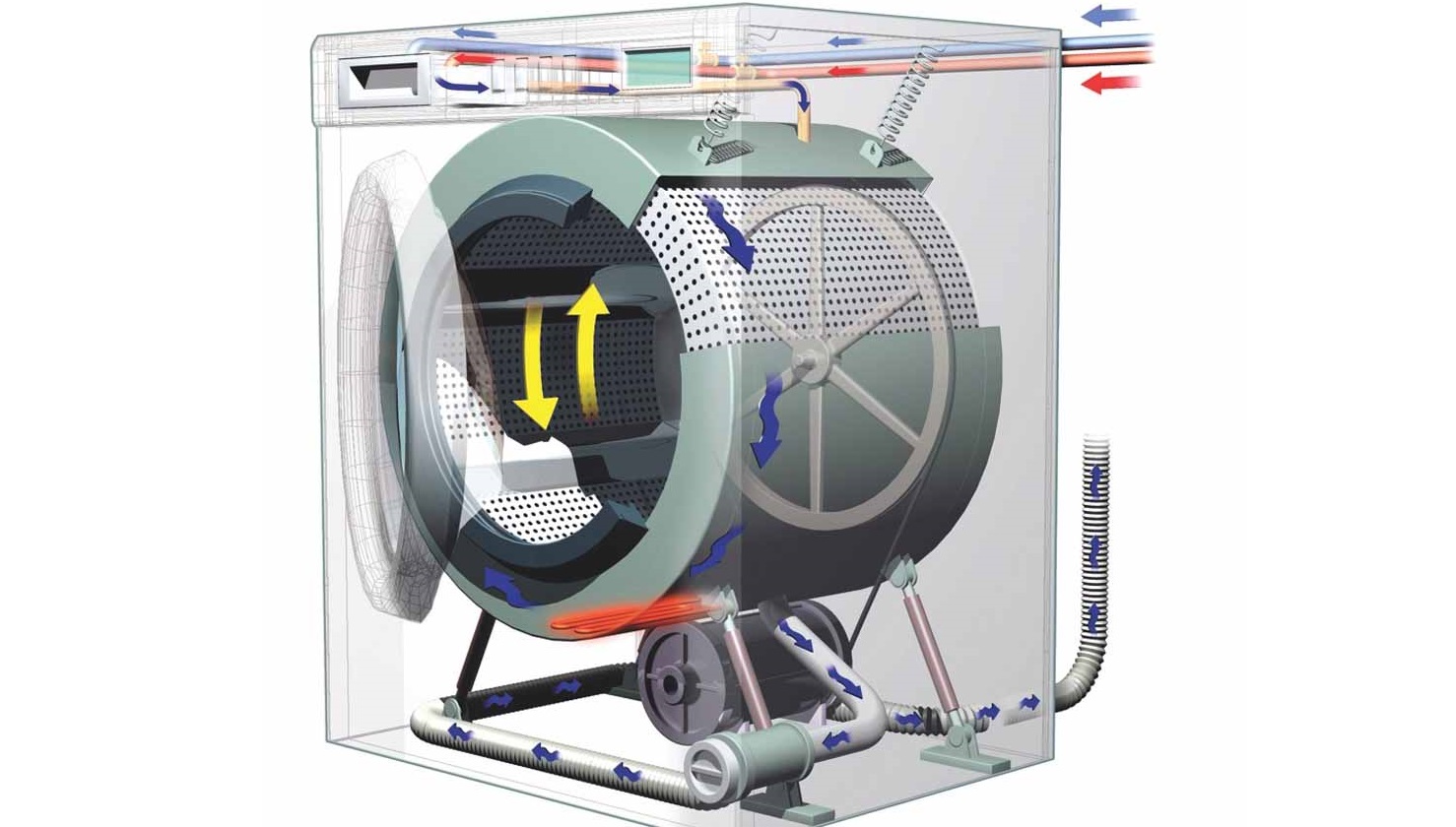
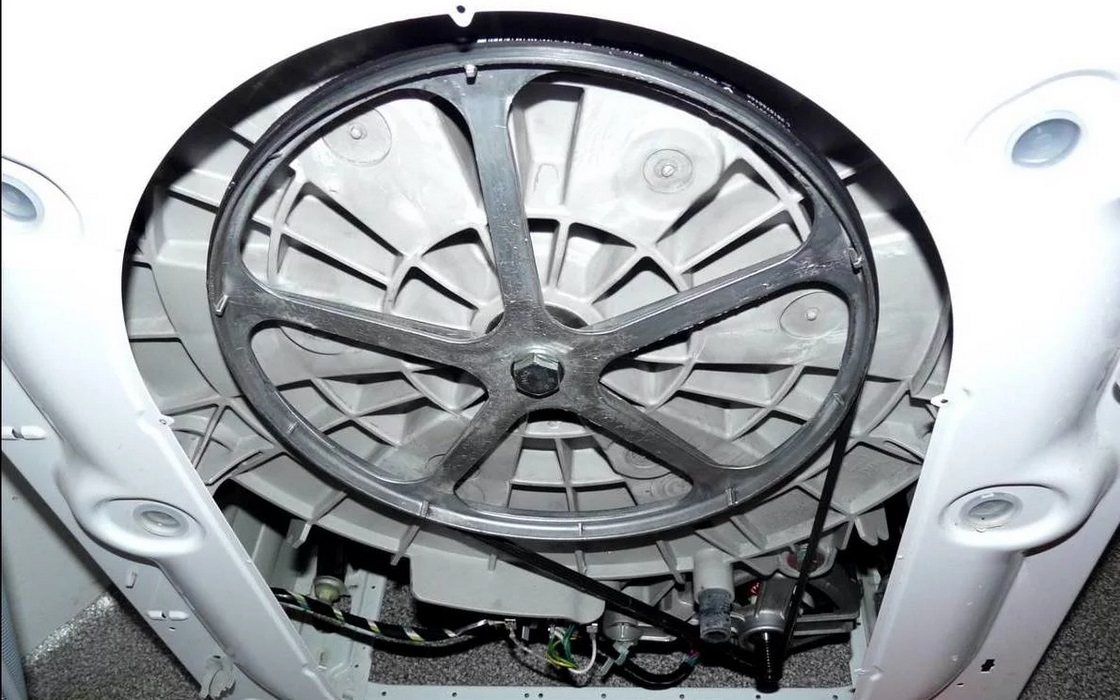
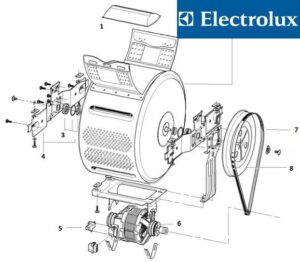
The washing machine's largest component is the drum. It's a large plastic or metal cylinder, its position controlled by shock-absorbing springs and dampers. The drum, made of stainless steel, is housed within the drum. It rotates actively during the wash cycle thanks to a "wheel" attached to it via a spider. The pulley is spun by a drive belt, which is in turn driven by the motor. The drum's rotation is what cleans the laundry.
Almost all automatic machines from the Belarusian manufacturer are equipped with plastic detachable tanks.
After the wash cycle starts, the drum begins to fill with water. By pressing the "Start" button, the user sends a signal to the control board, which then commands the solenoid valve. It opens, allowing liquid to flow into the system, and a pressure switch monitors the filling level. When the water reaches the desired level, a sensor alerts the "brain," and the filling stops.
The heating element is then activated to heat the water to the set temperature. The control unit monitors the cycle stages, moving from soak to main wash, and then to rinse. Between cycles, the pump is instructed to drain the water.
This is the general picture of almost every wash. In fact, there's nothing complicated about the machine's operation. To better understand how it works, you need to disassemble each component separately.
How does the main node function?
The tank is the largest component of the washing machine. In Atlant models, it's made of plastic, which explains the low cost. Some manufacturers make the tank out of stainless steel; this type of equipment is considerably more expensive but considered more reliable. The tank is positioned horizontally within the machine, but some models have an angled tank.
The main tank has a built-in metal drum where the laundry is placed to be washed. The water is heated and mixed with the powder in the drum, then penetrates through the pores on the walls of the drum to the clothes. The ribs present on the drum surface improve the quality of washing and help to cope with dirt.
Damage to the drum assembly of Atlant washing machines is very rare. This can happen if the load capacity is not met or if the machine is not level. Foreign objects, such as bra wires, nails, hairpins, or keys, accidentally dropped inside the machine can also puncture the plastic drum.
How is water heated?
The water reaches the desired temperature thanks to a heating element. The heating element is located directly under the drum, at the rear of the housing. The tubular heater can be accessed by removing the wall and the drive belt.
The heating element is one of the most frequently damaged and requiring replacement elements of Atlant washing machines.
The heater breaks down because:
- is constantly in contact with hard water, resulting in scale forming on its surface;
- The deposited layer of limescale disrupts the heat transfer of the heating element, which leads to overheating and burnout of the element.
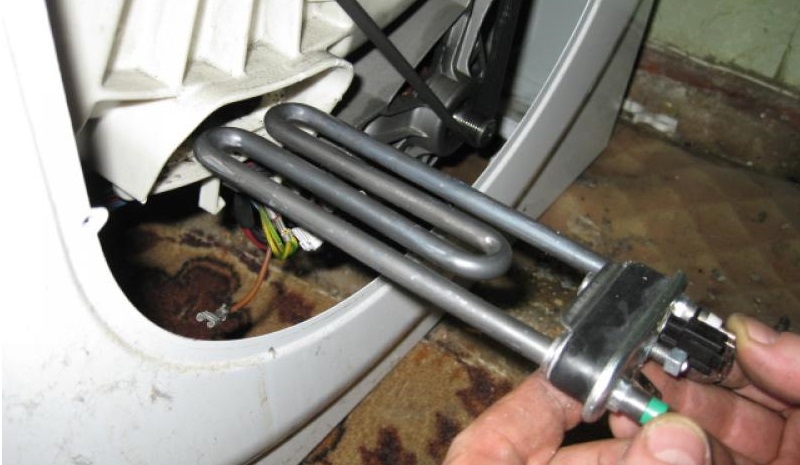
Therefore, it's best to avoid constantly using high-temperature wash cycles, especially running several cycles in a row with water heated to 60-90 degrees Celsius. Allow the heating element to cool for an hour before starting a new cycle. In terms of heating power, the heater consumes approximately 1800-2200 watts. These values are similar to those of other heating devices.
What makes the drum move?
The washing machine's motor spins the drum to the set speed. The motor, via a drive belt and pulley, accelerates the drum to the required speed, ensuring high-quality washing and spinning. The motor's service life depends on several factors, primarily its type. Inverter motors are more reliable and durable than brushed motors.
Atlant brand washing machines are equipped with collectors – they are cheaper than inverters, but at the same time they are inferior to the latter in several characteristics. Collector motors are very sensitive to voltage surges and require regular maintenance, such as replacing brushes when they wear out. You can take this into account and connect your automatic washing machine through a voltage stabilizer – then you won't have to worry about power surges. As for the brushes, this is a routine repair that doesn't take much time.
Water is poured into the drum according to the following principle:
- the user starts the wash by pressing the “Start” button;
- the module gives a command to the electromagnetic valve to open;
- the pressure in the system decreases, water begins to flow into the tank;
- The pressure switch measures the amount of liquid;
- the level sensor sends a signal to the board about the tank being full;
- the block, based on the information received, “orders” the intake valve to close;
- The filling of the machine with water is completed.
After this, the machine begins heating the water and performing the main wash. When the water needs to be drained, the module signals the pump. The pump begins to draw water and discharge it through the pipes into the sewer. The level sensor, noticing that the tank is empty, alerts the control unit. When the wash is complete, the "brain" stops the drainage system, ensures that all machine components have finished their work, and releases the door lock.
The "brain" of the machine
Continuous communication between all components is possible thanks to electronics. The control module is the “brain” of the washing machine, coordinating the actions of all units, issuing commands and monitoring their execution. The circuit board consists of numerous semiconductor components. Communication with other components of the machine is accomplished via conductive tracks.
Modern washing machines are equipped with a self-diagnostic system. It detects any malfunctions or problems in the equipment and notifies the user by flashing an indicator or displaying an error code.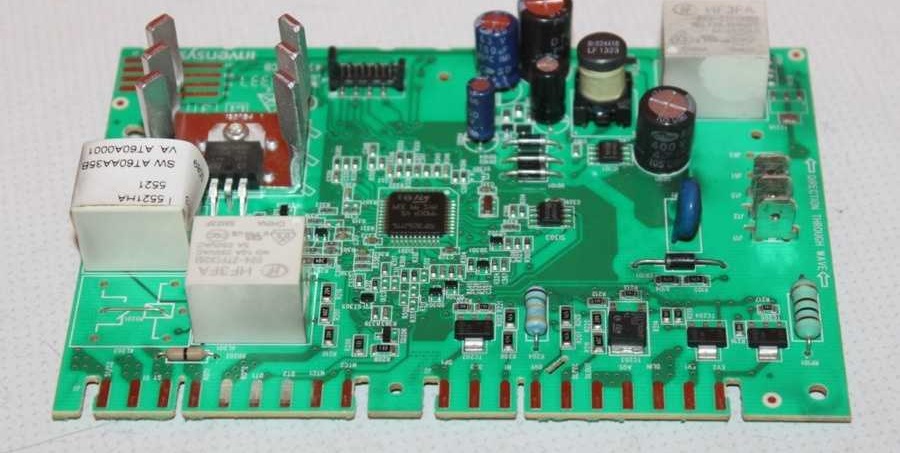
The "brain" of the machine determines the algorithm for selecting a specific washing program. The sequence of operations and settings for each mode are programmed into the intelligent system; the user only needs to select the desired one via the control panel. Some Atlant models offer the ability to adjust the factory washing programs. For example, the user can change the water temperature and spin speed.
Other washing machine components
To fully understand how a front-loading washing machine works, you'll need to understand not only the main components and sensors, but also the additional elements. Although we consider these parts to be secondary, in reality, without them, the machine cannot function properly. Every element, no matter how small, plays a vital role in the machine's design.
So, we are talking about the following components:
- Door cuff. The sealing rubber ensures the system is airtight;
- Locking device. Activated by the "brain" after the door is mechanically closed and the wash cycle starts. Once the locking device is activated, it will be impossible to open the door until the cycle is complete;
The control module automatically activates the door locking system after starting the washing mode.
- Drive belt. This is what transmits the impulse from the motor to the drum pulley, which then spins the drum to the required speed. If the belt breaks or slips, the wash will stop and the drum will freeze in place;
- Counterweights. These are concrete blocks necessary for the machine's stability. Without them, the washing machine would be unable to withstand the centrifugal force generated by the drum's movement;
- Debris filter. Protects the drain pump, preventing debris, hair, threads, and foreign objects from entering. Requires periodic cleaning;
- Door. No further explanation is needed here. Without a hatch, loading items into the machine would be problematic;
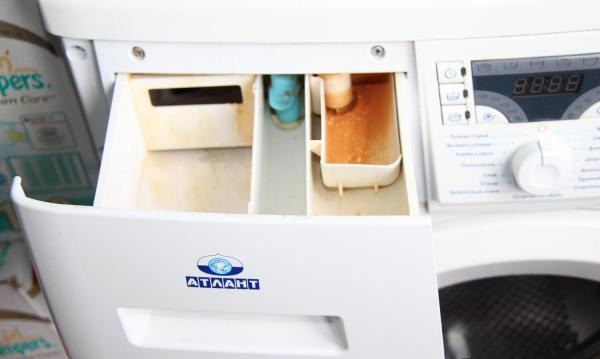
- Powder dispenser. The dispenser is divided into sections, each of which is loaded with a specific detergent—for pre-wash, main wash, or rinse. The drawer allows the detergent to flow gradually into the tank, thereby achieving maximum washing results.
- Hoses. These are the components that connect the main components of a washing machine. For example, the drain hose is located between the main tank and the pump, while other hoses lead from the dispenser to the drum. They allow water to circulate freely throughout the system.
Once you understand how your Atlant washing machine works, you can independently analyze its operation and spot the first signs of malfunction. It's important to read the manufacturer's instructions to understand the design of your "home assistant" and quickly troubleshoot minor issues.
Interesting:

Readers' comments
Headings
Washing machine repair




For buyers




For users


Dishwasher




Add a comment