
How does an Electrolux washing machine work?
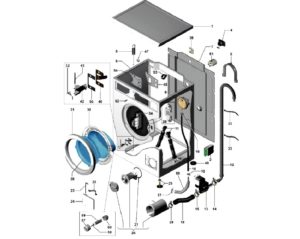 Interest in the design of an Electrolux washing machine often arises when it breaks or malfunctions. To diagnose and repair the machine yourself, you need to carefully examine the location and connection of the machine's parts and components, understand their purpose and operating principles. This isn't difficult – most front-loading and side-loading machines have similar designs and controls. All you need to do is take the time to delve into the machine's internals.
What details are hidden inside the machine body?
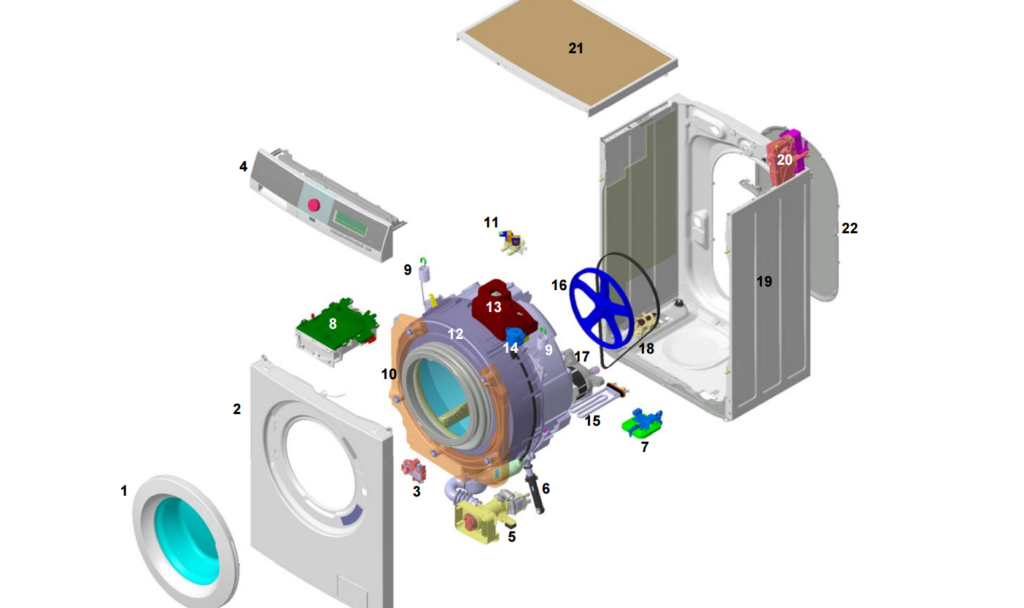
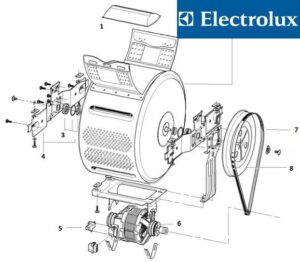
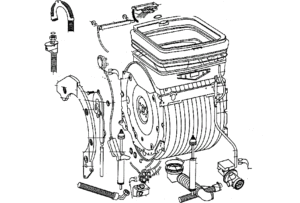
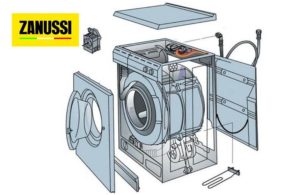
Getting to know your washing machine begins with examining all the components and parts. This is the only way to see all the components and understand their interconnections and layout. For example, every Electrolux washing machine, whether front-loading or side-by-side, is equipped with the following elements:
- electric motor;
- tank;
- drum;
- drain pump;
- several types of pipes;
- detergent dispenser (powder receiver);
- shock absorption system (springs and dampers);
- tubular electric heater (TEN);
- trash filter;
- drum pulley;
- snail;
- thermostat;
- control board;
- counterweights;
- hatch locking device (HLD);
- filling valve;
- hatch cuff;
- pressure switch;
- hoses (drain and fill);
- dashboard.
Most washing machines have the same design, and Electrolux is no exception.
The above-mentioned components and devices are housed within the washing machine's body. The metal "box" itself is simple in design: a top cover, front, rear, and side panels. The loading door is located at the top or front, depending on the machine type.
To diagnose and repair, it is not enough to just know the names of all the components of the washing machine. It is necessary to study the elements, their location and purpose in more detail. We'll tell you below how to check each part for functionality.
Control board
The control board is considered the "brain" of the Electrolux washing machine. It supplies power and controls all system components. It is the electronic module that activates the machine, transmitting user-defined commands to the required components along a "chain" of wires, tracks, and microchips.
Everything is controlled and regulated by the control board. Turning on the machine, setting the program, filling the tank, rotating the drum at a preset speed, draining the water—every command sent by the user is first sent to the electronic unit and then transmitted via semiconductors and contacts to its destination. If the entire module or one of its microcomponents fails, the washing machine stops functioning, as control over that specific component is lost. For safety reasons, the system automatically shuts down.
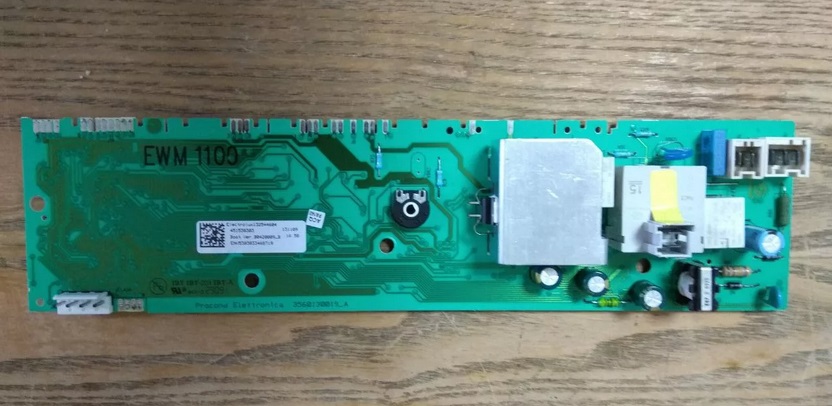
The washing machine's control panel is also part of the electronic module system. Through it, the user sets the cycle, activates additional options, adjusts the spin intensity, and controls the water temperature by pressing buttons and turning the dial. The system then processes the received information and activates the washing machine. It is very difficult to independently understand how the control board is structured and operates. Its diagnostics and repair should only be carried out by professionals.
A control board failure is a serious problem, and it is strongly recommended that you do not attempt to fix it yourself!
Elements that monitor the water intake and level
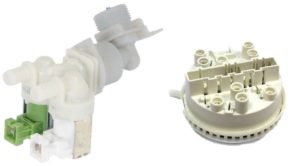 A pressure switch and an inlet valve are responsible for filling the washing machine with water. The former, via a long tube, monitors the pressure in the tank and sends a signal to the control board indicating how full the tank is. The latter, receiving feedback from the module, initiates or stops the filling process.
The inlet or inlet valve has one to three coils. These are energized as soon as the control module sends a signal to start water intake. This causes the membrane to open, allowing water from the water supply to flow into the tank. When the desired level is reached, the pressure switch releases the power, the board cuts off the power, and the system stops dispensing.
These elements always work together: the valve fills, the pressure switch controls, and the board acts as a transmitter. This ensures the tank is filled to the specified level, preventing underfilling or overfilling.
Electric motor and speed sensor
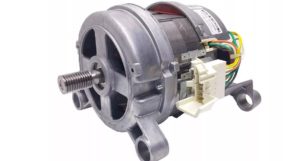 The drum rotation is provided by a motor and a tachogenerator. They also work in tandem, complementing each other. The motor spins the drum shaft, and the tachogenerator monitors the speed, or more precisely, the number of revolutions per minute. This is necessary to avoid erratic movement or sudden braking.
The driving force is the electric motor. Most modern Electrolux front-loading machines are equipped with inverter motors that are mounted directly to the drum shaft. The absence of a belt drive makes rotation more efficient and powerful, and the design itself, without a "middleman," is more reliable and durable.
Some washing machines are equipped with commutator motors. In this case, the drum is spun by a drive belt, which transmits power from the motor to the shaft. Unlike their inverter counterparts, commutator motors require repair more often: the rubber seal wears out, and the brushes wear out.
Water heating elements
Heating to a set temperature is the function of a tubular electric heater. The chosen mode determines how hot the water in the tank will be. After the user selects a program and sets the desired temperature, the control board transmits the received information to the heating element. The heater begins operating according to the set temperature.
The heating element and the temperature sensor built into it are responsible for heating the water in the washing machine.
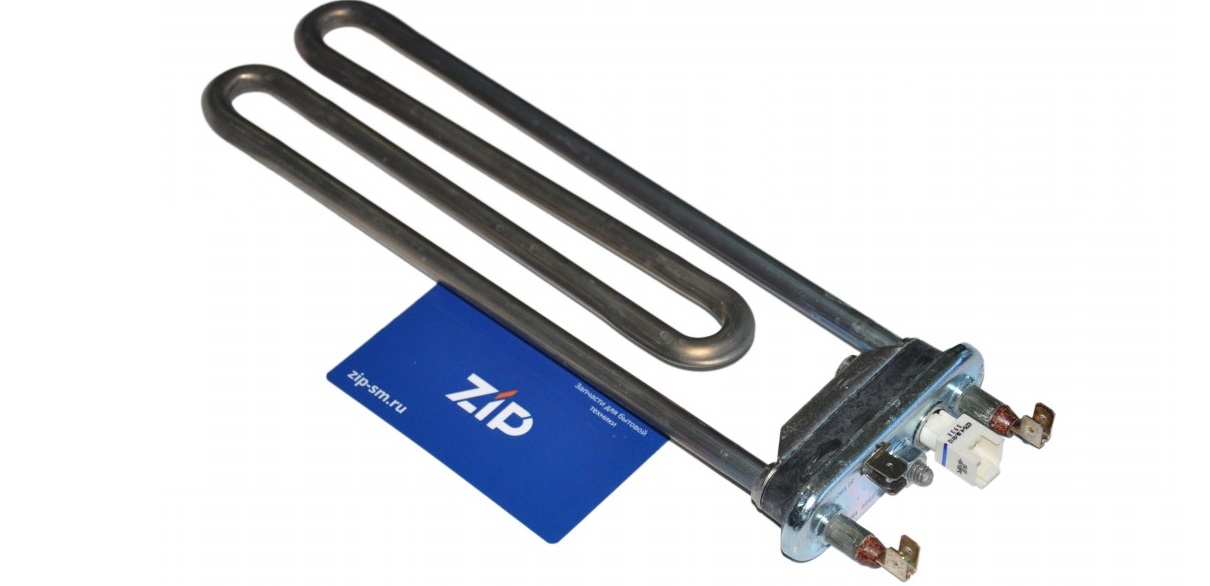
The heating element's temperature is controlled by a thermistor, a metal tube located directly within the heater. Once the water reaches the set temperature, the sensor sends a signal to the control board, which in turn switches off the heating element.
Vibration and centrifugal force compensators
 To prevent both top-loading and front-loading washing machines from "jumping" during the wash and spin cycles, special compensators are incorporated into the design. These dampen vibrations emitted by the motor when it reaches maximum speed. The rotation of the drum creates centrifugal force, which without a shock-absorbing system and counterweights would destroy the machine from the inside.
The following components help the washing machine maintain a stable position:
- dampers – spring struts that secure the bottom of the tank to the bottom of the housing;
- springs on which the tank is suspended from above;
- Counterweights are concrete blocks that add weight to the machine and maintain the required balance.
These components are designed to protect the washing machine from centrifugal force. However, with improper or prolonged use, they can fail: the shock absorbers wear out, the springs stretch, and the counterweights crack or become loose. In such cases, tightening the fasteners or replacing the damaged parts is necessary.
Hatch lock and rubber band
It's important to understand how the door works. Regardless of whether the washer is front-loading or top-loading, it has two locks: a mechanical one and an electronic one. The first is activated when the user closes the handle, while the second is activated after the cycle starts. In the latter case, the door lock is activated, preventing the machine from being opened accidentally during the wash cycle.
The door lock device will prevent the door from being opened while the Electrolux washing machine is operating.
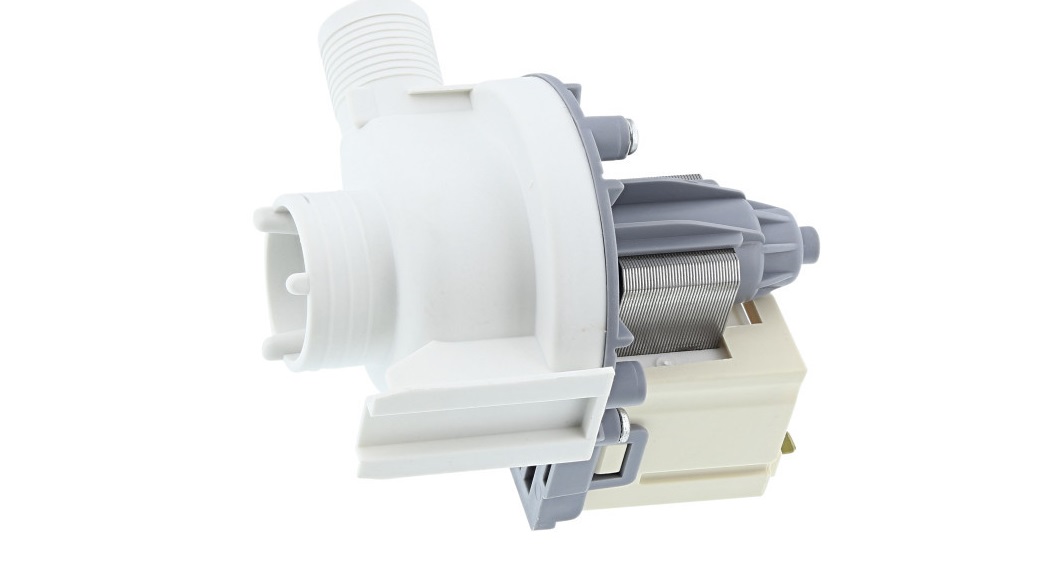
The tank and hatch seal ensure a watertight seal. This rubber seal closes the gap between the drum and the machine body, preventing water from escaping. If the rubber is cracked or torn, you cannot start the machine - a major leak is possible.
Elements responsible for drainage
A washing machine cannot function without proper drainage. A system of pipes and hoses, as well as a pump and debris filter, ensures the drum is emptied. The heart of the drainage system is the pump, which evacuates water from the tank after each wash cycle.
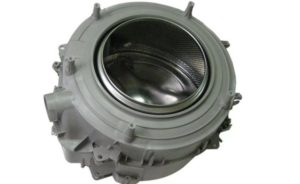 There are two types of pumps:
- synchronous;
- asynchronous.
The pump consists of a motor and an impeller. The motor starts the device, while the impeller, by rotating the blades, directs the water in the desired direction. A volute is mounted on top of the pump, through which the pipes and hose are connected.
Most of the debris, hair, dirt and fur that gets into the washing machine settles on the debris filter.
Pumps are durable, but the drainage system often malfunctions due to clogs. Coins, debris, hair, and other small objects often get caught in the drum and remain in the drain pipe. This is often caused by pockets of clothing not being checked before washing. Most of the foreign debris ends up in the specially designed debris filter, which must be regularly removed and cleaned.
Main tanks
 A crucial part of a washing machine is the drum. It's made of plastic and completely sealed. Water from the mains enters here, where it's mixed with detergent. On front-loading machines, the drum is positioned with the opening facing forward, and the vertical hatch facing upward.
The drum is always made of stainless metal and has porous walls. The laundry is placed inside, after which water and detergent from the tank are transferred to the cylinder, and the wash begins. The drum surfaces must be equipped with plastic combs – rib beaters – that mix and turn the laundry for better washing.
While the tanks and drums of Electrolux machines are mostly made of the same material, their size and capacity vary significantly. This all depends on the capacity specified by the manufacturer.
Additional elements
The Electrolux washing machine also features other system components that ensure high-quality cleaning. Among them is a dispenser tray for detergents. Thanks to its special design, the concentrate is gradually dispensed, precisely at a specific stage of the cycle. There is no mixing of ingredients: powder or gel is dispensed during the main wash, detergent during the bleach cycle, and fragrance, conditioner, or fabric softener are dispensed during the rinse cycle.
Electrolux produces washing machines with front and top loading.
The inlet and drain hoses also deserve attention. The former supplies clean water to the tank, while the latter pumps waste water into the sewer. The pipes connecting the system's key components serve as auxiliary components.
Washing machines are complex, especially modern "smart" machines packed with sensors and electronics. But understanding the layout and interconnections of the components is possible—the key is to carefully study the manual and the machine's internal structure.
Interesting:

Readers' comments
Headings
Washing machine repair




For buyers




For users


Dishwasher




Add a comment