
The Ariston Hotpoint washing machine
 Almost all front-loading washing machines have a similar design. Models differ only in a few details, such as an additional door, advanced firmware, or a larger display. However, the internals and operating principles of the components remain the same. A good example is the Hotpoint Ariston washing machine. This manufacturer's appliances are characterized by their simplicity and allow you to study the design of a typical front-loading machine.
Main components
Understanding the Ariston washing machine's design is easy. A list of all components is provided in the manufacturer's instructions, and the wiring is shown in the so-called electrical diagram. As with any other slot machine, there are both basic and additional elements. The first, basic ones include:
- electric motor;
- tank (metal or plastic);
- drum;
- pump;
- control board;
- shock absorption system (spring structures, shock absorbers and dampers);
- bearing unit;
- frame;
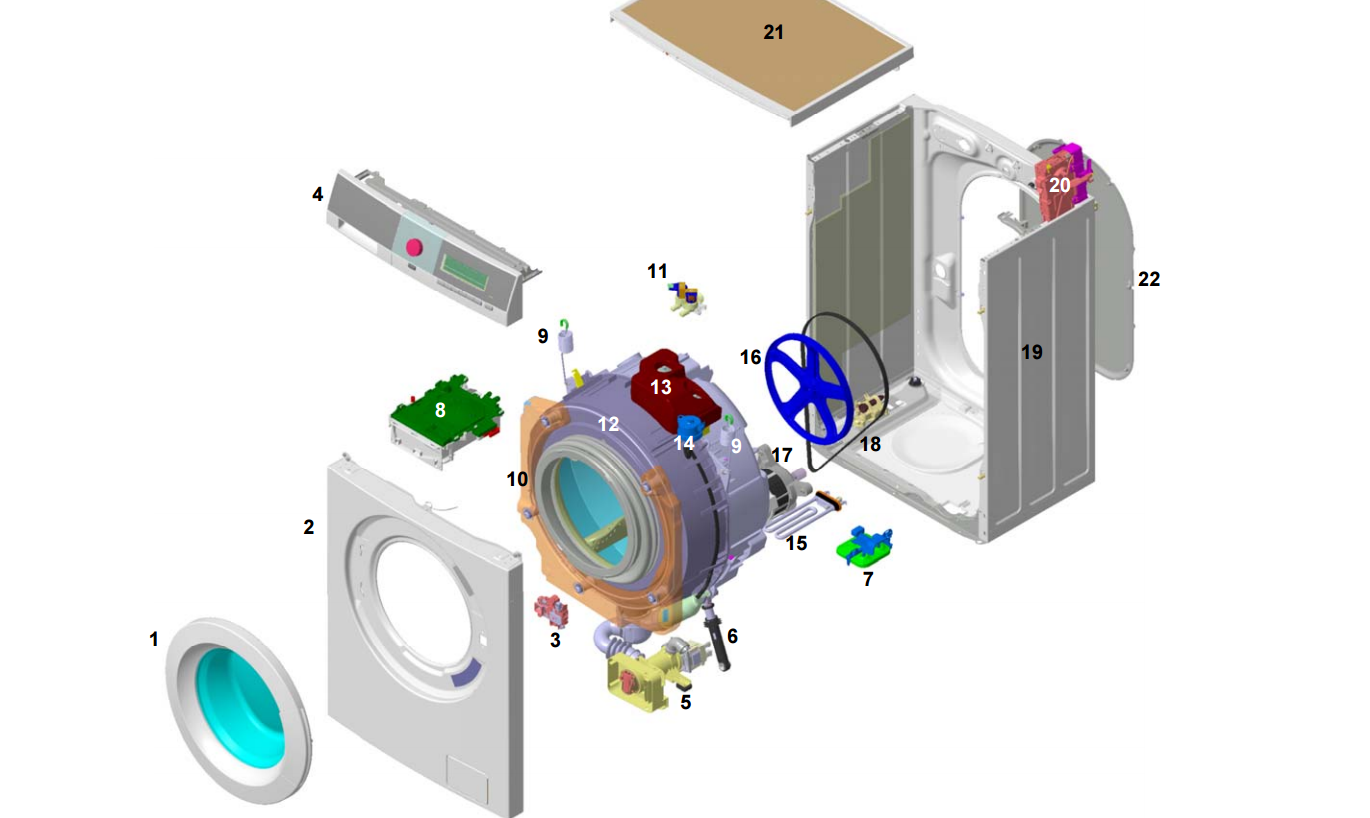
- inlet valve;
- Heating element.
Knowing what Ariston consists of, you can carry out diagnostics and repairs yourself, without involving repairmen.
This is a basic "set" of parts and devices without which the washing machine cannot be used. Knowing their location and operating principles makes it easier to spot malfunctions, diagnose, and repair the machine.
How do the parts interact?
When all the parts and components work together smoothly, the washing machine functions smoothly. Each component performs its task, and the process is controlled by the "brain"—the control board. The control module sets the sequence of operations, analyzes the signals received, and ensures seamless operation.
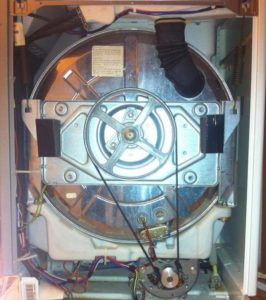
Peering inside the machine, the first thing you'll notice is the drum. It's a large plastic container, supported in a "weightless" state by springs and shock absorbers. It houses the drum—a porous stainless steel container that moves actively during the wash cycle thanks to a pulley connected via a spider. The spider pulley is an iron shaft that receives momentum from the accelerating electric motor via a drive belt. The increased speed is what actually cleans the clothes.
Most Ariston washing machines are equipped with plastic tanks.
Before washing, the drum fills with water. This occurs when the circuit board receives a signal to start the wash after the user presses the "Start" button. The inlet valve opens, the pressure switch monitors the fill level of the drum, and once the preset level is reached, the module activates the heating element. The machine then heats up to a predetermined temperature, and the electronic unit begins cycling through the cycle stages, finally giving the pump the go-ahead to drain.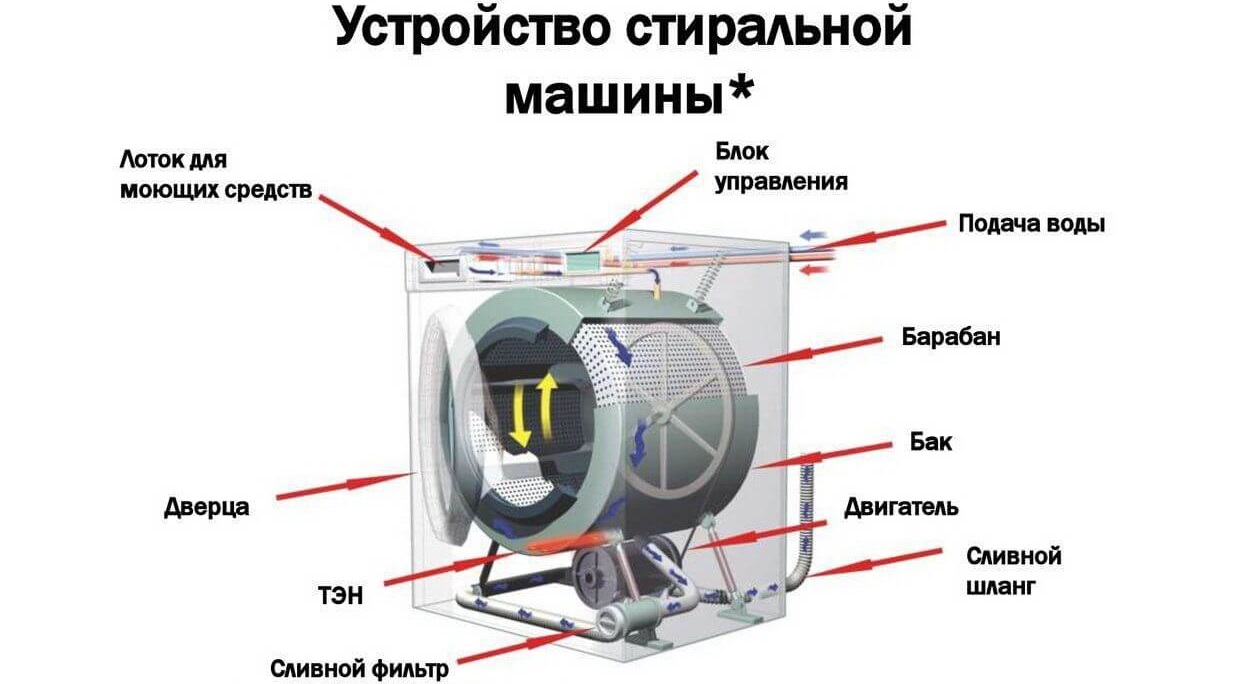
This is how almost every wash cycle works. A slight difference may occur when additional options are enabled. However, this is only a general overview; to fully understand the washing machine's design, it's worth examining the individual components.
Work of the largest elements
The washing machine's drum takes up the most space. Ariston models have a plastic drum, which contributes to the low cost and ease of transportation. Other manufacturers offer a stainless steel drum, which is stronger and more reliable, but more expensive and heavier. The drum is typically positioned horizontally within the machine, although some machines have a tilted drum.
A smaller metal tank is built into the drum, into which the user places the dirty laundry. Water is heated in the tank, mixed with detergent, and then penetrates the laundry through the porous walls of the drum. In addition to the holes, the drum surface also has ribbing, which improves the quality of washing.
Water is heated and mixed with detergent in the tank, and then enters the drum through holes in its walls.
The tub and drum are rarely damaged. An imbalance due to improper loading or an unstable frame can lead to serious damage. Hard objects, such as keys, coins, hairpins, and bra wires, can also damage both metal and plastic, often getting inside the machine due to carelessness.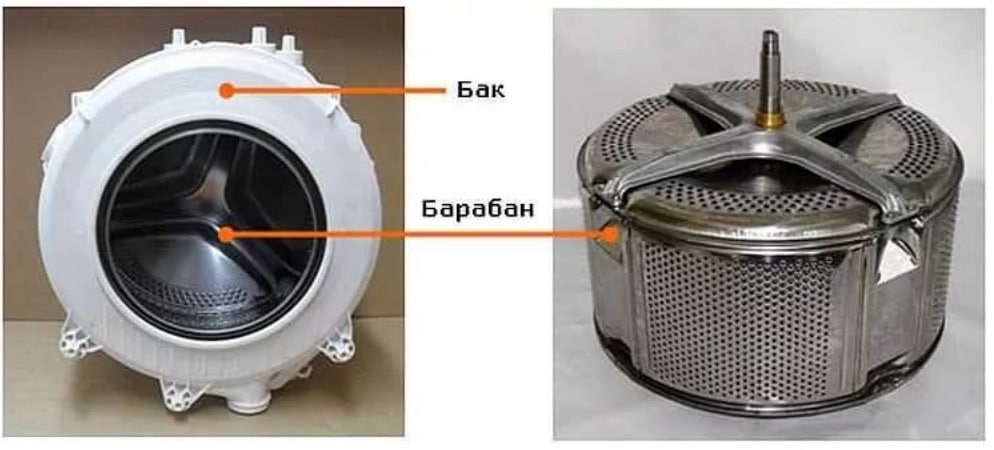
Why is the water in the tank hot?
The water in the drum is heated by a tubular heater, or heating element for short. It's located directly under the drum, at the bottom of the machine. It can be accessed by unscrewing the back panel of the washing machine and removing the drive belt. The heating element is one of the most common washing machine parts that fail. There are three reasons for this:
- the heater is constantly in water, often hard water, which causes scale deposits;
- the layer of scale increases the already high temperature, which results in overheating of the part and even burnout;
- Heating elements are more susceptible to breakdowns than others.
The heating element in Ariston machines consumes approximately 1800-2200 W.
Frequent washing in hot water is not recommended, especially for several consecutive cycles, especially when maintaining the machine temperature at 60-90 degrees Celsius. It's best to let the machine cool for 20-50 minutes before each wash.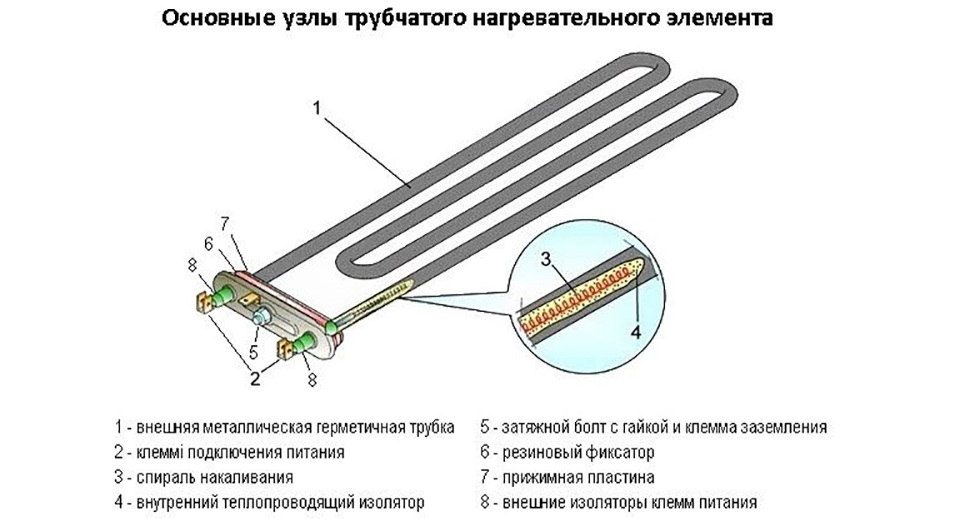
In terms of power, the heating element consumes approximately 1800-2200 watts. These figures are comparable to the power consumption of any heating mechanism.
"Who" moves the drum, pumps in and removes water?
The drum is rotated by a motor. The motor, via a belt drive and pulley, accelerates the drum to a set speed, ensuring high-quality washing and spinning. The motor's lifespan and power depend on many factors, the most important of which is its type.
Ariston washing machines are equipped with brushed motors. They are cheaper than inverter motors, but inferior in several respects. For example, the former are unreliable, sensitive to voltage fluctuations, and require constant maintenance, such as timely replacement of brushes. However, if you anticipate these issues, connect the machine through a voltage stabilizer, and carefully monitor the motor's condition, you won't have any problems operating the machine.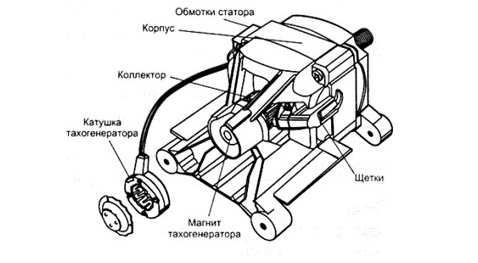
Water is pumped into the drum as follows:
- After the “Start” button is turned on, the control board sends a command to the inlet valve to open;
- the valve opens, the pressure drops and water flows through the inlet hose into the tank;
- a pressure switch, or water level sensor, monitors the degree of filling of the tank;
- when the specified volume is reached, the level sensor sends a signal to the electronic unit;
- the unit records the received information and “commands” the valve to close;
- The valve responds to the command and the water flow stops.
Ariston washing machines operate on a collector motor.
At the end of the wash cycle, the control board contacts the pump and gives the go-ahead to pump out the water. The pump activates and drains the water through the pipes and drain hose into the sewer. The pressure switch, in turn, monitors the emptying of the tank and, as soon as the level drops to the minimum, notifies the module that the procedure is complete. The unit sends a "clear" signal, shuts off the drainage system, and then, after verifying that all components have completed their operation, removes the power. UBL and unlocks the hatch door.
Electronics are very important
Continuous communication with the control board is possible thanks to electronics. The electronic module, via the control panel and special firmware, acts as the "brain", issuing commands and monitoring their execution. The system consists of semiconductor elements, triacs, thyristors, resistors, and “communication” with other components occurs via conductive paths.
Using a self-diagnostic system, the Ariston control board is able to record any problems that arise and display an error code on the display.
The board determines the sequence of actions for each selected program. All possible algorithms and settings are written into its circuit diagram, allowing for error-free cycle initiation via the control panel. The control panel offers the user a preset set of modes and options that simplify washing. Some Ariston models go further, allowing the owner to change the factory settings, adjusting the washing process.
What else is in the case?
To fully understand how the Ariston works, it's necessary to consider not only the basic components but also the additional ones. Despite their "secondary" status, all these parts and components play a significant role in the washing machine's operation. Without them, the washing machine won't function at its full potential.
- The damping system includes springs, shock absorbers, and dampers designed to suppress vibration emanating from the drum.
- Bow seal. Rubber seals that stretch over the edge of the drum and housing. Necessary to seal the machine.
- HLD stands for Door Locking Device. It's activated by the circuit board after the door is mechanically closed and the "Start" button is pressed, automatically locking the machine. This prevents the machine from being opened accidentally or intentionally during a wash cycle.
When the cycle starts, the control board automatically activates the hatch locking device (HLD).
- Drive belt. It allows the electric motor to transmit power to the pulley and spin the drum to the set speed. If the drive belt breaks or comes off, the washing machine will stop.
- Counterweights. More precisely, large concrete blocks installed above the drum to increase the weight of the washing machine. Due to the weight of the stones, the machine is able to withstand the centrifugal force created by the rotation of the drum. Without concrete, the machine will jump, leaning left and right.
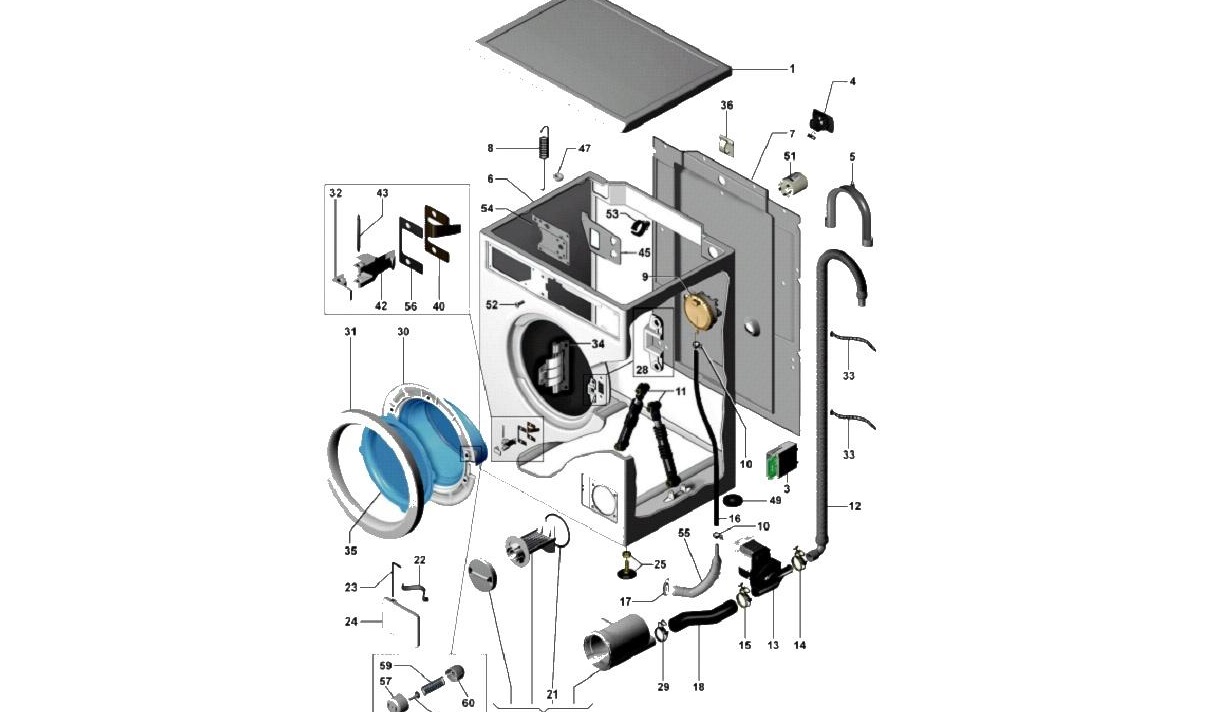
- The hatch door. This one is self-explanatory: without it, loading laundry into the machine would be extremely problematic.
- A detergent dispenser. Simply put, it's a powder dispenser. It has three compartments: one for prewash, one for the main wash, and one for additional liquids (stain remover, conditioner, fabric softener, rinse aid). It helps distribute detergent or gel evenly, improving cleaning results.
- Pipes. They connect components, such as the pump and drum, or the dispenser and tank, allowing water to circulate throughout the machine.
Once you understand the Ariston's design, you can analyze its behavior and perform diagnostics and repairs at home. The main thing is to follow the manufacturer's instructions and remember safety precautions.
Interesting:
Readers' comments
Headings
Washing machine repair




For buyers




For users


Dishwasher




Add a comment