
The design of the Indesit top-loading washing machine
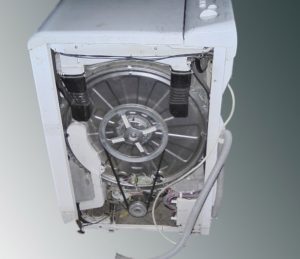 To be able to independently identify and fix a washing machine problem, you need to know how it works. Without understanding the internal structure of the machine, it will be difficult to detect and fix the problem. Therefore, before attempting any repairs at home, it's important to understand the components and parts of the machine. Let's take a look at the design of an Indesit top-loading washing machine and discuss its main components. We'll also discuss how to diagnose a top-loading machine.
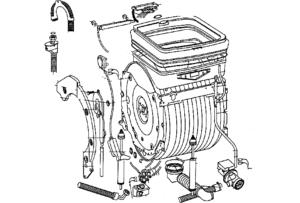
Main components of a vertical machine
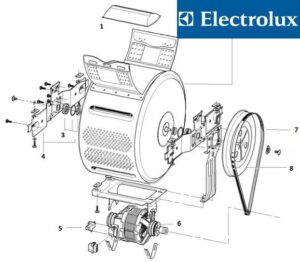
To repair a washing machine yourself, you need to understand how the mechanism works and how the machine's parts are interconnected. This knowledge will help you pinpoint the problem without wasting time inspecting and diagnosing components that are clearly unrelated. Indesit top-loading automatic machines are equipped with:
- top cover;
- side panels;
- tank with drum;
- control panel, behind which the main module is located;
- an electric motor responsible for the rotation of the drum;
- water supply valve;
- trash filter;
- drain pump;
- heating element;
- a pressure switch that determines the water level in the tank;
- a tachometer that records the number of revolutions;
- counterweight and shock-absorbing springs;
- detergent dispenser;
- drive belt and pulley.
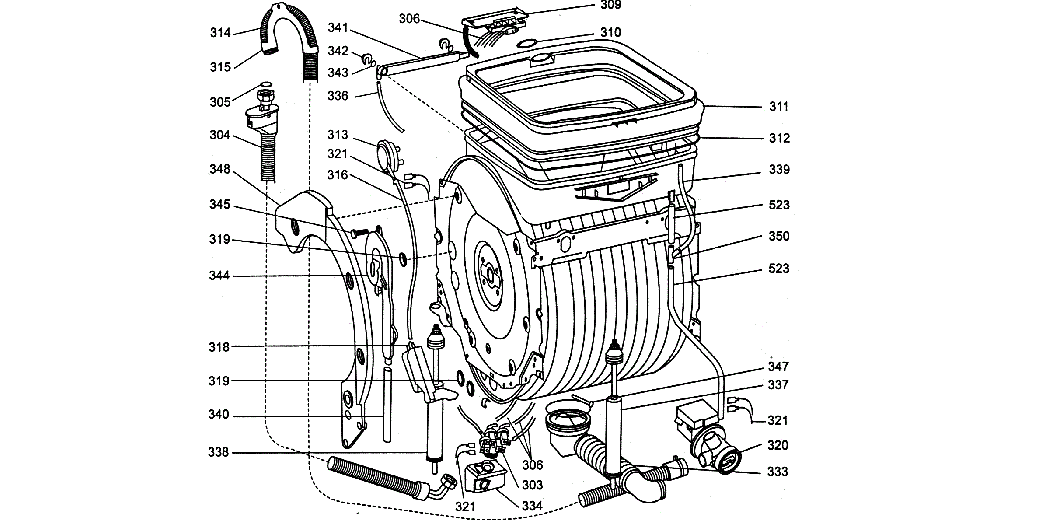
The main components of a vertical washing machine are the same as those of a front-loading machine. Having understood the washing machine's diagram and the functions of each component, it will be easier for the user to understand what exactly has failed and in which part of the system the failure occurred. The loading hatch of vertical washers is located on the top lid, where the control panel is also located. This is very convenient, as the user doesn't have to bend over to load laundry into the drum and set the desired program.
How to understand what is broken?
To perform repairs yourself, you need to identify the troubleshooting area. If your automatic top-loading washing machine has mechanical controls, you should focus on the symptoms of the problem.
For example, if a leak is detected externally, it's necessary to check the inlet valve connection, the door seal, and the drainage system for leaks. If the washing machine doesn't respond to user commands and is "idle," the cause is most likely an electronic failure or a broken wire.
If the control panel indicator lights up but the machine doesn't rotate, there's likely a problem with the electric motor. Stagnant water in the drum may indicate a clogged drain system or a faulty pump. If the machine is running but only washes with cold water, the heating element or temperature sensor is likely faulty.
Things are much easier for owners of Indesit washing machines with electronic controls. These machines are equipped with a self-diagnostic module that detects problems in the system. The washing machine will notify you of any detected malfunction with an error code. The code, displayed on the display, consists of the letter "F" and a couple of numbers. Let's look at some error codes that can easily be resolved on your own: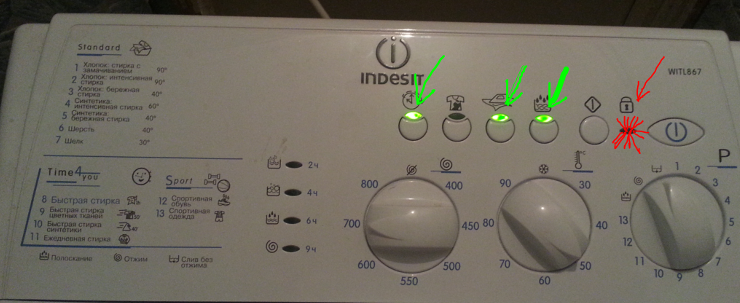
- 02 – drum overload, bearing damage;
- 03 – failure of the heating element or thermostat;
- 04 – Unable to determine the exact water level in the tank. The inlet is likely clogged or the pressure switch is not working;
- 05 – Unable to drain liquid from the tank. This could be due to a broken pump, clogged drain hose, filter, pipes, or sewer pipe;
- 07 – no water heating;
- 08 – heater short circuit (heating element);
- 10 – pressure switch is damaged;
- 13 – the drying mode does not function correctly;
- 16 – in top-loading machines, it signals damage to the bearing, exceeding the maximum weight when filling the drum, or the door not closing tightly;
- 17 – UBL faulty.
Knowing the washing machine's circuit diagram, it's easy to replace the heating element, pressure switch, door lock, thermostat, and other components yourself.
If one of the above codes lights up on the display, you can repair it yourself. For other errors, it's best to call a technician.
Interesting:
Readers' comments
Headings
Washing machine repair




For buyers




For users


Dishwasher




Add a comment