
How does an LG washing machine work?
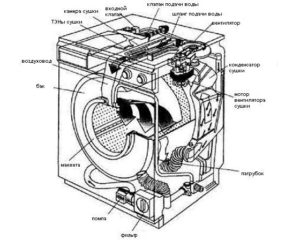 While a properly functioning washing machine doesn't require the owner to understand its internals, a breakdown can be a significant concern. Even a simple hose or pressure switch replacement requires a basic understanding of the washing machine's internals: what needs to be removed and how. You can figure out the innards of the machine yourself if you take the time to carefully read our article.
The exterior design of the machine
Knowing how your LG washing machine works means you can avoid worrying about potential breakdowns and fix the problem without calling in service technicians. This will save you time and money, and allow you to improve your skills. But for a successful result, it is necessary to “get to know” the machine well, both from the outside and from the inside.
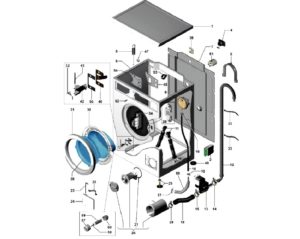
The factory manual will help you study the device of a specific LG model in detail.
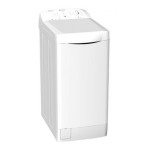
Like other washing machines, LG washing machines have a frame. It consists of a front and rear panel, a top cover, and a base. A significant portion of the front wall is occupied by the door for loading laundry into the drum. Depending on the door's location, models are referred to as front-loading models (if the door is in the front) and vertical models (if it's on the top).
The main external elements of a washing machine also include the control panel with a program selector, buttons, and display. Also located here, but to the left, is a pull-out detergent drawer, commonly referred to as a powder compartment. The lower right side of the unit houses a service hatch, which conceals a waste filter and an emergency drain hose.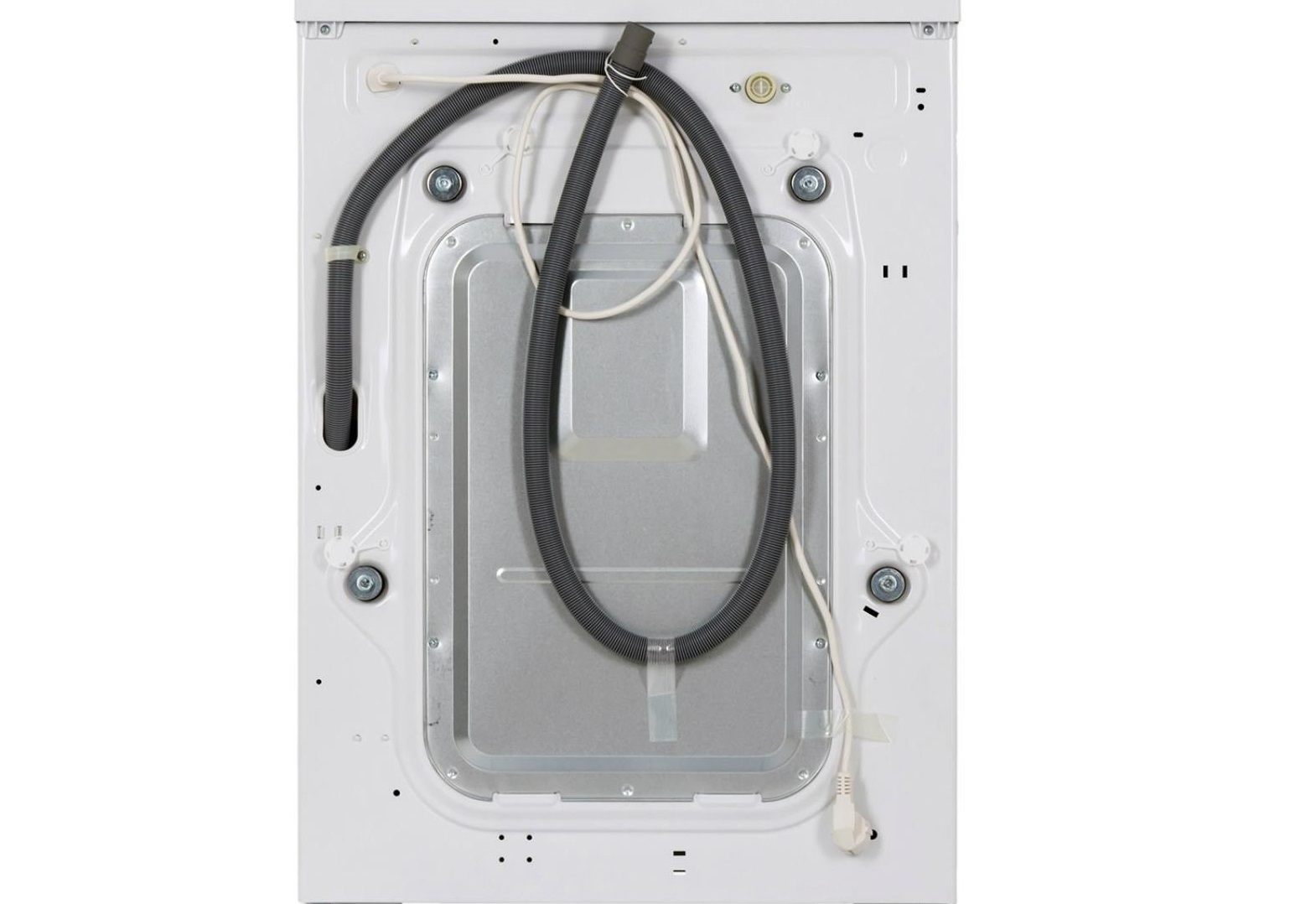
On the other side of the housing, you'll see two hoses and a power cord with a plug. The latter plugs into a wall outlet in the traditional way and supplies power to the washing machine. There are two rubber tubes: one, called the filler tube, exits from the top, and the other, the drain tube, attaches to the volute through the bottom and exits from the bottom. This concludes the external overview, and we can begin exploring the inside.
Internal structure
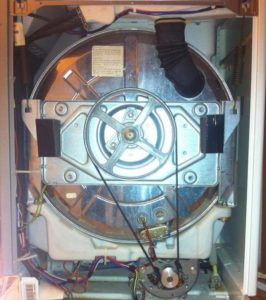
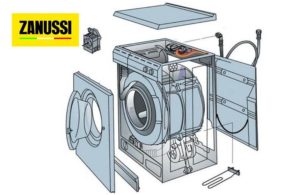
If you look inside the machine, you'll see dozens of different parts, meters of wiring, and countless fasteners and rubber seals. While some system components, such as the counterweights, are simple, others, such as the control board or pressure switch, are very fragile and complex mechanisms. Let's take a closer look at each one.
- The control board and other electronics. This is the "brain" of the washing machine, managing all system components. For example, the module starts the washing machine when power is supplied through the cord, records the user-selected program, monitors the tank fill level, controls motor speed, and performs other related functions. Each element on the electronic unit, called a resistor or triac, is responsible for a specific part and allows for complete coordination of the machine's operation. If the "helpers" stop receiving signals from their "charges", a failure occurs in the circuit and the unit stops.
The control board is the most fragile and expensive part in a washing machine.
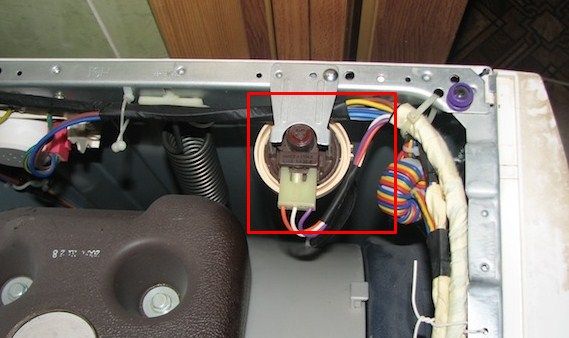
- Level sensor. Also called a pressure switch, it monitors the tank's fill level. It consists of a rounded "box" and a long, transparent tube extending downward. The tube measures the pressure in the tank and transmits the information to the circuit board. Once a certain water level is reached, the module signals the stoppage of water intake.
- Inlet valve. This is a plastic "box" with one or more coils. When voltage is applied to the coil, the membrane opens, allowing water to fill the tank. Conversely, once the machine has sufficient liquid, the circuit board again activates the membrane, triggering the mechanism and stopping the flow.
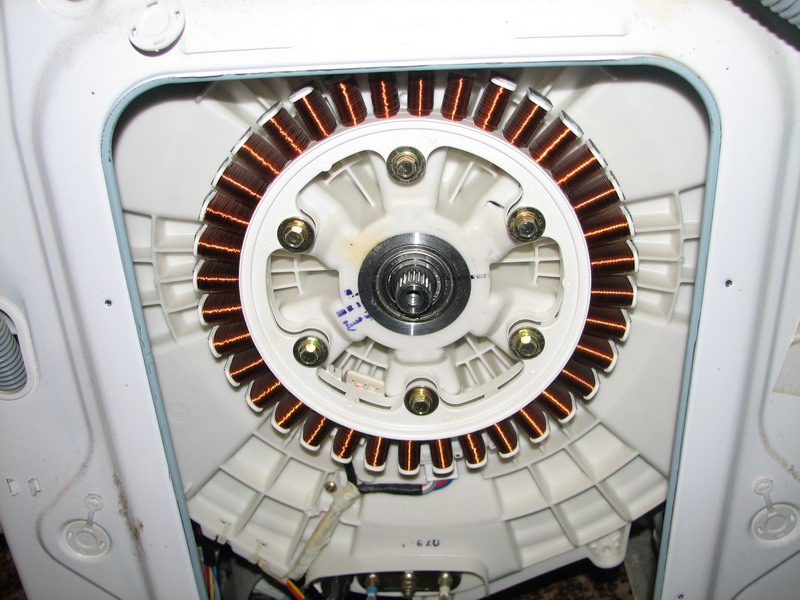
- The motor is one of the most important components of the washing machine. In older machines, it is a collector motor and is always complemented by a pulley and drive belt. The latter, due to its rubber structure, is considered the unit's "weak link," as it often stretches, slips, and breaks. Therefore, modern washing machines are equipped with an inverter motor with direct drive. This motor design eliminates the need for a belt drive or other "intermediaries," as the component is mounted directly on the drum. This increases the service life to 10 years with a manufacturer's warranty.
- A heating element (TEN) or electric heater. The name speaks for itself: the device heats the water in the tank to a preset level depending on the selected program. Typically, the temperature is set by the circuit board, after which the heating element begins to operate.
- Temperature sensor. Modern LG models, like other well-known brands, allow washing in various modes from 30 to 90 degrees Celsius. This requires the installation of a thermistor—a metal tube located inside the heating element. The sensor records the water's temperature, informing the control module. When the desired temperature is reached, the system switches off the heating element.
- A hatch locking device. Simply put, it's an electronic door lock. First, the user closes the latch manually, and the hatch locking device clicks into place. Only then does water intake begin.
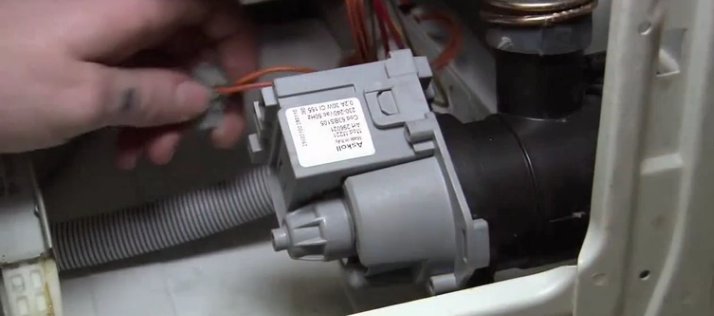
- Pump. The pump is often called the "heart" of the washing machine, as it is what draws water out of the drum. Depending on the type of device, drainage can be synchronous or asynchronous, detachable or non-detachable. It consists of a motor and a rotating impeller. A volute is installed on top of the pump, through which the pipes and drain hose are connected to the system. Despite its remote location, this part often becomes clogged due to carelessness on the part of the machine owner. For example, coins left in pockets can end up in the dust filter and reach the pump, blocking its operation.
- Shock absorption. To prevent the machine from bouncing around the room during the spin cycle, the unit is equipped with dampers—spring supports that absorb oscillations and vibrations. One end of the dampers is attached to the bottom of the drum, and the other to the base of the housing.
- Springs. The upper spring system dampens the machine's vibrations. One end of the springs is attached to the drum and the other to the sides of the washing machine.
- Counterweights. These heavy concrete or plastic blocks maintain the balance of the unit. They are bolted to the top of the tank and dampen vibrations emanating from the unit. However, even a solid structure can deteriorate over time. The fasteners are particularly susceptible and should be tightened periodically.
- Drum. A cylindrical container made of stainless steel. The front of the drum is open for loading laundry, while the rear houses the spider and shaft. Drainage is facilitated by numerous "holes" on the surface of the drum.
- Detergent drawer. The detergent drawer deserves a closer look. It's a plastic dispenser consisting of three compartments: the first holds the detergent for the main wash, and the second, smaller one, holds the pre-wash detergent. The compartment for the air conditioner is marked with an “*” or a flower. There is a tray in the bunker through which the pipes from the inlet valve are connected for filling with water.
- Cuff. A rubber seal that encircles the hatch opening and ensures a tight seal within the drum. The seal is pulled over the tank and housing and secured with clamps for security.
- Hoses and pipes. They allow water to enter and drain the machine, passing through the main components. First, the water flows from the water supply through the inlet hose into the tray and tub, and then through the drain hose into the sewer.
If you want to understand how a washing machine works, it's easy. This article will introduce you to the system's main components, and the instructions will provide all the supporting diagrams.
Interesting:
Readers' comments
Headings
Washing machine repair




For buyers




For users


Dishwasher




Add a comment